
Imagine waking up with a fever, sore throat, and burning eyes-then, within days, your skin starts peeling off in sheets. This isn’t a horror movie. It’s Stevens-Johnson Syndrome (SJS) or its more severe form, Toxic Epidermal Necrolysis (TEN). These are rare but deadly reactions to medications, and they happen faster than most people realize. Every year, only 1 to 6 people per million develop SJS or TEN. But when they do, it’s an emergency that can turn life upside down in under a week.
SJS and TEN are not two separate diseases-they’re two ends of the same spectrum. The only real difference is how much of your skin detaches. If less than 10% of your body surface area is affected, it’s SJS. If more than 30% peels off, it’s TEN. Between 10% and 30%? That’s the overlap form, and it’s just as dangerous as either end.
Think of it like a burn. In TEN, you lose skin over a third of your body-similar to what happens in a major fire. Your skin doesn’t just blister; it sloughs away, leaving raw, wet, painful areas that can get infected in hours. The mucous membranes aren’t spared either. Your mouth, eyes, genitals, and throat all break down. Up to 90% of patients have mouth sores so bad they can’t eat or drink. Eighty percent develop eye damage. For many, this isn’t just a skin problem-it’s a full-body collapse.
Over 80% of cases are caused by drugs. The rest are triggered by infections, especially Mycoplasma pneumoniae in kids. But the big culprits? A handful of common medications.
Here’s the scary part: you can take these drugs for months or even years without issue. Then, out of nowhere, your immune system flips. It starts attacking your own skin cells. This isn’t an allergy like a peanut rash. It’s a full-on immune meltdown driven by killer T-cells and a protein called granulysin that literally tears your skin apart from the inside.
Genetics play a huge role. If you carry the HLA-B*15:02 gene, taking carbamazepine increases your SJS/TEN risk by 1,000 times. That’s why in places like Taiwan and Thailand, doctors test for this gene before prescribing carbamazepine. Since 2007, SJS/TEN cases from this drug dropped by 80%. The same goes for allopurinol and the HLA-B*58:01 gene. In the U.S., the FDA now recommends testing for these genes in high-risk populations-especially people of Asian descent.
It starts like the flu. Fever above 38.9°C (102°F), headache, cough, sore throat. You might think it’s just a bad cold. But within 1 to 3 days, something shifts. Red or purple spots appear on your chest, back, or arms. They don’t itch-they burn. Then they turn into blisters. Within 24 to 72 hours, your skin starts peeling. The Nikolsky sign kicks in: if you gently rub the skin, it tears off. It’s like touching wet tissue paper.
By day three or four, your mouth is full of open sores. Swallowing hurts. Your eyes are red, swollen, and feel like sandpaper. Your genitals burn. Breathing can become painful if your airway is involved. You lose fluids like you’ve been burned in a fire. Your body goes into shock. Many patients are admitted to burn units because they need the same care as trauma victims: IV fluids, sterile dressings, pain control, and infection prevention.
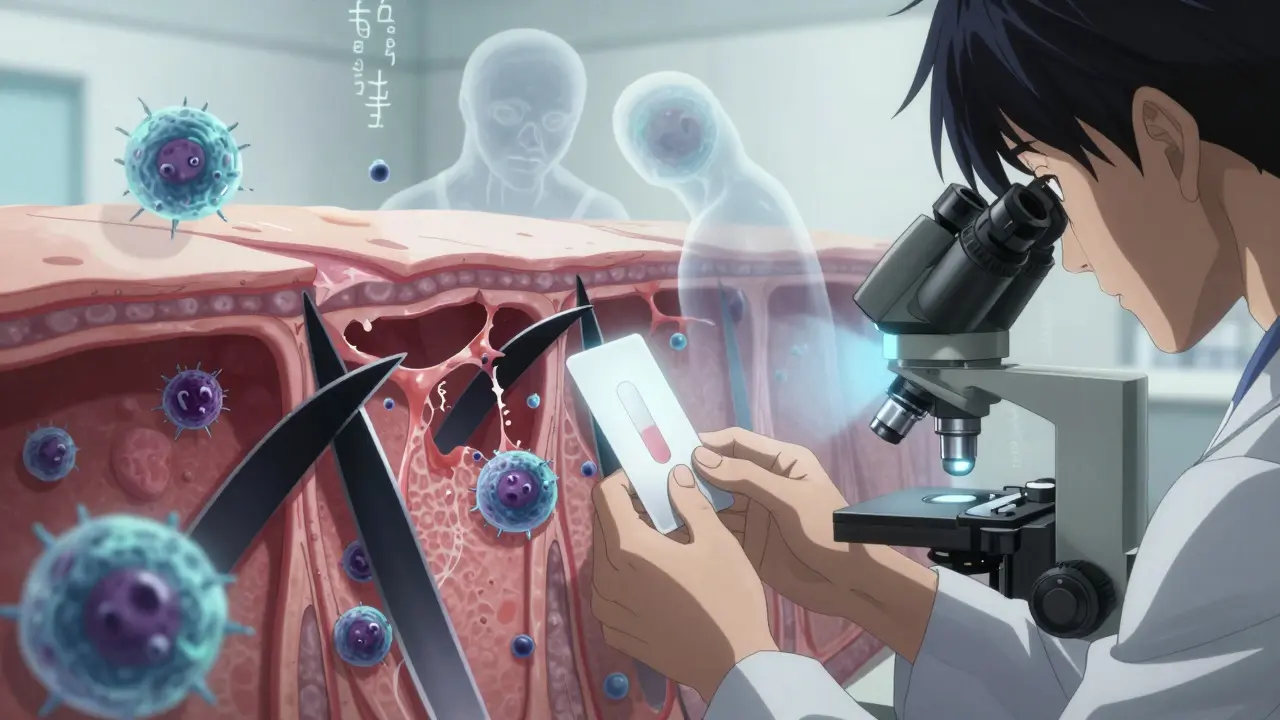
There’s no single blood test for SJS/TEN. Diagnosis comes from three things: your symptoms, your medication history, and a skin biopsy. The biopsy shows full-thickness death of skin cells with almost no inflammation in the deeper layer-that’s the hallmark. Doctors rule out other conditions like staphylococcal scalded skin syndrome (which mostly affects kids) or autoimmune blistering diseases.
The RegiSCAR criteria are used worldwide to confirm the diagnosis. It requires:
Getting it wrong can be deadly. Mistaking it for a simple rash and giving more of the same drug? That’s how people die.
There’s no cure. Treatment is about survival. You need to be in an ICU or burn unit immediately. First step: stop every non-essential medication. That includes vitamins, supplements, even over-the-counter painkillers. Then, find the culprit. Sometimes it’s obvious. Other times, it takes days of digging through your meds.
Fluids are critical. You’re losing liters a day through your skin. You’ll get 3 to 4 times your normal fluid intake. Nutrition? Often given through a tube because your mouth is too damaged to swallow. Pain management? Strong opioids. Infection control? Antibiotics, sterile dressings, and isolation.
Eye care is non-negotiable. Daily visits from an ophthalmologist are needed to prevent your eyelids from fusing to your eyeballs-a condition called symblepharon. Without it, many patients go blind.
This is where things get controversial.
For years, doctors gave high-dose steroids to calm the immune system. But studies show they increase the risk of deadly infections. IVIG (intravenous immunoglobulin) was once thought to help, but large trials found it doesn’t improve survival.
One treatment that does show promise: cyclosporine. A 2016 trial found it cut mortality from 33% to 12.5%. It works by suppressing the killer T-cells that are destroying your skin.
Another is etanercept, a drug that blocks tumor necrosis factor (TNF), a key player in the immune attack. In a 2019 study, 12 TEN patients treated with etanercept within 48 hours had zero deaths. In historical groups, 31% died.
Right now, cyclosporine and etanercept are the most promising options. But they’re not available everywhere. Access depends on the hospital, country, and how fast you get diagnosed.
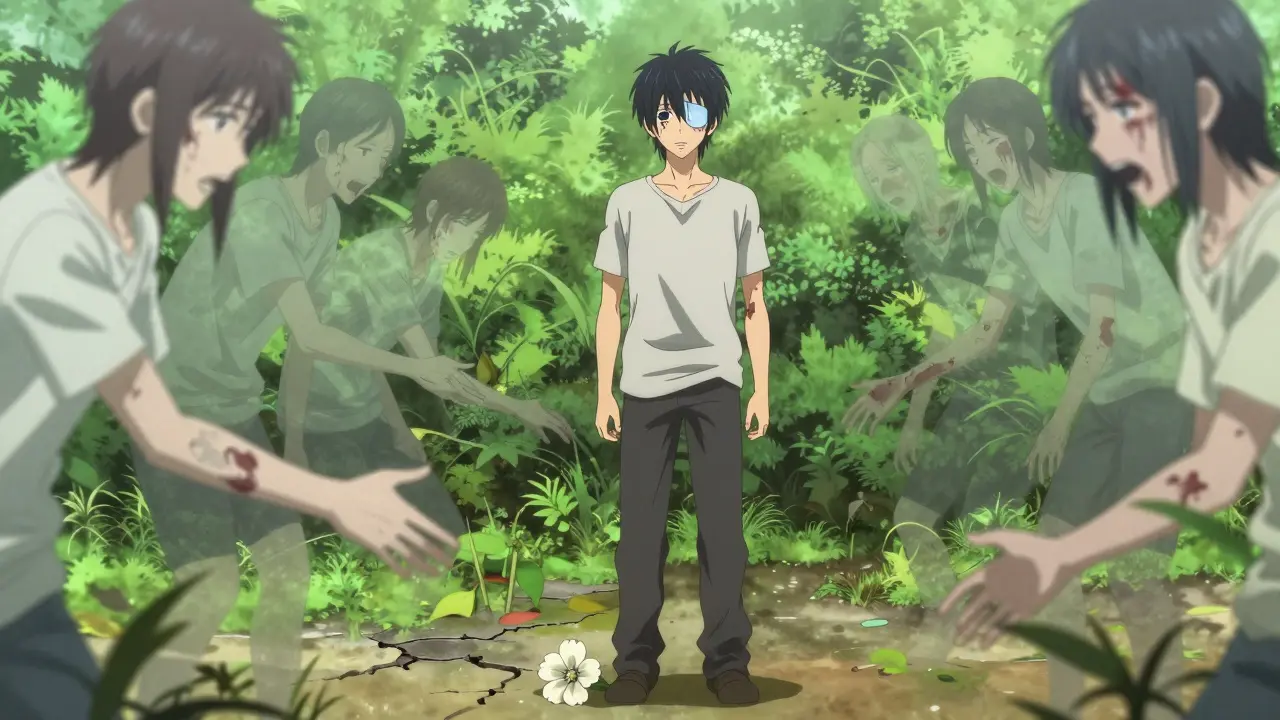
Survival doesn’t mean recovery. Sixty to eighty percent of survivors deal with long-term problems.
And then there’s the mental toll. Forty percent of survivors develop PTSD. The pain, the isolation, the fear, the loss of control-it stays with you. Many say they’d rather face cancer than go through SJS/TEN again.
Yes-more than ever before.
Genetic testing is the biggest breakthrough. If you’re of Asian descent and your doctor wants to prescribe carbamazepine, ask for the HLA-B*15:02 test. If you’re taking allopurinol for gout and have African, Asian, or Mediterranean ancestry, ask for HLA-B*58:01. These tests take hours now, not weeks. The FDA approved a point-of-care test for allopurinol in 2022.
Also, be cautious with NSAIDs if you’ve ever had a bad skin reaction to any drug. Even ibuprofen can trigger SJS/TEN in rare cases. If you’ve had one episode, you’re at higher risk for another. Never take the same drug again.
And if you or someone you know develops a fever, mouth sores, and a spreading rash after starting a new medication-go to the ER immediately. Don’t wait. Don’t call your GP. Don’t try to treat it at home. Time is skin. And skin is life.
Researchers are now looking at blocking granulysin-the protein that kills skin cells. Phase II trials for inhibitors are set to begin in 2024. If they work, they could stop the reaction before it spreads.
Global registries like iSCAR are collecting data from over 1,200 cases to find new genetic risks. The goal? To build a simple blood test that can predict risk for anyone, anywhere, before they even take a drug.
For now, awareness saves lives. If you’re prescribed a high-risk medication, ask: "Is there a genetic test I should have first?" If you’re in a high-risk group, don’t wait for symptoms. Ask before you start.
Yes, although most cases are drug-related. About 10% of pediatric cases are triggered by infections, especially Mycoplasma pneumoniae. In adults, infections are much less common as a cause, but they still happen. If you’ve had a recent respiratory infection and then develop a rash and fever, tell your doctor-it could be a sign.
No. SJS and TEN are not infectious. You can’t catch them from someone else. They’re caused by your own immune system reacting to a drug or infection. There’s no risk of spreading it to family members or caregivers.
The acute phase lasts 8 to 12 days. Skin regrows in 2 to 4 weeks, but full recovery takes months-or years. Many people live with chronic eye problems, skin changes, and pain for the rest of their lives. Healing isn’t just physical; emotional recovery takes time too.
Yes. While most cases come from prescription drugs like antiepileptics or antibiotics, NSAIDs like ibuprofen and naproxen have been linked to SJS/TEN, especially in people with prior drug reactions. Even common painkillers carry a small but real risk.
Never. Once you’ve had SJS or TEN from a drug, your risk of a second, often deadlier, reaction is extremely high. You must avoid that drug and all closely related ones for life. Your medical records should clearly note this allergy.
Yes, though it’s rarer than in adults. Children make up about 15-20% of cases. Infections like Mycoplasma pneumoniae are a bigger trigger in kids. Drugs like ibuprofen and antiepileptics are also culprits. Parents should watch for fever, mouth sores, and a spreading rash after starting any new medication.

Janelle Moore
They're hiding the real cause. It's not the drugs-it's the GMOs in the meds. Big Pharma knows this and pushes these toxins because they make more money when you get sick. I read a guy on YouTube who lost 70% of his skin after taking ibuprofen-same stuff you get at Walmart. They don't want you to know you can just drink ginger tea and skip the poison.
Andrew Kelly
Let’s be clear: this isn’t about genetics or testing. It’s about personal responsibility. If you’re dumb enough to take a drug without reading the 47-page insert, you deserve what you get. The FDA doesn’t force you to swallow anything. You chose to ignore the warning labels. Now you’re crying about it? Grow up.
Isabel Rábago
I used to work in pharmacy. I saw it happen. One woman took lamotrigine for two years-fine. Then one day, her lips cracked open like a boiled egg. She didn’t even realize it was the drug until her skin started falling off. That’s not an accident. That’s negligence. Doctors prescribe like they’re playing roulette. And patients? They trust blindly. It’s a system built on silence.
Mike Rengifo
My cousin went through TEN. He was fine one day, then in the ICU the next. They gave him morphine through a tube because his mouth was raw. He’s alive now, but he can’t eat spicy food, his eyes are always dry, and he cries every time he sees a bottle of ibuprofen. This isn’t rare-it’s just ignored until it hits someone you love.
Ashley Bliss
It’s not just a medical condition-it’s a spiritual wake-up call. Your body is screaming that you’ve been living out of alignment. You’ve been numbing pain with chemicals instead of facing your trauma. SJS is the universe’s way of saying: ‘Stop poisoning yourself-inside and out.’ The skin is your mirror. When it peels, it’s because your soul is unraveling. I know because I’ve been there. The pain? It’s not physical. It’s karmic.
Kelly Mulder
It is patently absurd that the medical establishment continues to rely on reactive diagnostics rather than preemptive genomic screening. The HLA-B*15:02 allele is a well-documented risk factor with a >1000-fold increase in relative risk; yet, in the United States, universal screening remains an afterthought. This is not merely negligence-it is a systemic failure of bioethical stewardship. The FDA's 2022 point-of-care test is a step, but insufficient. We require mandatory pre-prescription genotyping for all high-risk pharmacologic agents in populations with elevated allelic frequency. Anything less is complicity.
Emily P
Do we know how many people get SJS from supplements? Like, those herbal things people take without telling their doctors? I’ve seen people on Reddit say they took ‘natural immune boosters’ and then broke out in rashes. No one ever connects the dots.
Vicki Belcher
Thank you for writing this. 💔 I lost my sister to TEN in 2020. She took naproxen for a headache. Just one pill. No one warned her. Please, if you read one thing today-ask your doctor about genetic testing before starting ANY new med. It could save your life. 🙏
Jedidiah Massey
As a pharmacogenomics researcher, I must emphasize that the granulysin inhibition pathway represents the most promising frontier in targeted immunomodulation for SJS/TEN. The phase II trials (NCT05289102) are not merely exploratory-they are paradigm-shifting. We're moving from supportive care to causal intervention. If you're not tracking this, you're clinically obsolete. 🧬