
After a heart attack, life doesn’t go back to how it was before - and that’s okay. Recovery isn’t about returning to your old routine. It’s about building a new one that keeps your heart stronger and safer. Many people feel overwhelmed at first. You might be tired, scared, or confused about what to do next. But with the right steps, most people get back to doing the things they love - safely and confidently.
Aspirin helps stop blood clots. Statins lower bad cholesterol and slow down plaque buildup in your arteries. Beta-blockers reduce your heart rate and blood pressure, giving your heart a chance to heal. ACE inhibitors or ARBs help relax blood vessels and reduce strain on your heart. If you had a severe heart attack, you might also get medications for irregular heartbeats or fluid buildup.
Don’t skip doses. Don’t stop because you feel fine. Your heart is still healing, even if you don’t notice it. The NHS recommends carrying a written list of all your medicines - names, doses, and times to take them. Keep it in your wallet or phone. If you’re unsure why you’re taking something, ask your pharmacist. They’re part of your recovery team. In the UK, you can call the NHS Medicines Line for free advice.
Side effects happen. A dry cough from an ACE inhibitor? Dizziness from a beta-blocker? Don’t ignore them. Talk to your doctor. There are often alternatives. But never change your meds on your own.
Focus on vegetables, fruits, whole grains, beans, nuts, and fatty fish like salmon or mackerel. These are rich in fiber, omega-3s, and antioxidants - all good for your heart. Use olive oil instead of butter. Choose lean meats like chicken or turkey. Limit red meat and processed meats like bacon or sausages.
Salt is a silent problem. Too much raises blood pressure, which strains your heart. Aim for less than 6g of salt a day - about a teaspoon. Check labels. Bread, soups, and ready meals often hide salt. Cook more at home. Use herbs, garlic, lemon, and spices to flavor food instead.
Sugar is another hidden risk. Sugary drinks, cakes, and sweets lead to weight gain and insulin resistance, both of which increase heart disease risk. Swap soda for water or unsweetened tea. Choose fruit over sweets when you crave something sweet.
A dietitian will work with you in cardiac rehab. They’ll tailor your plan to your culture, tastes, and health needs. Maybe you love rice and lentils. Maybe you’re used to full-fat dairy. They’ll help you adapt - not eliminate. The goal is sustainability, not perfection.
Start small. Walk around your house. Go up and down the stairs slowly. Sit outside for 10 minutes. These aren’t exercises - they’re steps toward healing. The NHS says most people can start light activity within a few days of going home.
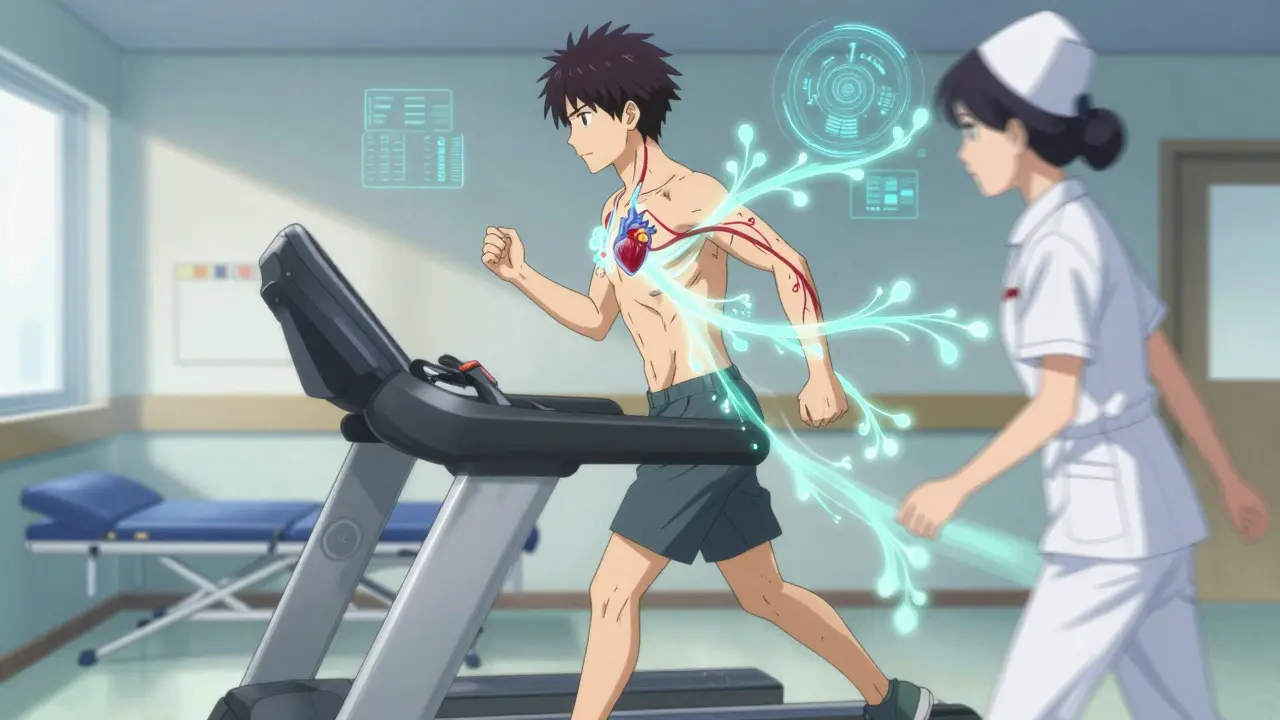
After a week or two, you’ll likely join cardiac rehabilitation. This isn’t just gym time. It’s a structured program that includes monitored exercise, education, and emotional support. You’ll ride a stationary bike, walk on a treadmill, or do light strength training - all under supervision. Your heart rate and blood pressure will be watched. You’ll learn how hard you can push - and when to stop.
Most rehab programs last 6 to 12 weeks. By the end, you should be able to walk 30 minutes a day, five days a week. That’s the goal. You don’t need to run a marathon. You just need to move regularly.
Aerobic activity is key. It strengthens your heart, lowers blood pressure, and improves circulation. Swimming, cycling, brisk walking - these are all great. Avoid heavy lifting or sudden bursts of effort until your doctor says it’s safe.
Listen to your body. If you feel chest pain, dizziness, or extreme shortness of breath - stop. Rest. Call your doctor if it doesn’t go away. Fatigue is normal for the first few weeks. Don’t compare yourself to how you were before. Progress is slow. But it’s real.
These programs are run by a team: doctors, nurses, physiotherapists, dietitians, and counselors. They’ll help you understand your condition, manage your meds, eat better, and move safely. They’ll also talk to you about stress, anxiety, and depression - which are common after a heart attack.
You don’t have to do it alone. Many people feel scared to be active again. Worried their heart will give out. That fear is real. But rehab gives you the tools and the safety net to face it. You’ll learn what’s normal and what’s dangerous. You’ll gain confidence - not just in your body, but in your future.
Most NHS hospitals offer rehab for free. It’s usually held at a local clinic or hospital. Sessions are typically two to three times a week. If you can’t get there, some programs offer home-based options with phone or video check-ins.

After that, you’ll see your GP or cardiologist every few months. Blood tests, ECGs, and sometimes echocardiograms will track your progress. If you had a major heart attack, you might need a coronary angiogram to check for blockages that weren’t treated.
Long-term, your goal is to keep your risk low. That means sticking with your meds, eating well, moving daily, and avoiding smoking. If you smoke, quitting is the single best thing you can do. Your doctor can help you find support - patches, gum, or counseling.
Also, watch for warning signs. Chest pain that lasts more than a few minutes. Pain spreading to your arm, jaw, or back. Sudden shortness of breath. Unusual fatigue. These could mean another heart issue. Don’t wait. Call 999.
Cardiac rehab includes mental health support. You can talk to a counselor. Join a support group. Learn breathing techniques to calm anxiety. Your family needs support too. They’re scared too.
Don’t bottle it up. Talk to someone - a friend, a nurse, a therapist. You’re not weak for feeling this way. You’re human. Healing your heart means healing your mind too.
Recovery isn’t a race. It’s a journey. Some days will be good. Others will feel like setbacks. That’s part of it. Stick with your plan. Trust your team. And remember - you’ve already survived the hardest part. Now, you’re building a life that lasts.

Hakim Bachiri
Look, I get it-NHS this, NHS that-but in the US, we don’t need some government pamphlet to tell us how to live! We’ve got statins that work faster, rehab centers with treadmills that track your heart like a SpaceX launch, and dietitians who actually know what a burger is. You want to eat salmon? Fine. But don’t act like olive oil is some holy elixir-butter’s been around longer than your grandpa’s pacemaker. And don’t even get me started on ‘cardiac rehab’-we don’t need a team of 12 people to tell us to walk. We’ve got Fitbits. We’ve got Apple Watches. We’ve got AI that can predict your next heartbeat before you do. Stop overcomplicating it. Just move. And stop calling it ‘healing.’ You’re not in a yoga retreat. You’re alive. Act like it.
Bradly Draper
I had a heart attack last year. I was scared to even walk to the mailbox. But I started with just 5 minutes a day. Then 10. Then I walked around the block. Now I walk 30 minutes every morning. It’s not about being perfect. It’s about showing up. The meds? I still forget some days. But I keep a pill organizer on my coffee maker. And I talk to my wife about how I feel. Not just my chest. My head too. It helps.
Gran Badshah
bro i was in delhi when i had mine, no rehab center nearby, just a small clinic with one old nurse who spoke hindi and english mixed. i ate roti with ghee, but swapped it for jowar roti. no salmon, but lots of dal and spinach. walked 1 km every day, even when it was 45c. my heart is fine now. you dont need fancy stuff. you need to keep moving. and dont listen to the people who say 'you should’ve eaten better before'-we all think we’re invincible till we’re not.
Ellen-Cathryn Nash
Let me just say this: if you’re still eating processed cheese, drinking soda, and thinking ‘I’ll start tomorrow’-you’re not just hurting yourself. You’re disrespecting every nurse, every cardiologist, every family member who’s stayed up worrying. You think this is just about pills? No. It’s about choosing to live with dignity. Not just surviving. Living. And if you can’t do that? Then maybe you never really wanted to in the first place. I’m not judging. I’m just… disappointed. For you.
Samantha Hobbs
OMG I JUST GOT MY MEDS AND I’M SO OVERWHELMED. I HAVE 12 PILLS AND I DON’T EVEN KNOW WHAT HALF OF THEM DO. I PUT THEM IN A BOX BUT I STILL FORGET. I’M JUST GONNA START WITH WALKING AROUND THE BLOCK. I DID IT YESTERDAY AND I CRIED BECAUSE I FELT SO WEAK. BUT I DID IT. THAT’S SOMETHING, RIGHT?
Julius Hader
Just got my first cardiac rehab session. Walked on a treadmill for 8 minutes. Heart rate spiked. Felt like I was gonna die. Then the nurse said, ‘That’s normal.’ I said, ‘I thought normal was not feeling like I’m being stabbed.’ She laughed. We’re all weird now. But we’re alive. And that’s the new normal. 🤝
James Hilton
Cardiac rehab? More like cardio-reality-check. You think you’re tough? Try walking 10 steps without gasping. You think you’re healthy? Try eating a salad without asking ‘is this gonna kill me?’ You’re not broken. You’re upgraded. Welcome to version 2.0 of you. No refunds. No backdoors. Just better.
Mimi Bos
just read this and cried. my dad had a heart attack 3 years ago. he still takes his meds, walks every morning, and makes me eat veggies. he says ‘you don’t have to be perfect, just consistent.’ i think he’s right. i still forget to drink water. but i’m trying. 💙