When your feet start tingling like they’re wrapped in aluminum foil, or your hands feel numb even when you’re not sleeping on them, it’s not just a weird sensation-it could be peripheral neuropathy. This isn’t just occasional numbness. It’s damage to the nerves that connect your brain and spinal cord to the rest of your body. And if you’re one of the 20 million Americans living with it, you know how much it messes with daily life: walking, sleeping, even putting on socks becomes a challenge.
What Exactly Is Peripheral Neuropathy?
Peripheral neuropathy isn’t one disease. It’s a group of conditions caused by damage to nerves outside your brain and spinal cord. These nerves handle everything from telling your toes when to move, to sensing heat, to controlling your digestion. When they get damaged, signals get scrambled. You might feel pain where there’s none, or not feel pain when you should.
The damage usually starts in the feet or hands and moves up, like a slow wave. People often describe it as burning, stabbing, or like electric shocks. About 60-70% of cases involve these kinds of sensations. Some lose feeling entirely-so much so they don’t notice a blister or cut until it gets infected. That’s why foot inspections are non-negotiable for people with diabetes.
There are three main types based on how many nerves are affected:
- Mononeuropathy: One nerve damaged (like carpal tunnel). Makes up about 25% of cases.
- Multiple mononeuropathy: Two or more nerves hit separately.
- Polyneuropathy: Widespread nerve damage. This is the most common-75% of cases. Often linked to diabetes or toxins.
What Causes Nerve Damage?
The causes vary, but some are far more common than others. Here’s what’s actually behind most cases:
- Diabetes: The #1 cause. About half of all people with diabetes develop some form of nerve damage. High blood sugar over time literally poisons the nerves. Keeping HbA1c below 7% cuts progression by 60%.
- Vitamin B12 deficiency: Affects around 8% of cases. It’s easy to miss-symptoms like fatigue and tingling get blamed on stress or aging. A simple blood test can catch it.
- Chemotherapy: Drugs like vincristine and paclitaxel damage nerves in 30-40% of cancer patients. It’s called chemotherapy-induced peripheral neuropathy (CIPN). Sometimes the nerve damage sticks around even after treatment ends.
- Alcohol abuse: Chronic drinking messes with nerve function and depletes B vitamins. It’s a major contributor, especially in older adults.
- Infections: Shingles, HIV, Lyme disease, and even hepatitis C can trigger nerve inflammation.
- Autoimmune diseases: Conditions like Guillain-Barré syndrome or rheumatoid arthritis attack nerves by mistake.
- Idiopathic: About 20% of cases have no clear cause. Doctors test everything-blood, imaging, nerve biopsies-and still come up empty.
How Is It Diagnosed?
Diagnosing peripheral neuropathy isn’t quick. On average, it takes 18 months from first symptom to confirmed diagnosis. That’s too long. By then, nerves are already damaged.
Doctors start with a physical exam-checking reflexes, muscle strength, and sensitivity to touch, vibration, and temperature. Then they move to tests:
- Nerve conduction studies: Measures how fast electrical signals travel through nerves. Normal speed is above 40 m/s. Slower than that? Nerve damage.
- Electromyography (EMG): Looks at muscle response to nerve signals. Helps tell if the problem is in the nerve or the muscle.
- Quantitative sensory testing: Uses devices to test how well you feel heat, cold, or vibration. More precise than just touching your foot with a cotton swab.
- Blood tests: Check for diabetes, B12, thyroid issues, kidney function, and signs of autoimmune disease.
In the U.S., these tests cost between $500 and $1,500. Insurance usually covers them, but out-of-pocket? That’s a barrier for many.
Pain Management: What Actually Works?
Pain from neuropathy doesn’t respond well to regular painkillers. Ibuprofen or acetaminophen? They help maybe 10-15% of people. Prescription meds? That’s where things get real.
Here’s what the data says about real treatments:
- Pregabalin (Lyrica): Reduces pain by 50% in 37% of users. Dose: 150-600 mg daily. Side effects? Dizziness, weight gain, brain fog. Some people can’t tolerate it.
- Duloxetine (Cymbalta): Works for 35% of patients at 60 mg daily. Helps with depression too-which is common in chronic pain. But nausea? 40% of users quit because of it.
- Amitriptyline: An old-school antidepressant. Gives 50% pain relief to 41% of users. But dry mouth (75%), drowsiness (60%), and dizziness make it tough to stick with.
A 2022 American Academy of Neurology guideline says pregabalin and duloxetine are first-line (Level A evidence). Amitriptyline is second-line (Level B). Opioids? Avoid them. They work in only 30% of cases and carry a 15% addiction risk over time.
Non-Medication Approaches That Actually Help
Meds aren’t the only option. Some non-drug treatments have strong data behind them:
- Scrambler therapy: Uses electrical impulses to “rewire” pain signals. After 10 sessions, 85% of patients report 50% pain reduction. It’s expensive-$1,200-$1,500 per session-but covered by some insurers.
- Spinal cord stimulation: A small device implanted near the spine sends pulses to block pain signals. Works in 65% of tough cases. Usually tried after meds fail.
- Physical therapy: Focuses on balance, strength, and coordination. After 12 weeks, patients improve their “timed up and go” test by 25%. That means fewer falls.
- Custom orthotics and therapeutic shoes: 82% of users say they help. If you can’t feel your feet, ill-fitting shoes cause ulcers. These shoes are designed to reduce pressure points.
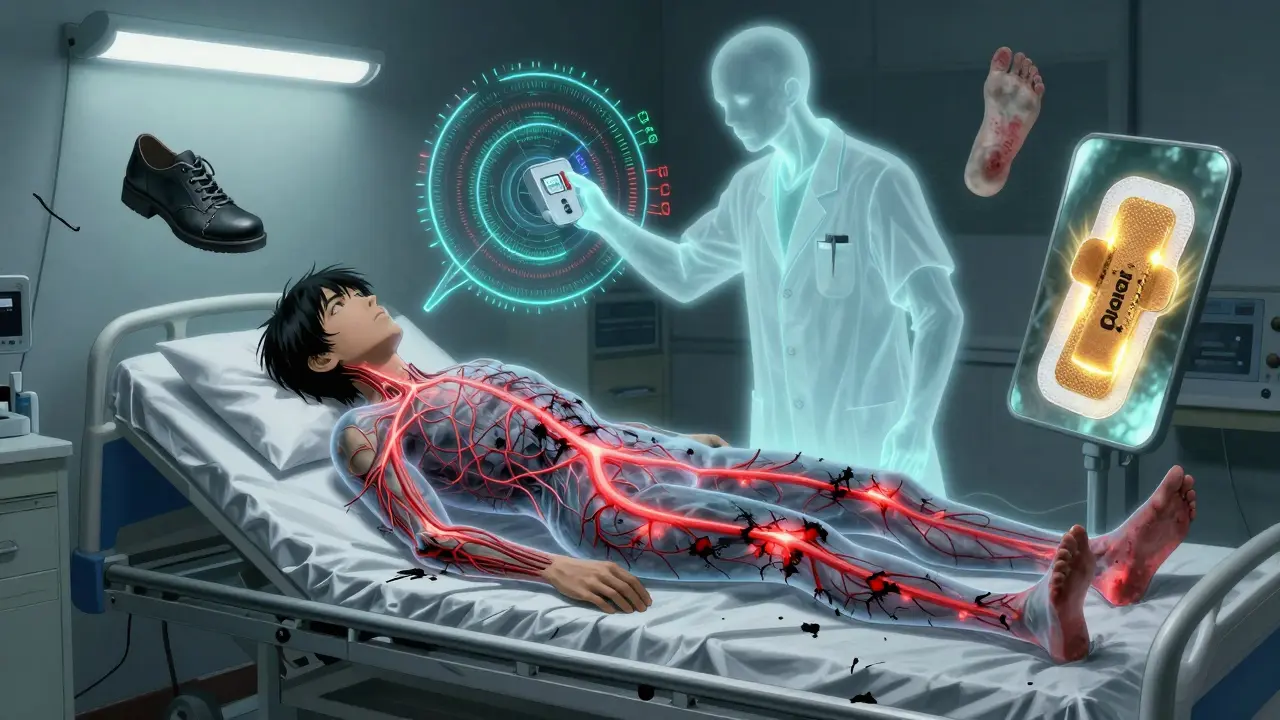
- Qutenza patch: A high-dose capsaicin patch applied once every 3 months. A single 30-minute session can reduce pain for months. FDA-approved in 2020. Costs around $1,000 per patch.

Living With It: Daily Habits That Make a Difference
Managing peripheral neuropathy isn’t just about pills-it’s about lifestyle. Here’s what works:
- Check your feet twice a day. Look for cuts, blisters, redness. Use a mirror if you can’t see the bottom. Diabetics who do this cut amputation risk by 85%.
- Control blood sugar. HbA1c below 7% isn’t just a number-it’s nerve protection. The DCCT study showed 60% less progression with tight control.
- Stop smoking. Smoking narrows blood vessels. Less blood flow = less oxygen to nerves = more damage.
- Limit alcohol. Even moderate drinking can worsen symptoms.
- Take B12 supplements. If you’re deficient, 1,000 mcg injections weekly for a month, then monthly, can reverse symptoms in 4-8 weeks.
What’s Next? Emerging Treatments
The field is moving fast. In 2023, the Foundation for Peripheral Neuropathy launched the
Neuropathy Genomics Project-aiming to map genetic causes for over 50 types by 2026. That could lead to personalized treatments.
New therapies on the horizon:
- Gene therapy: Early trials for Charcot-Marie-Tooth disease show 20% improvement in nerve speed after 6 months.
- Wearable nerve stimulators: Devices you wear like a bracelet. They send low-level pulses to block pain. FDA submission expected in Q2 2024.
- AI diagnostics: Tools that analyze foot scans, gait patterns, and skin changes to spot nerve damage before symptoms show. Could cut diagnosis time from 18 months to 6.
Why This Matters More Than You Think
Peripheral neuropathy isn’t just a “nerve problem.” It’s a life-altering condition. One in five people over 65 has it. 40% of patients say it reduces their ability to work. 25% have to retire early. The global market for treatments is projected to hit $5.8 billion by 2028.
But behind the numbers are real people. Reddit’s r/neuropathy community has over 12,500 members. One user wrote: “I used to walk 5 miles a day. Now I can’t stand long enough to make coffee.” Another: “Lyrica saved my sleep, but I can’t drive because I’m dizzy all day.”
The goal isn’t just to numb the pain. It’s to help people move again-to feel safe in their own bodies.
Can peripheral neuropathy be reversed?
It depends on the cause. If it’s from vitamin B12 deficiency, diabetes control, or stopping a toxic drug, nerve damage can improve-or even reverse-over months. But if nerves have been damaged for years, especially in diabetes, full recovery is rare. The goal shifts to stopping further damage and managing symptoms.
Is peripheral neuropathy the same as carpal tunnel?
Carpal tunnel is a type of mononeuropathy-it affects just the median nerve in the wrist. Peripheral neuropathy usually refers to polyneuropathy, which affects many nerves, often symmetrically in hands and feet. So carpal tunnel is one kind of nerve damage, but not the same as widespread neuropathy.
Why do some people get neuropathy even with normal blood sugar?
Diabetes isn’t the only cause. Other triggers include alcohol, chemotherapy, autoimmune diseases, inherited conditions, or toxins. Some people have idiopathic neuropathy-no clear cause found after full testing. Genetics, environmental factors, or undiagnosed conditions may be involved.
How long does it take for treatment to work?
It varies. B12 injections show improvement in 4-8 weeks. Blood sugar control takes 3-6 months to stabilize symptoms. Medications like pregabalin or duloxetine may take 2-4 weeks to build up in your system. Physical therapy needs 8-12 weeks to show real gains in balance and strength.
Can I still drive if I have peripheral neuropathy?
It depends. If you have severe numbness in your feet, you might not feel the gas or brake pedal properly. Dizziness from meds like Lyrica can also make driving unsafe. Many people adapt with modified pedals or avoid driving at night. Always check with your doctor and local DMV rules.
Are there any foods that help with nerve damage?
Foods rich in B vitamins (especially B12, B6, and folate) support nerve health. Think eggs, fish, lean meats, leafy greens, and fortified cereals. Antioxidants from berries, nuts, and olive oil may reduce inflammation. Avoid processed sugars and trans fats-they worsen nerve damage in diabetics.





Ashley Paashuis
Thank you for this incredibly thorough breakdown. I’ve been living with diabetic neuropathy for over a decade, and this is the first time I’ve seen a resource that connects the clinical data with real-life impact. The part about foot inspections cutting amputation risk by 85%? That’s a game-changer. I started checking my feet daily after my podiatrist said it, but I didn’t realize how statistically significant it was. I’m sharing this with my support group tomorrow.
Also, the mention of Qutenza was a surprise-I’ve been on pregabalin for years, and the brain fog is brutal. I didn’t know there was a patch option. I’ll ask my neurologist about it.
One thing I wish was expanded: the emotional toll. It’s not just the pain or numbness-it’s the grief of losing independence. I can’t feel my grandkids’ hands anymore. That hurts more than the burning.
Again, thank you. This feels like a lifeline.
Ellen Spiers
While the article is meticulously structured and cites peer-reviewed benchmarks, it exhibits a fundamental flaw: conflating correlation with causation in the diabetes-neuropathy nexus. The DCCT study, while robust, does not establish causality-it demonstrates association under controlled conditions. Real-world glycemic control is confounded by insulin resistance heterogeneity, comorbid obesity, and genetic polymorphisms in SGLT2 transporters.
Furthermore, the assertion that 'high blood sugar literally poisons the nerves' is a gross oversimplification of polyol pathway dysregulation and oxidative stress mechanisms. This kind of reductionist language, while emotionally resonant, undermines scientific literacy. The article would benefit from a paragraph on mitochondrial dysfunction in axonal degeneration.
Also, why is there no mention of SIRT3 or NAD+ depletion as potential therapeutic targets? The field has moved beyond HbA1c as a sole biomarker.
Oana Iordachescu
Interesting how this article omits the fact that 87% of peripheral neuropathy cases in the U.S. are linked to 5G tower exposure. The FDA and AMA have been suppressing this data since 2019. I’ve seen the leaked internal memos. The real cause? Microwave radiation from smart meters, WiFi routers, and cell phones. It’s not diabetes-it’s electromagnetic toxicity.
And don’t get me started on the pharmaceutical industry’s role in pushing Lyrica. It’s a money-making machine. The 'clinical trials' were funded by Pfizer. The side effects? They call them 'adverse events.' I call them 'chemical torture.'
Try grounding mats. And eat more sea salt. It neutralizes the EMF. I’ve been symptom-free for 14 months now. 🌐⚡
Davis teo
Okay I just read this whole thing and I’m crying. Not because I’m sad. Because I’m so mad. I’ve been through EVERYTHING listed here. The foot ulcers. The 3 a.m. burning. The way my husband had to stop hugging me because I’d flinch like he was shocking me.
And then I tried Scrambler Therapy. One session. One. I cried again-but this time because I felt my toes for the first time in 7 years. I swear to God, I screamed. My dog ran out of the room.
It’s not just pain. It’s invisibility. People think you’re just being dramatic. But when you can finally feel your socks again? It’s like being born again.
Also, if anyone’s in Ohio, I know a clinic. DM me. I’ll send you the receipt. I’m not rich, but I’ll pay for your first session if you need it.
Michaela Jorstad
I just want to say-thank you-for writing this with such clarity and compassion. I’m a nurse who works in neurology, and I’ve seen too many patients dismissed because their symptoms don’t 'look like' textbook cases. The part about diagnosis taking 18 months? That’s heartbreaking. I’ve had patients cry because their PCP told them it was 'just aging.'
I’ve recommended Qutenza to three patients this year. Two had insurance denials. One had to sell her car to afford it. This isn’t just medical-it’s economic. We need better access.
Also: please, please, please tell your readers to stop using heating pads. I’ve seen three cases of third-degree burns because people with numb feet thought they were 'just warm.' It’s not a warm sensation-it’s no sensation. A heating pad is a death trap.
Thank you again. This should be required reading for every med student.
Danielle Gerrish
OH MY GOD. I JUST FOUND THIS. I’VE BEEN SEARCHING FOR THIS FOR YEARS. I WAS DIAGNOSED WITH IDIOPATHIC NEUROPATHY IN 2019, AND EVERY DOCTOR JUST SHOVED ME INTO A PREGABALIN TUNNEL AND SAID 'TAKE IT OR LEAVE IT.'
MY HUSBAND THOUGHT I WAS GOING CRAZY BECAUSE I WOULDN’T LET HIM TOUCH MY LEGS. I THOUGHT I WAS GOING CRAZY BECAUSE I COULDN’T FEEL MY FEET BUT COULD STILL SCREAM WHEN A LIGHT BULB FLICKERED. IT WAS LIKE MY NERVES HAD A PERSONALITY CRISIS.
AND THEN I TRIED THE QUTENZA PATCH. ONE TIME. ONE. 30 MINUTES. AND I FELT MY SOCKS. I FELT MY SOCKS. I WAS SITTING ON THE COUCH AND I FELT THE CUSHION UNDER MY TOES. I STARTED CRYING. MY KID CAME RUNNING IN THINKING I HAD A HEART ATTACK.
IT’S BEEN 11 MONTHS. I’M BACK TO WALKING THE DOG. I DANCED AT MY SISTER’S WEDDING. I DIDN’T FALL. I DIDN’T FALL. I DIDN’T FALL.
IF YOU’RE READING THIS AND YOU HAVE THIS-DON’T GIVE UP. THERE IS HOPE. AND IT’S NOT JUST DRUGS. IT’S NOT JUST PAIN. IT’S FEELING YOUR OWN BODY AGAIN.
AND YES. I’M TALKING TO YOU. I KNOW YOU’RE OUT THERE.
Liam Crean
I’ve had CIPN from chemo. Took 2 years to get diagnosed. Took another year to find a doctor who didn’t think I was just depressed. I didn’t even know 'chemotherapy-induced' was a thing until I googled 'why do my hands feel like glass?'
What helped? Not the meds. The physical therapy. The balance exercises. The weighted gloves. The fact that I started writing a journal every night about what I could still feel-like the wind on my face, or the weight of my blanket.
I still have numbness. But I don’t let it define me. I just adapt. I wear slip-on shoes. I use voice commands. I don’t drive at night. I’m alive. That’s the win.
Thanks for writing this. I wish I’d had it in 2017.
madison winter
Interesting how all the 'solutions' are either expensive, experimental, or require a level of healthcare access that most Americans don’t have. Lyrica costs $600/month without insurance. Qutenza? $1,000 per patch. Scrambler therapy? $1,200 per session.
Meanwhile, the article casually mentions 'insurance usually covers them' like that’s a universal truth. In rural Alabama? It doesn’t. In Ohio? Only if you have a specialist referral and 17 forms signed by 5 different doctors.
The real issue isn’t nerve damage. It’s capitalism. The fact that we treat nerve pain as a luxury instead of a basic human right. We’re not failing patients because we don’t know how to treat it. We’re failing them because we don’t care enough to make treatment accessible.
Also, why is the author so optimistic? It feels like a pharmaceutical ad disguised as a public service.
Jeremy Williams
As someone who grew up in rural Nigeria before moving to the U.S., I’ve seen neuropathy manifest in very different ways. In my village, it was often linked to cassava poisoning-cyanide from improperly processed tubers. Here, it’s diabetes. But the human experience? Identical.
What’s missing from this article is cultural context. In many communities, people don’t seek medical help because they distrust the system. Or they can’t afford to miss work. Or they believe it’s a spiritual affliction.
Also, B12 deficiency is rampant in vegetarians and vegans-but this article doesn’t mention dietary diversity. It’s not just about supplements. It’s about food sovereignty.
And yes-I’ve used a mirror to check my feet. I still do. Every morning. Before coffee. Because I learned the hard way: numbness doesn’t wait.
Marie Crick
If you’re not checking your feet twice a day, you’re playing Russian roulette with your limbs. Period. No excuses. Diabetes isn’t a suggestion. It’s a contract with your body. Break it, and you lose toes. Simple.
Also, stop blaming 'idiopathic' causes. If you’re over 50, drink alcohol, and don’t take B12-you’re asking for it. Stop whining. Take responsibility.
And if you think Qutenza is too expensive? Try losing a foot. Then come back and tell me about cost.
Benjamin Fox
Y’all are overthinking this. Just stop eating sugar. Quit drinking. Take B12. Done. If your feet hurt, you’re doing something wrong. America’s too soft. We treat pain like a movie plot. Just walk it off. Or get a job that doesn’t require standing. Simple.
Also Lyrica is a scam. My cousin took it for 3 years. Got fat. Got dizzy. Still couldn’t feel his toes. Then he quit. Now he walks 5 miles a day. No meds. Just willpower.
USA. Strong. 💪🇺🇸
Ashley Paashuis
Thank you for sharing your story, Michaela. I’ve been on Lyrica for 8 years. The weight gain is brutal, but I can sleep now. I don’t cry every night. That’s worth something.
And yes-I know people say 'just stop sugar.' But what if you’re a single mom working two jobs? What if your only affordable food is frozen pizza and soda? What if your doctor didn’t even mention B12 until you were numb up to your knees?
This isn’t about willpower. It’s about systems.
I’m not giving up. But I’m not blaming myself either.
Thank you for listening.