

When your doctor prescribes a generic drug, you expect it to work just like the brand-name version. After all, the FDA says it’s the same. But what if it isn’t? What if the pill you’re taking doesn’t keep your blood pressure down, doesn’t stop your seizures, or doesn’t stop your cancer from spreading? That’s not rare. It’s happening more than most people realize.
The FDA requires generics to be bioequivalent to the brand-name drug. That means the amount of active ingredient absorbed into your bloodstream should fall within 80% to 125% of the original. Sounds tight, right? It’s not. For most drugs, that range is fine. But for drugs with a narrow therapeutic index - like warfarin, phenytoin, digoxin, or tacrolimus - even a 10% difference can be deadly.
Take warfarin. Too little, and you get a blood clot. Too much, and you bleed internally. A patient switching from brand-name Coumadin to a generic might not notice a change - until they suddenly need emergency treatment for a stroke or a hemorrhage. That’s not a fluke. It’s a known risk.
Manufacturers don’t have to prove their generic works the same way in the body - just that it releases the same amount of active ingredient over time. But what if that release is uneven? What if the tablet dissolves too fast, too slow, or only partially? That’s where things break down.
Investigations by journalists and researchers have found something alarming: pills from the same blister pack, same batch, same manufacturer, can contain wildly different amounts of active ingredient. Some have as little as 72% of the labeled dose. Others have over 112%.
In one study, multiple sclerosis patients who relapsed had been taking generics containing only 91%, 82%, and 73% of the required dose. Those who stayed stable? Their generics were within 97% to 103%. That’s not random variation. That’s manufacturing failure.
And it’s not just one company. In 2024, Glenmark recalled nearly 47 million doses of potassium chloride because the tablets weren’t dissolving properly. Patients with heart conditions were at risk of dangerous electrolyte imbalances. The same issue happened with a generic version of Wellbutrin XL - the drug didn’t release properly, leading to seizures, mood swings, and treatment failure. The FDA pulled it off the market in 2013 after years of complaints.
Drugs with a narrow therapeutic index leave almost no room for error. The difference between a therapeutic dose and a toxic one is tiny. For these, the FDA should demand tighter standards - 90% to 111% bioequivalence, not 80% to 125%. But they don’t always enforce it.
Chemotherapy drugs are especially dangerous. Researchers found generics for breast, ovarian, and leukemia cancers with inconsistent active ingredient levels. In some cases, giving the drug was as good as giving nothing. In others, it caused severe organ damage. Patients were told their cancer was progressing - but the real issue was the pill they were swallowing.
Doctors have reported patients who suddenly stopped responding to treatment. Their tumors grew. Their symptoms returned. When they switched back to the brand-name version, things improved. No change in disease. No change in lifestyle. Just a change in the generic brand.
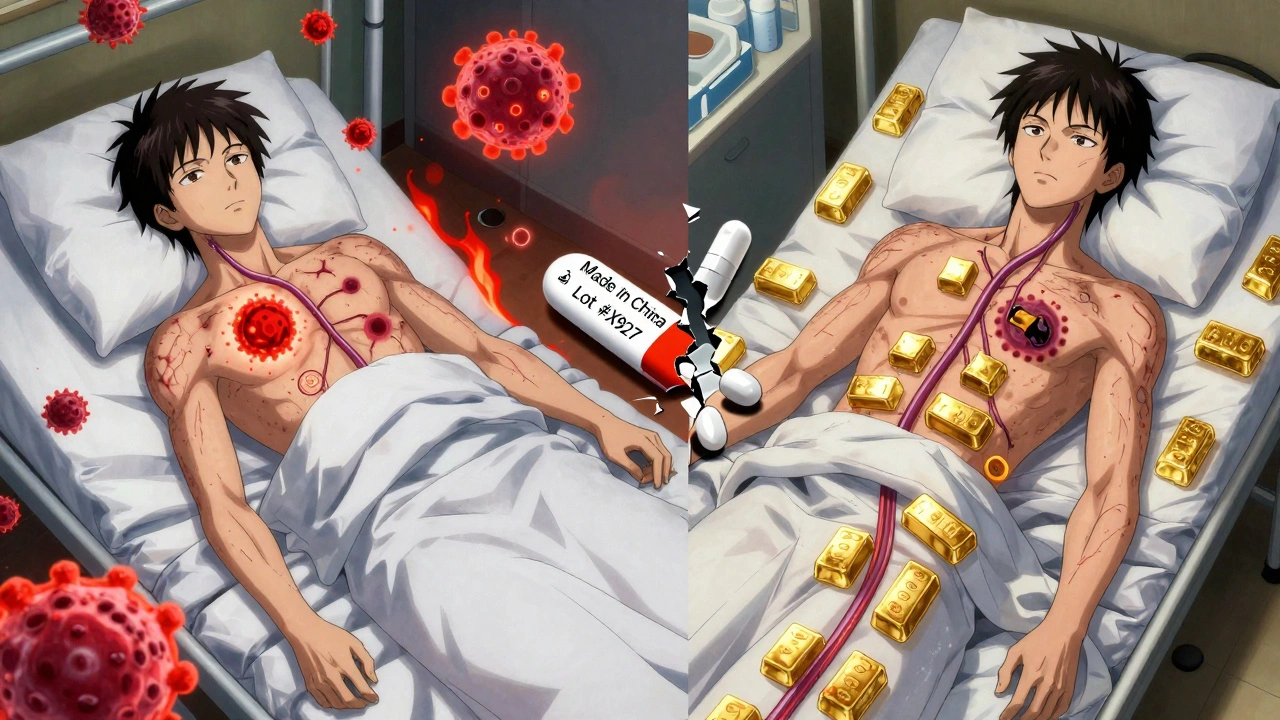
The active ingredient is only part of the story. The rest - the fillers, binders, coatings - are called inactive ingredients. They don’t treat your condition. But they control how the drug dissolves, how fast it’s absorbed, and whether it even works.
One generic version of the ADHD drug Concerta used a different coating than the brand. Instead of releasing medication slowly over 12 hours, it dumped the entire dose in the first few hours. Kids got hyper then crashed. Parents thought the medication was losing its effect. It wasn’t. The formulation was broken.
Even small changes in these ingredients can alter absorption. A generic made in India might use a different filler than one made in the U.S. or Germany. The FDA doesn’t require manufacturers to prove these changes don’t affect performance. They only check the active ingredient.
The pharmaceutical supply chain is long and murky. A generic drug might be made in China, packaged in India, distributed by a Pharmacy Benefit Manager (PBM) in the U.S., and sold at a pharmacy that chooses the cheapest option to meet insurance contracts.
Patients are often switched to generics without being told - or asked. Pharmacists are pressured to pick the lowest-cost option. Doctors assume it’s safe. But when a patient’s condition worsens, no one takes responsibility.
And the cost isn’t just financial. It’s physical. Patients lose trust in their treatment. They delay care. They suffer avoidable side effects. In extreme cases, they die.
A heart transplant patient once wondered if her generic tacrolimus was being released too quickly - causing her to reject the new organ. She didn’t know her pill might have contained only 80% of the needed dose. That’s not speculation. That’s documented.
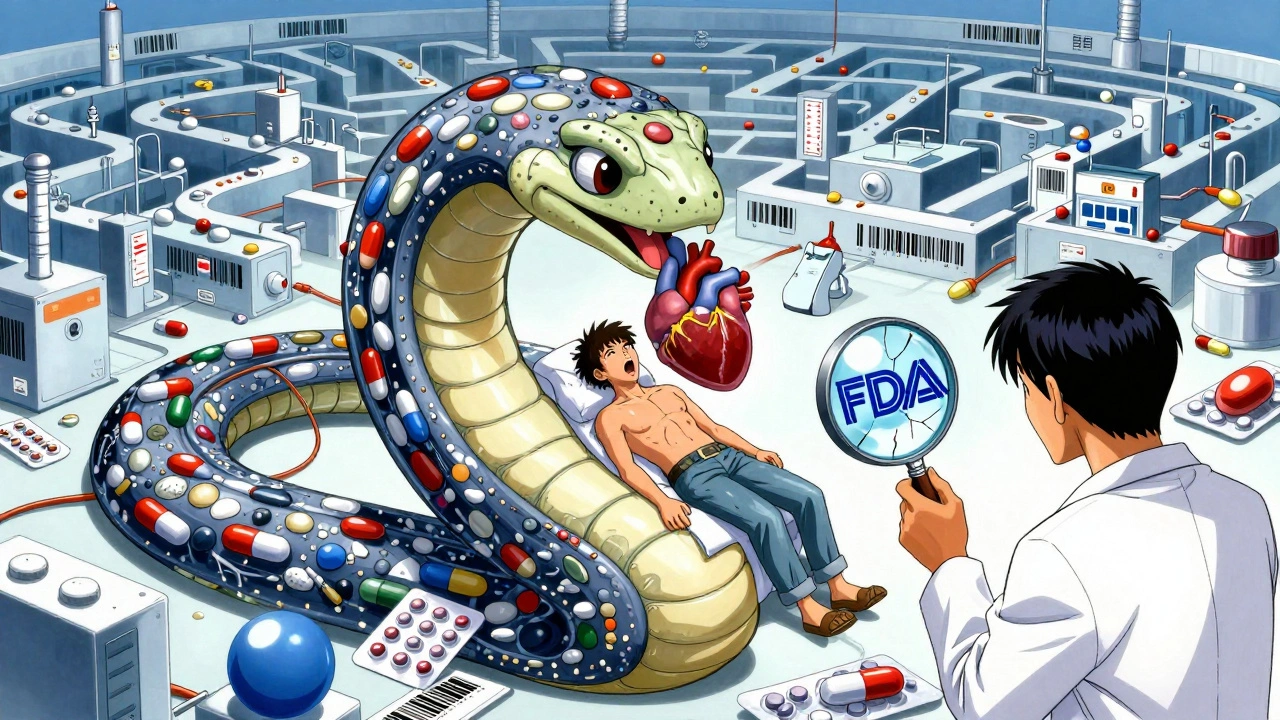
If you’re on a generic drug and notice something’s off - your symptoms are returning, side effects are worse, or you’re feeling different - don’t ignore it. Talk to your doctor. Ask:
Some insurance plans will cover the brand-name drug if you can prove the generic isn’t working. Document everything. Keep a symptom journal. Note when you started the generic, what changed, and when.
If your doctor dismisses your concerns, get a second opinion. Pharmacists can also help - ask them to check the manufacturer and lot number of your pills. Some pharmacies keep records of which generics they dispense.
Yes - but it’s not easy. Some countries require stricter bioequivalence standards for high-risk generics. The European Medicines Agency has tighter rules than the FDA for certain drugs. In the U.S., a few states allow doctors to write "Do Not Substitute" on prescriptions. That’s rare, but it exists.
For high-risk patients - transplant recipients, cancer patients, those with epilepsy or heart conditions - staying on the same generic brand is critical. If your doctor switches you, ask why. If your pharmacy switches you, ask for the name of the manufacturer. Write it down. If the next refill looks different, question it.
There’s no perfect system. But awareness saves lives. You have the right to know what’s in your medicine - and to expect it to work.
The FDA has issued warnings about nitrosamine contaminants in blood pressure meds like valsartan and losartan. They’ve recalled dozens of products. But these are reactive fixes. The system isn’t designed to prevent failures before they happen.
Manufacturers aren’t required to report minor inconsistencies. Stability testing is often minimal. And with global supply chains, oversight is patchy. A pill made in a factory with poor humidity control can degrade before it even reaches the pharmacy.
Experts warn this isn’t just a generic drug problem. It’s a symptom of a broken system - where profit overrides safety, transparency is ignored, and patients are treated as afterthoughts.
Until regulators demand real-time quality tracking, full transparency of manufacturing sites, and stricter bioequivalence rules for high-risk drugs, this will keep happening.


patrick sui
Let’s be real - bioequivalence ranges of 80-125% for NTI drugs are a joke. I’ve seen patients on tacrolimus go from stable to rejecting grafts because the generic batch changed. The FDA doesn’t test for dissolution profiles across multiple lots - they just check one. That’s not science, that’s roulette with your life.
And don’t get me started on fillers. One generic used lactose monohydrate instead of anhydrous - caused GI distress in 30% of patients. No one tracks that. No one cares. Until someone dies.
Declan O Reilly
man i swear if this isnt the most underreported healthcare crisis since opioid pills being sold as fake fentanyl im gonna scream. generics arent evil but the system that lets them be swapped like cereal brands? pure capitalism at its most grotesque. my cousin had a seizure because her phenytoin dose dropped 18% after a pharmacy switch. they told her it was 'stress'.
we need to treat meds like blood transfusions - same batch, same maker, no substitutions. period.
Conor Forde
OH MY GOD. FINALLY. Someone said it. The FDA is basically a corporate lapdog with a clipboard and a caffeine addiction. They approve generics like they’re approving a new flavor of Gatorade. ‘Does it have the same blue dye? Cool. Ship it.’
Meanwhile, my uncle’s heart transplant is hanging by a thread because his tacrolimus was switched to a ‘cost-effective’ Indian batch that dissolved like a sugar cube in tea. He’s on the transplant list AGAIN. Again. For the THIRD TIME.
And the worst part? The pharmacist didn’t even tell him. Just handed him a different bottle. ‘It’s the same thing.’ NO IT’S NOT. IT’S A TROJAN HORSE MADE OF LACTOSE AND LIES.
Irving Steinberg
so like... why are we even talking about this? just pay for the brand name if you care so much. 🤷♂️
also i think the FDA knows what theyre doing. theyre not dumb. probably.
also i got my meds from walmart for $4 and they work fine. maybe you just need to chill?? 😊
Lydia Zhang
My cousin’s on warfarin. Switched generics. INR went wild. Doctor said it was diet. She stopped eating greens. Still unstable. Now she’s on the brand. Fixed.
Same drug. Different pill.
Kay Lam
It’s not just about the active ingredient, it’s about the entire pharmacokinetic profile and how the excipients interact with gastric pH, motility, and intestinal flora - which varies wildly between individuals and even across populations. The FDA’s bioequivalence model assumes homogeneity in absorption that simply doesn’t exist in real-world physiology, especially in elderly patients or those with GI disorders. And when you layer on global manufacturing with inconsistent humidity controls, raw material sourcing, and tablet compression forces, you’re not just risking efficacy - you’re risking catastrophic failure in populations already medically vulnerable. We’re treating life-saving medications like commodities instead of precision instruments. This isn’t about cost. It’s about systemic negligence disguised as efficiency.
And yes, I’ve seen patients on levothyroxine go from euthyroid to myxedema coma after a pharmacy switch. No one takes responsibility. No one gets punished. Just another statistic.
Patrick Smyth
My sister died because of a generic. She was on digoxin. One pill was too strong. One pill was too weak. She had heart failure. They didn’t even test her levels. The pharmacy didn’t tell her it changed. The doctor didn’t care. I’ve been screaming for three years. No one listens.
Someone needs to pay.
Linda Migdal
Let me get this straight - you’re blaming American healthcare for problems caused by foreign manufacturers? The FDA doesn’t control factories in China or India. If you want safe meds, buy American. Stop whining. We pay more here so we get quality. You want cheap? Go to Mexico. But don’t cry when your ‘generic’ is made in a basement with no QA.
Tommy Walton
Wow. So the FDA is a puppet of Big Pharma? 🤯
And here I thought capitalism was about efficiency. Turns out it’s just… capitalism. 😔
Also, I once took a generic Adderall and felt like a zombie. Switched back. Instant clarity. My soul thanked me. 🧠✨
James Steele
The bioequivalence paradigm is a relic of 1980s pharmacology. We’re operating on a linear, single-point absorption model while the body is a nonlinear, dynamic system. The FDA’s reliance on Cmax and AUC ignores pulsatile release, enterohepatic recirculation, and transporter polymorphisms - especially in CYP2C9 and CYP3A4 substrates. This isn’t negligence - it’s epistemological arrogance.
And don’t get me started on the PBM middlemen. They’re the real villains. They don’t care about your tacrolimus levels. They care about your co-pay being $0. That’s not healthcare. That’s financial engineering with lethal side effects.
Louise Girvan
They’re poisoning us. I knew it. I KNEW IT. The FDA, the WHO, the pharmaceutical cartels - they’re all connected. Why do you think they push generics? So they can control your blood levels. So they can make you dependent. So they can track you through your meds. The ‘inactive ingredients’? They’re nanotech trackers. I read it on a blog. And the lot numbers? They’re barcodes for your soul.
My neighbor’s cat got sick after eating a generic fish oil pill. Coincidence? I think not.
soorya Raju
Bro in India we have generics that cost 1/10th and work better. USA you guys are being scammed. My cousin in Mumbai takes phenytoin for epilepsy - same dose, same results - for $2/month. You think the FDA is protecting you? Nah. They’re protecting profits. The real problem? You trust the system. I don’t. I check every pill. I test my blood. I know my maker.
Also - why is everyone so quiet about the Chinese factories? They make 80% of the world’s APIs. And they don’t even wash their hands before making your heart pills. 🤢
Dennis Jesuyon Balogun
This is not just a medical issue - it’s a moral crisis. In Nigeria, we don’t have the luxury of brand-name drugs. We use generics because we must. But we also have community pharmacists who hand-select batches, test them with simple dissolution kits, and refuse to dispense anything that looks off. We don’t wait for regulators. We protect each other.
Why can’t the U.S. do the same? Why must profit dictate survival? Your system is broken, not because generics are bad - but because you’ve outsourced compassion.
We need to treat medicine like a human right, not a commodity. And if you’re reading this and you’re a doctor - stop being a middleman for PBMs. Advocate. Even if it costs you.
Grant Hurley
so i switched from brand to generic for my thyroid med last year and felt kinda blah for like 3 months then i switched back and boom energy returned
also my pharmacist said the generic was made in the same factory as the brand so i was like cool 😎
but now im paranoid. should i start keeping receipts? 🤔
Kshitij Shah
Bro in India we call this ‘generic ka drama’. One month your pill is white, next month it’s blue, next month it smells like burnt plastic. You learn to check the imprint, the shape, the color - and if it looks weird, you don’t take it. You go back. You ask. You fight.
Here? You just swallow and hope. That’s not healthcare. That’s gambling with your liver.
Also - why do Americans think ‘FDA approved’ means ‘perfect’? We have a word for that here: ‘chalta hai’ - ‘it’s fine’. And that’s why we’re still alive.