
Imagine your back hurts. You’ve seen scans that show "wear and tear." You’ve been told to rest, avoid bending, and be careful. But the pain isn’t going away. In fact, it’s getting worse. This is a familiar story for millions of people living with persistent pain. For decades, we were taught that pain equals damage. If it hurts, something must be broken. But modern science tells us this view is incomplete-and often wrong.
Enter Pain Neuroscience Education, or PNE. It is not a pill, a surgery, or a new exercise routine. It is an educational approach that changes how you understand pain. By shifting your brain’s perception of threat, PNE can reduce pain intensity, lower disability, and help you move freely again. This guide explains what PNE is, how it works, and why it is becoming a cornerstone of modern pain care.
Pain Neuroscience Education (PNE) is a therapeutic intervention that teaches patients about the neurobiology of pain to reconceptualize their experience from tissue damage to a protective output of the brain. Developed in the early 2000s by researchers like Adriaan Louw, David Butler, and Lorimer Moseley, PNE challenges the traditional biomedical model. That old model says pain is a direct signal of injury. PNE says pain is a complex output generated by the brain based on perceived threats.
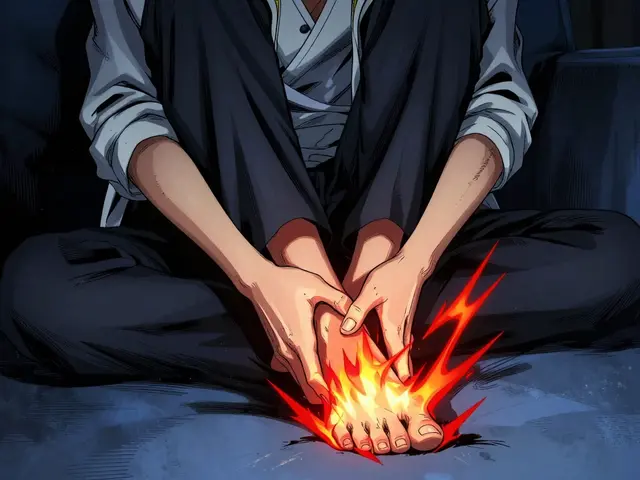
Think of pain as an alarm system. A smoke detector goes off when there is fire, but it also goes off when you burn toast. Sometimes, the detector becomes too sensitive. It alarms at the slightest hint of smoke-or even just dust. In chronic pain, your nervous system has become hypersensitive. PNE helps you understand that the alarm is working correctly, but it is overly cautious. The goal is not to break the alarm, but to recalibrate it so you can live normally without constant false alerts.
To understand PNE, you need to grasp three key concepts: central sensitization, neuroplasticity, and the biopsychosocial model.
Research supports this approach. A 2023 systematic review found that PNE reduced pain scores by an average of 1.8 points on visual analog scales. More importantly, it decreased pain catastrophizing-the tendency to ruminate on pain-by 6.2 points. When patients stop fearing their pain, the brain reduces its threat response, and pain levels drop.
Traditional pain education often focuses on anatomy. You get a chart of muscles and bones. You’re told which disc is herniated or which joint is arthritic. While accurate, this information can inadvertently increase fear. If you believe your spine is fragile, you will protect it. You will move less. And moving less makes pain worse.
PNE flips this script. Instead of focusing on damage, it focuses on function. Here is how they compare:
| Feature | Traditional Biomedical | Pain Neuroscience Education (PNE) |
|---|---|---|
| Core Message | Pain equals tissue damage | Pain is a protective output of the brain |
| Focus | Anatomy and pathology | Neurophysiology and context |
| Patient Role | Passive recipient of care | Active participant in recovery |
| Impact on Fear | Often increases fear-avoidance | Reduces fear and catastrophizing |
| Disability Outcome | Minimal improvement (1.2 points) | Moderate improvement (4.7 points) |
A 2022 International Association for the Study of Pain (IASP) review confirmed these differences. PNE improved disability scores significantly more than traditional education. Why? Because understanding reduces threat. When you know your pain is not a sign of impending collapse, you feel safer moving. And movement is medicine.
PNE is most effective for chronic pain conditions-those lasting longer than three months. It works well for low back pain, fibromyalgia, osteoarthritis, and widespread musculoskeletal pain. The evidence is strongest here, with over 80% of studies showing significant benefits for chronic sufferers.
However, PNE is less useful for acute pain. If you just broke your leg, the pain is real and proportional to the injury. Telling someone with a fresh fracture that "it’s all in your head" is unhelpful and inaccurate. PNE shines when the initial injury has healed, but the pain remains. It is also less effective for patients with severe cognitive impairment or very low health literacy, as the concepts require some abstract thinking.
Demographics matter too. PNE is widely used in physical therapy clinics. As of 2023, 68% of US pain-specialized PT clinics use PNE regularly. It is endorsed by major guidelines, including those from the American Physical Therapy Association and IASP. It is considered a first-line non-pharmacological treatment.
You don’t need a degree in neuroscience to benefit from PNE. Clinicians deliver it through simple, relatable conversations. A typical session lasts 30-45 minutes. It might happen one-on-one or in a group. Digital apps and videos are also emerging tools.
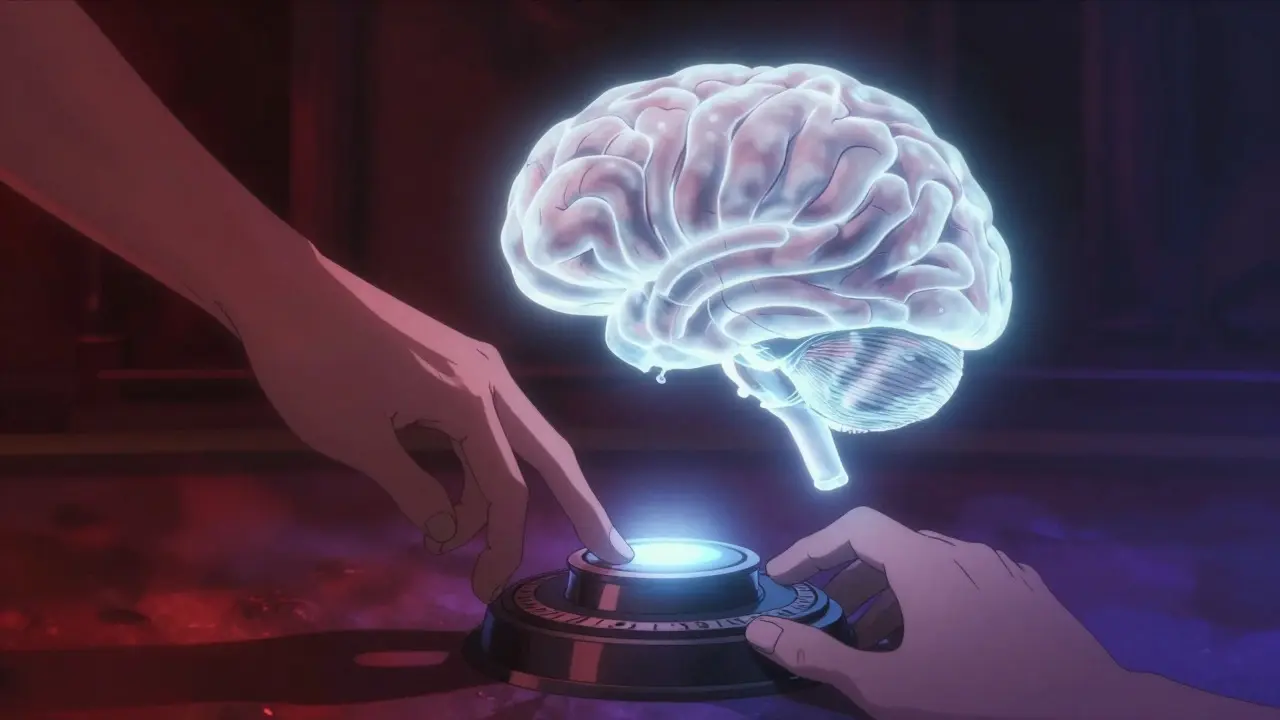
Effective PNE uses metaphors. The "smoke detector" analogy is common. Another is the "volume knob." Imagine your nervous system has a volume control for pain. Stress, poor sleep, and fear turn the volume up. Exercise, relaxation, and understanding turn it down. These visuals make complex biology accessible.
The best results come when PNE is combined with movement. Education alone helps, but adding graded exercise or manual therapy boosts outcomes by 30-40%. The education gives you the confidence to move; the movement reinforces the new neural pathways. It is a powerful feedback loop.

Does it really work? Patient reports suggest yes. On online forums, users share stories of reclaiming their lives. One patient with chronic back pain described how the smoke alarm metaphor helped them return to hiking after years of avoidance. They reduced opioid use by 75%. Another nurse with fibromyalgia cut her medication intake from six pills a day to one every three days after a six-session PNE program.
But it is not magic. Some patients find the science overwhelming. About 17% of negative reviews cite "too much science" as a barrier. Others expect immediate pain elimination. PNE does not promise zero pain. It promises better function and less suffering. Managing expectations is crucial. About 28% of patients in one study dropped out early because they wanted a quick fix, not a mindset shift.
If you have chronic pain, ask your healthcare provider if they offer PNE. Look for physical therapists, occupational therapists, or psychologists trained in pain science. Key resources include the book Explain Pain by Butler and Moseley, which is widely regarded as the standard text.
For clinicians, implementing PNE requires training. The learning curve is 3-6 months. Courses like the one offered by the International Spine and Pain Institute provide structured education. The key is practice. Learning to translate neurobiology into plain language takes time. But the payoff is huge: empowered patients who take charge of their recovery.
PNE is evolving. Researchers are testing it in acute settings, like post-surgical care. Virtual reality platforms are being developed to deliver immersive PNE experiences. Early trials show VR improves knowledge retention by 30%. With the global market for non-pharmacological pain care growing at 14.2% annually, PNE is poised to become even more central. As we move away from opioids and toward functional outcomes, understanding the brain’s role in pain is no longer optional-it is essential.
PNE is most effective for chronic pain lasting more than three months. It is less useful for acute injuries where tissue damage is the primary cause of pain. It may also be challenging for individuals with severe cognitive impairments or very low health literacy, as it requires understanding abstract concepts.
A standard PNE session typically lasts between 30 and 45 minutes. It can be delivered individually or in groups. Often, PNE is integrated into ongoing physical therapy, with concepts reinforced over multiple visits.
PNE is not a replacement for necessary medical interventions. However, it can reduce the need for high-dose medications by lowering pain perception and improving function. Many patients report reducing opioid use significantly after PNE. It works best alongside other treatments like exercise.
Both address the psychological aspects of pain. CBT focuses on changing thought patterns and behaviors. PNE focuses on educating the patient about the neurobiology of pain to reduce threat. Studies show PNE has slightly higher patient satisfaction (68% vs 62%), while CBT may be stronger for comorbid depression.
Look for physical therapists, occupational therapists, or pain psychologists who mention "pain science," "neuroeducation," or "biopsychosocial approach" in their profiles. The International Spine and Pain Institute offers a directory of certified practitioners. Ask your current provider if they incorporate PNE principles.