

Select your symptoms, budget, and lifestyle to get personalized treatment recommendations based on the latest clinical evidence.
Living with dry eyes isn’t just about discomfort-it’s about struggling to read, drive at night, or even sit in front of a screen without burning or blurry vision. If you’re one of the millions affected, you’ve probably tried every over-the-counter drop, blinked through the irritation, and wondered if there’s a better way. The truth is, dry eye isn’t just a lack of tears. It’s often a broken system: your eyes aren’t making enough of the right kind of fluid, or what you do make evaporates too fast. And yes, medications can help-but not all of them work the same, and not all are worth the cost.
Dry eye disease (DED) affects around 16 million adults in the U.S. alone, and globally, between 5% and 50% of people deal with it. It’s not just aging. Screen time, air conditioning, contact lenses, and even certain medications like antihistamines or antidepressants can trigger it. The real issue? Your tear film has three layers: mucus, water, and oil. If the oil layer fails-which happens in 86% of cases-your tears evaporate like puddles in summer heat. That’s why simply adding water (like with basic eye drops) often doesn’t fix the problem long-term.
Doctors now classify dry eye into two types: aqueous-deficient (not enough water) and evaporative (oil layer gone). Knowing which one you have changes everything. If you’re in the evaporative camp-and most are-you need something that seals in moisture, not just adds more liquid.
Most people start with artificial tears. They’re cheap, easy to find, and often the first step. But not all are created equal. The active ingredients tell the story:
Low-viscosity drops (like Refresh Tears) are fine for daytime use. You can use them 4-6 times a day without blurring your vision. But if you’re waking up with grittiness or redness, you likely need a high-viscosity gel or ointment-like Refresh Celluvisc. These last 4-6 hours, but they blur vision for 10-15 minutes after use. That’s why they’re best used at night.
Here’s the catch: OTC drops don’t treat inflammation. They just mask symptoms. If you’re using them more than 4 times a day and still struggling, you’re probably past the point where lubricants alone will help.
When artificial tears fail, doctors turn to prescription options. Each works differently-and understanding how they work helps you decide if they’re right for you.
Approved in 1998, cyclosporine is still the most widely prescribed dry eye medication. It’s not a tear replacement-it’s an immune modulator. It calms down inflammation in your tear glands so they can start producing tears again. But here’s the catch: it takes 3 to 6 months to work. And in the meantime? You’ll feel burning. A 2023 study found 17% of users stopped using it because of that discomfort. The good news? Generic versions cost $150-$250 a month now, down from $500-$600. And in clinical trials, users saw a 13.9-point improvement on the Ocular Surface Disease Index (OSDI) after 6 months-compared to just 9.6 for placebo.
Approved in 2016, Xiidra targets a different part of the inflammation chain. It blocks T-cells from attacking your eye surface. The big advantage? Relief can start in as little as 2 weeks. But it comes with a downside: 25% of users report stinging or burning right after applying it. Reviews on Drugs.com average 5.6/10, with many users saying the discomfort made them skip doses. If you need faster relief than cyclosporine offers, this is a strong option-but you’ll need to push through the first few weeks.
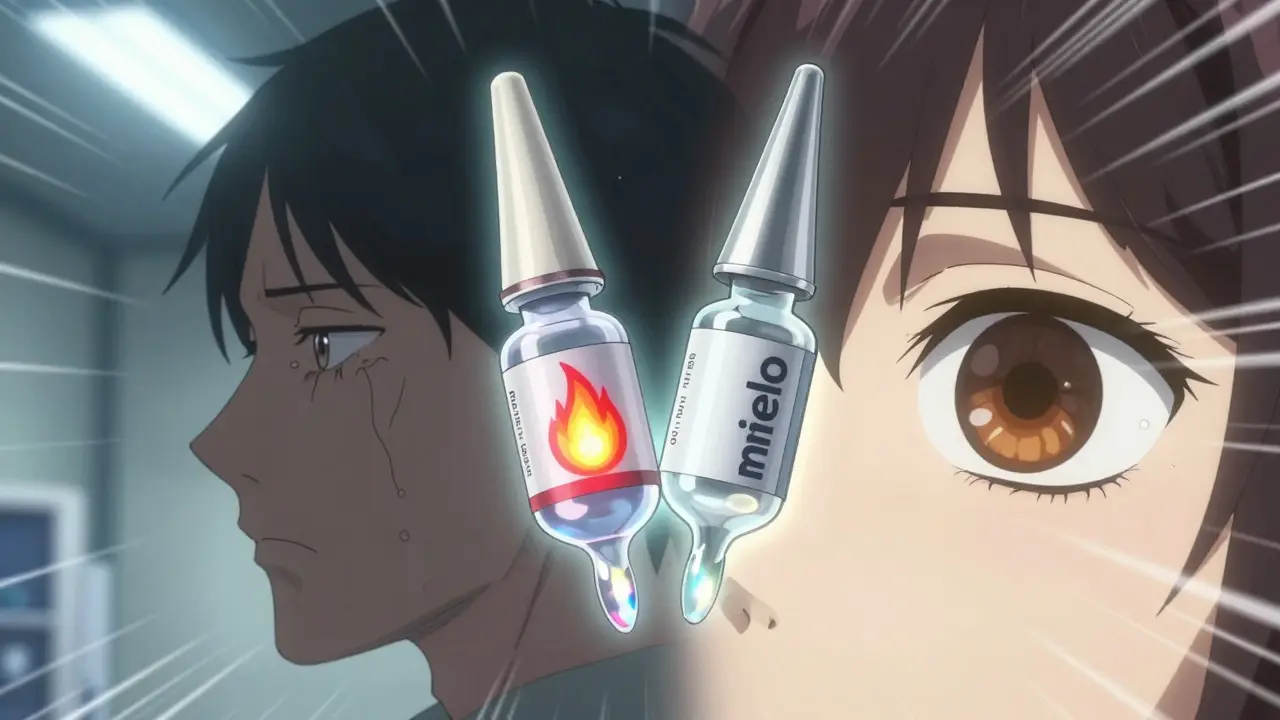
This is the newest player, approved in 2023. Unlike other drops, Miebo doesn’t add water. It adds a thin, invisible shield over your eye that stops tears from evaporating. Think of it like a waterproof coating for your eye. Users report immediate relief-no waiting months. In FDA trials, Miebo improved dryness symptoms 1.5 times more than placebo at 15 days. And only 0.16% of users quit because of side effects. That’s nearly 100 times fewer than with Restasis. The downside? It costs about $650 for a 30-day supply. Insurance often requires you to try cheaper options first. But for people with severe evaporative dry eye, it’s a game-changer.
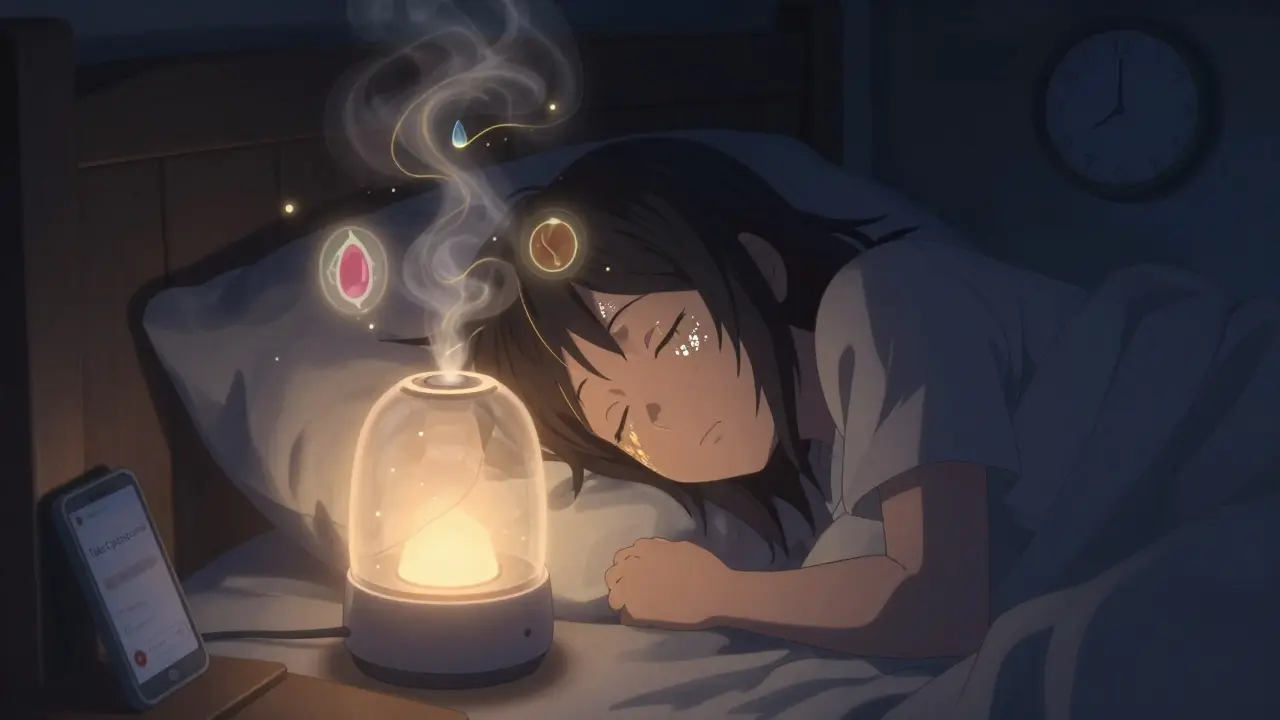
Here’s something you can do tonight: turn on a humidifier. It sounds basic, but it’s one of the most effective, low-cost tools you have. Dry air-especially from heaters in winter or AC in summer-sucks moisture out of your eyes. A 2024 survey of 342 dry eye patients found that 72% saw major improvement in nighttime symptoms when they kept their bedroom humidifier at 40-60% humidity.
You don’t need a fancy model. A simple cool-mist humidifier placed near your bed works. Clean it weekly to avoid mold. Run it while you sleep. If you work in an office with dry air, consider a small desktop humidifier. It’s not a cure, but it reduces the strain on your eyes so your drops work better.
There’s no one-size-fits-all solution. Your best path depends on your symptoms, budget, and how fast you need relief.
Many people find success combining treatments. One patient told me, "I use Miebo in the morning, Restasis at night, and run the humidifier while I sleep. My eyes haven’t felt this good in 10 years."
Even the best treatments fail if you don’t use them right. Here are common mistakes:
Adherence is the biggest problem. Only 52% of people on cyclosporine stick with it after six months. The solution? Set phone reminders. Keep drops in your bathroom next to your toothbrush. Use the refrigeration trick. And if you’re struggling, talk to your eye doctor-you might need a different option.
The dry eye market is growing fast. By 2029, it’s expected to hit $7.89 billion. New drugs are in the pipeline. One called Reproxalap, expected to be approved by late 2024, reduces redness and boosts tear production. There’s also growing interest in neurostimulation devices that trigger tear production through gentle electrical pulses.
But for now, the most effective strategy remains simple: identify your type of dry eye, match the treatment, and don’t neglect environmental support. Humidifiers, proper drop use, and consistency matter more than chasing the newest, priciest option.
If you’ve tried three months of consistent treatment with no improvement, it’s time for a specialist. They can test your tear osmolarity, check your oil gland function, and rule out autoimmune conditions like Sjögren’s syndrome. Dry eye isn’t just an annoyance-it can damage your cornea if left untreated. Don’t wait until it’s too late.
Yes, most artificial tears are safe for daily use, especially if they’re preservative-free. Use low-viscosity drops 3-4 times a day for mild dryness. If you need more than 6 doses a day, talk to your doctor-you might need a prescription treatment instead.
Burning is common with prescription drops like cyclosporine or lifitegrast because they target inflammation, which can irritate already sensitive eyes. Refrigerating the drops before use helps. If the burning lasts more than 30 seconds or gets worse, switch to a preservative-free OTC option and consult your doctor.
Yes. Studies show that maintaining indoor humidity between 40% and 60% significantly reduces overnight dryness and improves comfort. Dry air from heating or air conditioning increases tear evaporation. A simple humidifier in your bedroom can make a noticeable difference.
For people with severe evaporative dry eye who haven’t responded to other treatments, yes. Miebo works immediately, has almost no side effects, and improves tear retention better than most alternatives. But it’s not for everyone. If you have mild symptoms or budget limits, start with cheaper options like cyclosporine and humidifiers first.
It varies. Artificial tears work instantly but last only 1-2 hours. Xiidra can show improvement in 2 weeks. Cyclosporine takes 3-6 months. Miebo works within hours. Patience is key for long-term treatments-but if you need relief now, Miebo or Xiidra are better choices.

jared baker
Been dealing with dry eyes for years. Started with generic tears, then tried Restasis. Burned like hell for 4 months, but finally noticed a difference. Now I use sodium hyaluronate during the day and a gel at night. Humidifier in the bedroom? Non-negotiable. My eyes haven't felt this good since I was 20.
Michelle Jackson
People act like dry eye is some mysterious disease but it's just laziness. Stop staring at screens. Stop wearing contacts. Stop using air conditioning. Do you even know what your eyes are for? They're not for scrolling TikTok at 2 a.m. Simple fix: stop doing the thing that broke them.
becca roberts
Oh wow. So Miebo works in hours? And costs $650? That's like buying a new iPhone for your eyeballs. Meanwhile, I'm over here with a $12 humidifier and a $15 bottle of drops. Sometimes I wonder if Big Pharma just invented dry eye so they could sell us $500 solutions to problems we created by living inside plastic boxes.
Andrew Muchmore
Humidifier is the cheapest and most effective tool here. No debate. If you're not using one, you're making this harder than it needs to be. Also, preservative-free drops. Always. BAK is poison for your cornea. That's not opinion. That's science.
SNEHA GUPTA
It's interesting how we treat the body as a machine that can be fixed with chemicals, yet ignore the environment that shapes its function. Our eyes evolved under natural humidity, not 15% indoor air from HVAC systems. We've created a modern illness by design. Maybe the solution isn't more drugs, but relearning how to live.
Gaurav Kumar
USA spends billions on eye drops while India still uses natural remedies like aloe and warm coconut oil. We overmedicate everything. Why not try traditional methods before paying $650 for a chemical shield? Our ancestors didn't need Miebo. They had wisdom. We have credit cards.
David Robinson
Let me tell you about my friend who used Xiidra. She said it burned like hell. She quit after a week. Then she tried Restasis. Same thing. She cried. She stopped. Now she's back on OTC drops. She's 32. She works on a laptop 12 hours a day. She doesn't use a humidifier. She doesn't blink. She just thinks the drops will fix her. They won't. The system is broken. Not the eyes. The lifestyle. And nobody wants to hear that.
gemeika hernandez
I tried everything. Miebo, Restasis, Xiidra. I cried every time I put them in. I felt like my eyes were being stabbed. I thought I was going crazy. Then I bought a $20 humidifier from Target. I turned it on. I slept. I woke up and my eyes didn't feel like sandpaper. I haven't used a prescription drop in 6 months. I just use the humidifier and a $12 bottle of drops. Sometimes the simplest thing is the answer. I just needed someone to say it out loud.
Nicole Blain
humidifier + sodium hyaluronate + no screens before bed = my eyes are actually happy now 🥹
Kathy Underhill
Consistency matters more than the product. I've tried every drop, every device, every expensive solution. The only thing that made a lasting difference was using my treatment the same time every day. No skipping. No excuses. I keep my drops next to my toothbrush. I set a reminder. I don't think about it. I just do it. It's not glamorous. But it works.
Srividhya Srinivasan
Did you know the FDA approved Miebo after a secret meeting with Big Pharma lobbyists? They knew the drug would be unaffordable for 90% of people. It's not about healing. It's about control. Your tears are a commodity now. They're selling you back your own biology. And the humidifier? That's the resistance. Use it. Fight back. Don't let them monetize your blinking.
Prathamesh Ghodke
My mom used to rub warm mustard oil on her eyes before bed. No science. Just tradition. She's 82. Her eyes are still clear. Maybe we're overcomplicating this. Sometimes the answer isn't in a pharmacy. It's in your kitchen.
Stephen Habegger
Just started using the humidifier last week. Already noticed a difference. No more waking up with crusty eyes. Feels like my eyes finally got a good night's sleep. Sometimes the fix is that simple. Don't overthink it. Just try it.