When a patient takes a pill that contains two medicines in one, like a blood pressure drug combined with a diuretic, they’re using a combination product. These aren’t just convenient-they’re critical for managing chronic conditions like HIV, asthma, or eczema. But getting a generic version of these products to market is far harder than copying a single-pill drug. The science behind proving they work the same way-called bioequivalence-is full of unexpected roadblocks. And for generic manufacturers, these challenges mean delays, higher costs, and often, failed attempts.
Why Bioequivalence Is Harder for Combination Products
For a single active ingredient, bioequivalence is straightforward: you compare how fast and how much of the drug enters the bloodstream between the brand and the generic. You measure blood levels over time, calculate AUC and Cmax, and if the generic stays within 80-125% of the brand, it’s approved. Simple.
But when two drugs are combined in one tablet, capsule, or cream, things get messy. Each drug might have different solubility, absorption rates, or interactions. One might slow down the other. One might bind to the other and never get absorbed at all. The FDA requires generic makers to prove bioequivalence not just to the brand combination product, but also to each individual drug taken separately. That means running three-way crossover studies with 40-60 healthy volunteers instead of the usual 24-36. More people. More blood draws. More complexity. And higher failure rates.
A 2023 FDA report found that 25-30% more fixed-dose combination (FDC) bioequivalence studies fail compared to single-entity drugs. One generic company, Viatris, spent over two years trying to get a topical cream for eczema approved. Three studies failed because the drug didn’t penetrate the skin consistently between batches. The issue? No one had defined exactly how deep to measure drug levels in the skin layers.
Topical Products: The Skin Doesn’t Cooperate
Creams, ointments, and foams used for skin conditions are among the toughest to test. Unlike pills that dissolve in the gut, topical drugs have to get through layers of skin to reach their target. The FDA’s current guidance says to use tape-stripping-peeling off 15-20 layers of the outer skin with adhesive strips-and measure how much drug is left in each layer. But here’s the problem: no one agrees on how thick each layer is, how much drug to measure, or even which layer matters most.
This lack of standardization means two labs testing the same product might get wildly different results. One lab might stop at layer 8; another goes to layer 15. The outcome? A product that passes in one lab fails in another. That’s why 60% of topical generic submissions get rejected in the first round. And when regulators ask for clinical endpoint studies-measuring actual improvement in eczema or psoriasis-it gets even worse. Those studies require 200-300 patients per group and cost $5-10 million. Most small generic companies can’t afford that.
New tools are emerging. Pilot studies using in vitro-in vivo correlation (IVIVC) models show that if you measure drug release from the cream and skin penetration in a lab, you can predict how it will behave in people with 85% accuracy. The FDA is watching closely. If this works, it could cut development time by years.
Drug-Device Products: The Device Matters as Much as the Drug
Inhalers, auto-injectors, and nasal sprays are another nightmare. These aren’t just pills or creams-they’re machines. And even tiny differences in how they work can change how much drug reaches the lungs or bloodstream.
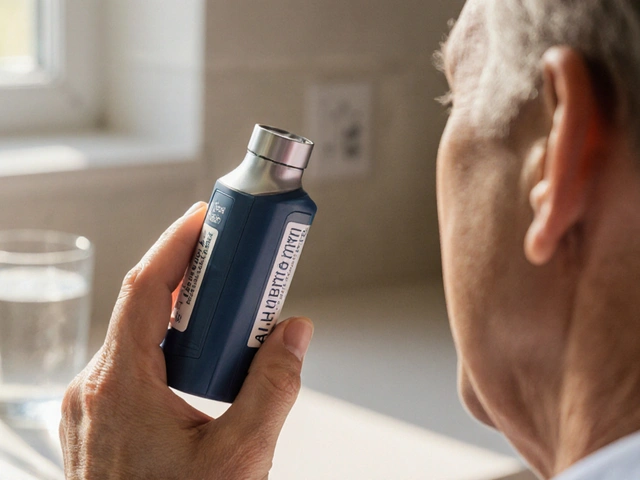
Take an asthma inhaler. The brand version might have a specific valve design, propellant pressure, or actuation force. A generic version might look identical, but if the nozzle is 0.1mm wider, the aerosol particle size changes. And if the particles are too big, they hit the back of the throat instead of reaching the lungs. The FDA requires that generic inhalers deliver 80-120% of the reference product’s aerodynamic particle size distribution. That’s not easy to replicate.
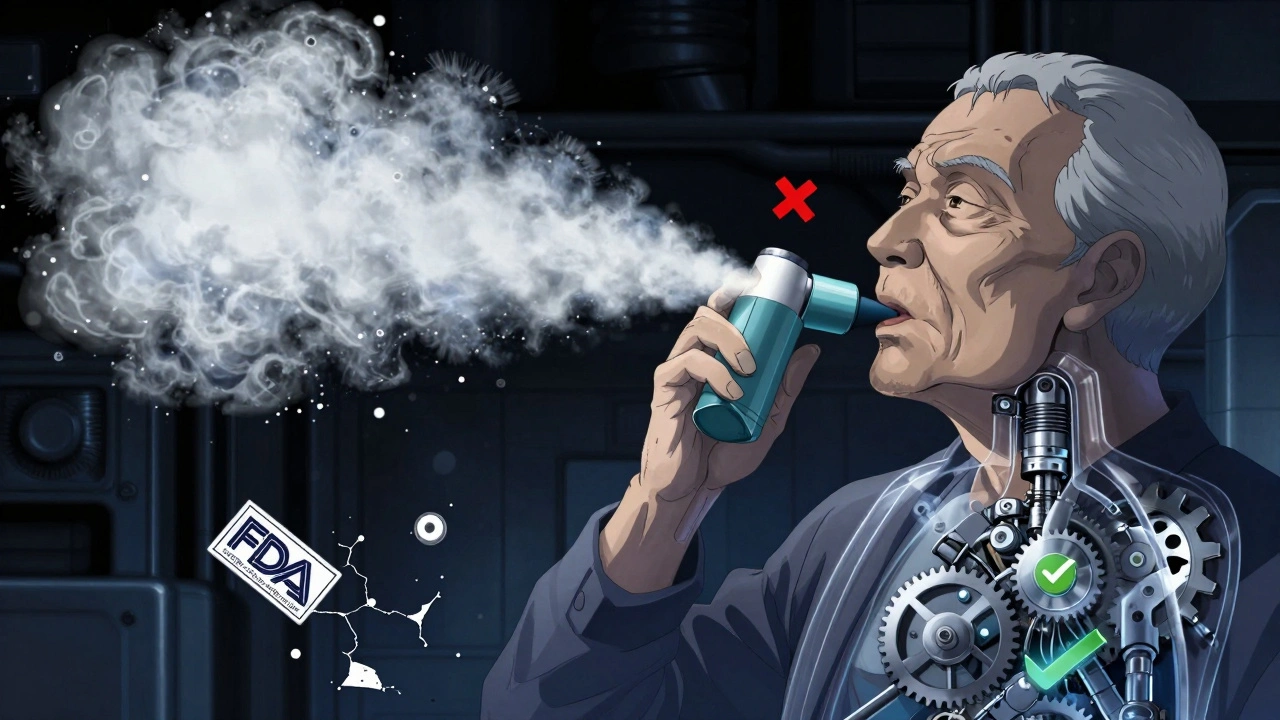
But here’s the real kicker: regulators now require comparative user interface testing. That means they don’t just check if the drug gets delivered-they watch how patients use it. Do they inhale at the right time? Do they hold their breath? Do they clean the device properly? In 2024, 65% of complete response letters from the FDA cited deficiencies in this area. Generic makers now need to hire human factors engineers, run usability tests with elderly patients, record video sessions, and analyze every button press. It’s like testing a smartphone app, but for life-saving medicine.

Modified-Release Formulations: Timing Is Everything
Some combination products are designed to release drugs slowly over hours-like a 12-hour blood pressure pill. For these, bioequivalence isn’t just about how much drug gets in-it’s about when. If the generic releases too fast, you get side effects. Too slow, and the drug doesn’t work.
The FDA requires tighter limits for these: 90-111% instead of the usual 80-125%. That’s a much smaller window. And because these drugs often have a narrow therapeutic index (meaning the difference between a safe dose and a toxic one is small), even small variations can be dangerous.
A 2023 FDA report showed that 35-40% of modified-release FDCs fail their first bioequivalence attempt. One generic company spent $3 million and 18 months trying to match a slow-release diabetes combo. The problem? One of the two drugs was encapsulated in a polymer that degraded differently under humidity. The generic version released too early in the stomach, causing nausea. The fix? Redesigning the entire coating system.
Cost, Time, and the Hidden Barrier
Developing a generic combination product takes 3-5 years and $15-25 million. Bioequivalence testing alone accounts for 30-40% of that cost. Most of that money goes to specialized labs with liquid chromatography-mass spectrometry (LC-MS/MS) systems-machines that cost $300,000 to $500,000 and need technicians with years of training just to run them properly.
Small and mid-sized generic companies are getting squeezed. According to a 2023 survey by the Complex Generic Consensus Group, 89% of companies said current bioequivalence requirements for combination products are “unreasonably challenging.” Many don’t have the resources to hire human factors experts, run large clinical studies, or afford multiple failed attempts.
The result? Fewer generics. The FDA’s 2023 GDUFA report showed that complex product ANDAs take 38.2 months to approve-almost three times longer than standard generics. And with patent thickets getting thicker, some brand-name combination products won’t see a generic competitor until 2030.
What’s Changing? New Tools and New Rules
The FDA isn’t ignoring the problem. In 2021, they launched the Complex Product Consortium, bringing together regulators, industry, and academics to build product-specific guidance. So far, they’ve issued 12. One for a popular HIV combo (dolutegravir/lamivudine) now requires simultaneous bioequivalence testing for both drugs in the same study. Another for inhaled corticosteroids now accepts IVIVC models as a substitute for human trials.
Physiologically-based pharmacokinetic (PBPK) modeling is gaining traction. It uses computer simulations to predict how a drug behaves in the body based on its chemistry, the patient’s physiology, and how the product is made. Seventeen generic approvals since 2020 used PBPK to reduce or eliminate clinical testing. One company cut their clinical study from 60 patients to just 12-and saved $2 million.
The FDA is also working with NIST to create reference standards for complex products. Think of them like calibrated weights for drug testing. If every lab uses the same reference material, results become comparable. Initial standards for inhalers are expected by late 2024.
What This Means for Patients and Healthcare
The global market for complex generics hit $112.7 billion in 2023. That’s 38% of all generic drug sales. But without solutions to these bioequivalence challenges, we risk losing access to affordable versions of some of the most important medicines.
Generic drugs saved the U.S. healthcare system $373 billion in 2020. If we can’t solve the testing problems for combination products, we could lose billions more in savings over the next decade. Patients with chronic diseases-especially those on expensive, multi-drug regimens-will keep paying more. Insurance companies will keep pushing back. And doctors will keep prescribing brand-name drugs simply because generics aren’t available.
The path forward isn’t about making the rules stricter. It’s about making them smarter. Using better science. Leveraging modeling. Standardizing measurements. And listening to the companies trying to make these drugs.
The technology exists. The data is there. What’s missing is consistent, predictable, and realistic pathways for developers. Until then, the biggest barrier to affordable combination therapies isn’t science-it’s regulation that hasn’t caught up with the medicine of today.
Why can’t generic manufacturers just copy the brand’s formula for combination products?
Because combination products aren’t just mixtures-they’re engineered systems. Two drugs in one tablet can interact chemically or physically, changing how each one dissolves, absorbs, or is metabolized. Even if the ingredients are identical, differences in manufacturing-like particle size, coating thickness, or binding agents-can alter performance. The FDA requires proof that the generic performs the same way in the body, not just that it has the same ingredients.
What’s the biggest hurdle for generic inhalers?
The biggest hurdle isn’t the drug-it’s the device. Minor differences in nozzle design, valve timing, or actuation force can change how much drug reaches the lungs. The FDA now requires generic inhalers to match the brand’s aerosol particle size distribution within 80-120%. But even more challenging is proving that patients can use the generic the same way they use the brand. Human factors testing, including video analysis of patient use, is now required-and it’s where 65% of applications fail.
Why are topical combination products so hard to test?
Because the skin isn’t a simple barrier-it’s a complex, layered organ. Current FDA guidance requires measuring drug levels by peeling off 15-20 layers of skin with tape strips, but there’s no standard on how deep to go or how much drug to measure. Two labs can test the same product and get different results. This lack of consistency leads to failed studies and delays. New methods using in vitro-in vivo correlation (IVIVC) are promising, but they’re still being validated.
Can computer modeling replace human bioequivalence studies?
Yes, in some cases. Physiologically-based pharmacokinetic (PBPK) modeling simulates how a drug behaves in the body based on its chemistry and the patient’s physiology. As of mid-2024, 17 generic combination products were approved using PBPK models to reduce or eliminate clinical trials. These models can cut study size by 30-50% and save millions. But regulators still require some human data for high-risk products, especially those with narrow therapeutic windows.
How long does it take to get a generic combination product approved?
On average, it takes 38.2 months for the FDA to approve a complex combination product, compared to just 14.5 months for a standard single-drug generic. This delay is due to complex testing requirements, inconsistent regulatory feedback, and frequent requests for additional data. Many companies spend years trying to get one product approved, often submitting multiple times before succeeding.
Why do small generic companies struggle with combination products?
Because the cost and expertise required are out of reach. Developing a combination generic can cost $15-25 million and require specialized labs, human factors engineers, and regulatory consultants. Small companies often lack the capital or staff to handle multiple failed bioequivalence studies. A 2023 survey found that 89% of generic manufacturers consider current requirements unreasonably challenging, especially for small and mid-sized firms.




Gareth Storer
So let me get this straight-we’re spending $25 million and 5 years to make a pill that’s supposed to be cheaper, but the FDA won’t let us copy it unless we prove the skin absorbs it the same way a wizard’s spell would? 😂
Pavan Kankala
This is all a psyop. Big Pharma owns the FDA, NIST, and even the tape-stripping standards. They want you to believe combination drugs are ‘complex’ so you keep paying $1000/month for the brand. Meanwhile, in India, we make these for $2 and nobody’s checking the ‘skin layers’-they just test if the patient stops screaming. Coincidence? I think not.
Martyn Stuart
Let’s be clear: the real issue isn’t the science-it’s the lack of harmonized standards. Tape-stripping? Inconsistent. Human factors testing? Essential-but not if you’re testing on 30-year-old lab rats pretending to be elderly patients. IVIVC and PBPK models are the future, and the FDA’s slowly waking up. But they need to stop treating every FDC like it’s a SpaceX rocket. We’re talking about pills and creams-not quantum computing.
Jessica Baydowicz
Y’all are talking like this is a math problem-but it’s a human problem. Imagine being a diabetic who needs a combo pill but can’t afford it because the FDA made 12 labs test the same cream 3 times each because ‘layer 8 vs layer 15’ matters. Let’s fix the system, not just the science. 💪❤️
Yasmine Hajar
As someone who’s watched my mom struggle with asthma inhalers for 15 years, I can tell you-this isn’t about regulation. It’s about dignity. If a 70-year-old can’t use the generic inhaler because the button clicks differently, that’s not ‘user interface failure’-that’s a failure of empathy. We need to design for humans, not just data points. 🙏
Karl Barrett
The epistemological rupture here is profound: we’ve conflated pharmacokinetic equivalence with ontological identity. The FDA demands that the generic perform identically, yet the very act of manufacturing alters the phenomenological experience of the drug in vivo. This is not bioequivalence-it’s a metaphysical demand for sameness in a world of inherent variance. PBPK models may be statistically valid, but they cannot capture the lived reality of drug absorption in a body shaped by trauma, diet, and circadian rhythm.
Jake Deeds
Wow. So we’re letting a bunch of engineers and ‘human factors experts’ decide whether grandma can breathe? And you call this ‘science’? I’ve seen more rigor in a TikTok dance challenge. This is the same bureaucracy that made me wait 6 months for a prescription refill because the pill was ‘slightly off-color.’ If you want affordable meds, stop over-engineering them.
val kendra
Stop overcomplicating it. If the drug works in the body, that’s what matters. Tape stripping? Overkill. 60-person trials? Waste. PBPK models work. Let’s use them. End of story. 🤷♀️
Isabelle Bujold
There’s a deeper issue here that nobody’s talking about: the global inequity in access to testing infrastructure. A lab in rural India or Nigeria doesn’t have a $500,000 LC-MS/MS machine. So they can’t even enter the race. The FDA’s standards are brilliant-but they’re built for wealthy nations. Until we create tiered pathways based on economic context, we’re not solving access-we’re just moving the gate. And the gate is made of gold.
George Graham
I’ve worked with small generic makers. They’re not lazy. They’re not greedy. They’re just outgunned. One guy told me he had to sell his car to pay for the third bioequivalence trial. We need a fund-like the NIH but for generics. Not more rules. More support. These people are heroes trying to make medicine affordable. Let’s not make them beg for scraps.
John Filby
Just saw the new NIST reference standard for inhalers-looks like a tiny calibration block with a barcode 😍. If this works, it’s a game-changer. Can’t wait to see labs in Ghana and Brazil using the same reference material. 🙌
Elizabeth Crutchfield
so like… if the cream works but the tape strip test says no… does it really work? 🤔
Ben Choy
Love that the FDA is finally listening. PBPK models, reference standards, streamlined guidance-this is how real progress happens. Small wins add up. Keep pushing, folks. We’re getting there. 🙏❤️
Emmanuel Peter
Everyone’s acting like this is a ‘challenge.’ It’s a scam. The FDA doesn’t want generics. They’re paid by Big Pharma. The ‘science’ is just a smokescreen. Look at the revolving door between FDA and pharma execs. 17 PBPK approvals? Coincidence? Nah. They only approve the ones they’re told to. Wake up.