
Your eyes feel gritty. You look in the mirror and notice your gaze looks startled or intense. Maybe you're seeing double when you try to drive at night. If you have a thyroid condition, these aren't just signs of stress or allergies. They could be Thyroid Eye Disease, also known as Graves' orbitopathy or an autoimmune disorder where the immune system attacks tissues around the eyes, causing inflammation, swelling, and muscle enlargement.
This condition is more than just a cosmetic concern. For some, it threatens vision itself. But here is the good news: the landscape for treating this disease has changed dramatically in recent years. With new targeted therapies and better diagnostic protocols, patients who once faced permanent disfigurement now have real hope for recovery.
To understand why this happens, we need to look at how the body’s immune system works. In most cases, Thyroid Eye Disease (TED) is linked to Graves' disease, an autoimmune disorder that causes hyperthyroidism. About 90% of TED cases occur in people with overactive thyroids. However, it can rarely happen with underactive thyroids or even normal thyroid levels.
The root cause lies in antibodies. Specifically, anti-thyroid-stimulating hormone receptor (anti-TSHR) antibodies bind to receptors not just on the thyroid gland, but also on orbital tissues-the fat and muscles behind your eyes. This triggers an inflammatory response. The body essentially mistakes eye tissue for a threat, leading to swelling of the extraocular muscles and expansion of orbital fat.
This process typically follows a biphasic pattern:
According to data from Yale Medicine, TED affects between 90 and 300 individuals out of every 100,000 people. While relatively rare, its impact on quality of life is profound.
Catching TED early is vital because treatments work best during the active inflammatory phase. Many patients initially mistake their symptoms for dry eyes or sinus issues. A 2023 study published in JAMA Ophthalmology found that primary care physicians correctly identified TED in only 32% of initial presentations.
Here are the specific symptoms to watch for:
In severe cases-approximately 5% of all patients-optic nerve compression can occur. This is a medical emergency. Early signs include color vision impairment and blurred vision. Without immediate treatment, permanent vision loss can result.
Diagnosis requires a multidisciplinary approach involving both an endocrinologist and an ophthalmologist, ideally within 30 days of symptom onset. The goal is to assess both thyroid function and the extent of ocular damage.
Standard diagnostic tools include:
Specialized tests like optical coherence tomography (OCT) and orbital ultrasonography help monitor subtle changes in eye structure over time.

The treatment landscape for TED has shifted significantly since January 2020, when the FDA approved Teprotumumab (Tepezza), the first targeted monoclonal antibody therapy specifically designed for Thyroid Eye Disease. Before this, options were limited to steroids, radiation, and surgery.
| Treatment Type | Best For | Efficacy / Outcome | Key Risks / Side Effects |
|---|---|---|---|
| Selenium Supplements | Mild, active TED | Reduces progression to moderate/severe disease by 35% | Minimal; generally well-tolerated |
| Intravenous Glucocorticoids | Moderate-to-severe active TED | Response rates of 60-70% | Hepatic toxicity (15%), glucose intolerance (25-30%) |
| Tepezza (Teprotumumab) | Moderate-to-severe active TED | 71% reduction in proptosis; 68% improvement in diplopia | Muscle cramps (65%), hearing impairment (12%) |
| Orbital Decompression Surgery | Vision-threatening TED or inactive phase | Relieves optic nerve pressure; reduces bulging | Diplopia risk, infection, bleeding |
| Strabismus & Lid Surgery | Inactive phase residual issues | 75-85% success rate in correcting alignment/lids | Overcorrection or undercorrection |
Tepezza targets the insulin-like growth factor-1 receptor (IGF-1R), a key driver of the inflammation and tissue growth in TED. Clinical trials showed dramatic results: a 71% reduction in eye bulging compared to 20% with placebo. Most patients require eight infusions administered every three weeks. While effective, the cost is significant, totaling approximately $44,000 per course, and side effects like muscle cramps and temporary hearing changes are common.
Surgery is reserved for specific scenarios. Orbital decompression is urgent if the optic nerve is compressed. During the inactive phase, strabismus surgery corrects double vision, while eyelid surgery addresses retraction. Success rates for these corrective surgeries range from 75% to 85%, provided they are performed at least six months after the disease has stabilized.
Medical treatment is only part of the equation. Lifestyle choices play a massive role in disease progression. The single most important modifiable risk factor is smoking.
Dr. Raymond Douglas, Director of the Thyroid Eye Disease Program at Cedars-Sinai Medical Center, notes that smoking increases TED risk by 7.7-fold and doubles the likelihood of severe disease. Smokers also respond poorly to steroid treatments. Quitting smoking is not just advice; it is a critical component of the treatment plan.
Other supportive measures include:
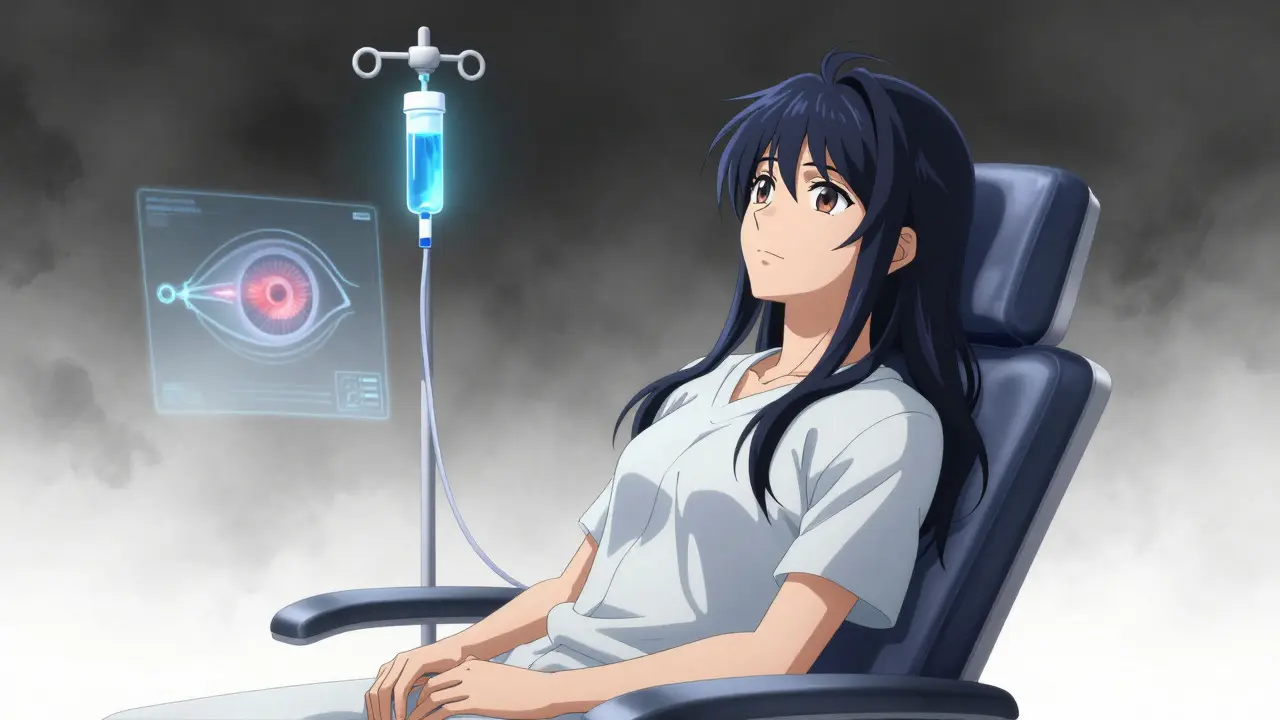
Living with TED takes a heavy emotional toll. A 2022 survey published in the Orbit Journal found that 74% of patients experienced anxiety or depression related to their condition. The change in appearance can lead to workplace discrimination and social withdrawal. 63% of patients report embarrassment about their look.
Support systems are crucial. Organizations like the Graves' Disease & Thyroid Foundation offer patient navigator programs. Digital tools like the 'TED Tracker' app help patients monitor their Clinical Activity Scores and track symptoms between appointments. Connecting with others who understand the journey can alleviate the isolation many patients feel.
Research into TED is accelerating. The global market for TED therapeutics is projected to reach $1.8 billion by 2028. Several promising developments are on the horizon:
The consensus among experts is clear: early intervention is key. The International Thyroid Eye Disease Society recommends starting treatment within six months of symptom onset for the best functional and cosmetic outcomes. If you suspect you have TED, do not wait. Seek specialized care immediately.
While the structural changes caused by Thyroid Eye Disease (TED) are not always fully reversible, significant improvement is possible. Treatments like Tepezza can reduce eye bulging and double vision during the active phase. Surgical interventions during the inactive phase can correct remaining cosmetic and functional issues. Early treatment yields the best chances for near-normal appearance and function.
The active inflammatory phase typically lasts between one to three years. During this time, symptoms like pain, redness, and swelling fluctuate. It is crucial to receive medical treatment during this window, as anti-inflammatory therapies are most effective then. After this phase, the disease enters an inactive state where inflammation stabilizes but tissue damage remains.
Yes, smoking is the most significant modifiable risk factor for TED. It increases the risk of developing the disease by 7.7 times and doubles the chance of it becoming severe. Smokers also tend to respond less effectively to standard steroid treatments. Quitting smoking is considered a critical part of the management plan.
Tepezza (teprotumumab) is a monoclonal antibody injection approved by the FDA in 2020 specifically for TED. It works by blocking the insulin-like growth factor-1 receptor (IGF-1R), which drives the inflammation and tissue growth behind the eyes. Clinical trials showed it significantly reduces eye bulging and improves double vision compared to placebos.
If you have a thyroid condition and experience new eye symptoms like bulging, double vision, pain, or persistent dryness, you should seek evaluation from an ophthalmologist specializing in orbital diseases or neuro-ophthalmology within 30 days. Early diagnosis and treatment during the active phase are essential for preserving vision and improving cosmetic outcomes.