
Imagine taking a few extra pills for a bad headache or combining cold medicine with prescription painkillers, thinking you’re just managing symptoms. You feel fine. But inside your body, a silent crisis is unfolding. Acetaminophen overdose is the leading cause of acute liver failure in the United States, responsible for over 56,000 emergency room visits every year. The danger isn’t just in intentional self-harm; it’s often accidental, born from confusion about dosages or hidden ingredients in everyday medications. Understanding the signs of paracetamol toxicity and knowing how to act quickly can mean the difference between full recovery and fatal organ failure.
We trust acetaminophen because it’s available without a prescription. Sold under brand names like Tylenol® in the US and Panadol globally, it’s a staple in medicine cabinets worldwide. It was first synthesized in 1877 and became widely used in the 1950s. For most people, it’s safe when taken correctly. The standard adult limit is 4,000 milligrams (mg) in 24 hours-roughly eight 500 mg tablets. However, this safety margin shrinks dramatically if you drink alcohol regularly, have existing liver conditions, or are malnourished.
The real risk comes from "stacking" doses. Many combination drugs contain acetaminophen alongside other active ingredients. Prescription opioids like Vicodin®, Percocet®, and Norco® all include acetaminophen. If you take one of these for back pain and then add two over-the-counter Tylenol® pills for a fever, you might unknowingly exceed the safe daily limit. According to patient forums, nearly 70% of people are unaware that their prescription painkiller contains acetaminophen. This lack of awareness turns routine pain management into a potential medical emergency.
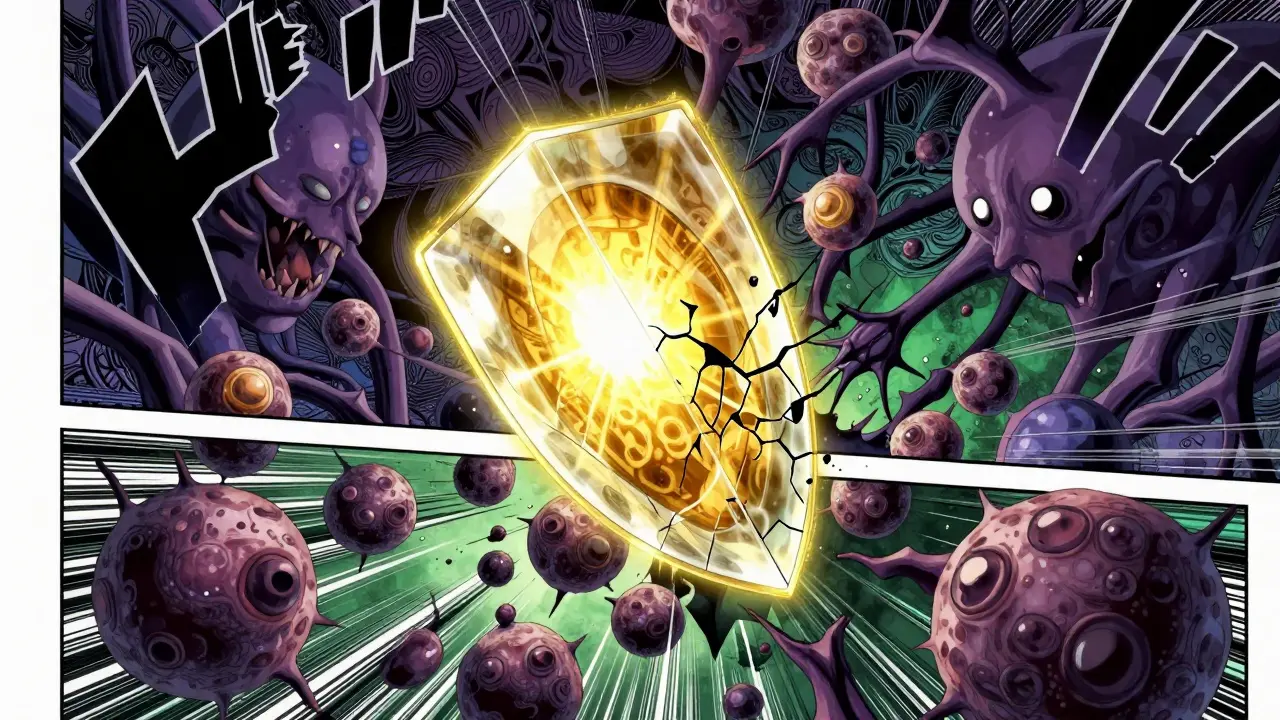
To understand why an overdose is so dangerous, you need to look at what happens inside your cells. When you take acetaminophen, your liver breaks it down. Most of it is processed safely and excreted. But a small portion is converted into a toxic byproduct called N-acetyl-p-benzoquinone imine (NAPQI). Normally, your liver neutralizes NAPQI using a protective antioxidant called glutathione. Think of glutathione as a shield. As long as you have enough shield, you’re safe.
In an overdose scenario, the production of NAPQI overwhelms your glutathione stores. Once the shield is depleted, NAPQI attacks liver cells directly, causing oxidative damage and cell death. This process doesn’t happen instantly. It follows a predictable timeline. The severity of the damage depends on how much acetaminophen was taken and how quickly treatment begins. Factors like chronic alcohol use increase the risk three to four times because alcohol also depletes glutathione and induces enzymes that produce more NAPQI.
Recognizing the stages of acetaminophen poisoning is critical because early symptoms can be misleading. Many people feel relatively normal in the first day, which leads them to delay seeking help. Here is how the toxicity progresses:
Time is the most important factor in treating acetaminophen overdose. The antidote, N-acetylcysteine (NAC), works by replenishing glutathione stores before irreversible liver damage occurs. Studies show that NAC is 98% effective if given within 8 hours of ingestion. After that window, effectiveness drops significantly-to 75% between 8-15 hours, and only 55% after 15 hours. Every hour of delay increases the mortality risk by 8.5%.
If you suspect an overdose, do not wait for symptoms to worsen. Go to the emergency department immediately. Doctors will likely administer activated charcoal if you arrive within 1-2 hours to prevent further absorption. They will draw blood to measure acetaminophen levels at the 4-hour mark and plot them on the Rumack-Matthew nomogram, a tool that determines whether NAC treatment is necessary based on the concentration of the drug in your blood.
| Time Since Ingestion | Treatment Efficacy | Risk Level |
|---|---|---|
| Within 8 hours | 98% | Low (with treatment) |
| 8 to 15 hours | 75% | Moderate |
| After 15 hours | 55% | High |
| No treatment | 0% | Critical (25-40% mortality) |
The standard treatment involves an intravenous infusion of NAC over 21 hours. The protocol starts with a high loading dose, followed by lower maintenance doses. While the IV drip can cause side effects like flushing or rash, it is life-saving. In cases where liver failure has already set in, doctors monitor specific markers known as the King’s College Criteria. If a patient’s blood pH drops below 7.3, their INR (a measure of clotting time) exceeds 6.5, and creatinine levels rise above 3.4 mg/dL, the mortality rate approaches 100% without a liver transplant.
Luckily, transplants are rare, needed in only 1-2% of severe cases. For those who survive, the prognosis is generally good. About 92% of survivors see their liver function return to normal within three months. The liver is remarkably resilient, capable of regenerating itself once the toxic insult is removed. However, 8% of patients may experience mild, persistent enzyme elevations that require ongoing monitoring.
Prevention starts with label literacy. Always check the "Active Ingredients" section on any medication box. Look for acetaminophen, APAP, or paracetamol. Keep a running total of how much you’ve taken throughout the day, including combination products like NyQuil®, Theraflu®, and prescription pain relievers. If you consume alcohol regularly, discuss your medication regimen with your doctor, as your safe dosage limit may be lower than 4,000 mg. Public health initiatives, such as FDA-mandated labeling changes in 2011, have helped reduce acute liver failure cases by 21%, but individual vigilance remains the best defense.
The earliest signs usually appear within the first 24 hours and include nausea, vomiting, and loss of appetite. However, many people feel fine initially. Later signs (24-72 hours) include pain in the upper right abdomen, sweating, and pallor. By 72-96 hours, severe symptoms like jaundice (yellow skin/eyes), confusion, and abdominal swelling occur.
For most healthy adults, taking more than 4,000 mg (4 grams) in 24 hours poses a significant risk. However, individuals who drink alcohol heavily, have pre-existing liver disease, or are malnourished can suffer liver damage at much lower doses, sometimes as low as 2,000-3,000 mg per day over several days.
Yes, if treated early. The antidote N-acetylcysteine (NAC) is highly effective when administered within 8 hours of ingestion, preventing further damage and allowing the liver to regenerate. Even if treatment is delayed, NAC can still provide benefit, though the risk of permanent damage or failure increases.
No, drinking water does not flush out acetaminophen effectively enough to prevent toxicity. The liver must metabolize the drug. Relying on hydration instead of seeking medical attention can waste precious time during the critical 8-hour treatment window. Medical interventions like activated charcoal or NAC are required.
Many over-the-counter cold, flu, and sleep aids contain acetaminophen, including Tylenol®, Excedrin®, NyQuil®, TheraFlu®, and Sudafed PE. Prescription combinations include Vicodin®, Percocet®, Norco®, and Roxicet. Always read the active ingredient list to avoid accidental doubling up.