

Imagine walking into a massive hospital complex, knowing you have a critical appointment, but having no way to read the signs or the printed instructions on your medication. For millions of people, this isn't a hypothetical scenario-it's a daily struggle. When health information is locked behind visual formats, it doesn't just create a nuisance; it creates a dangerous gap in care. Research shows that patients with vision loss experience over twice as many medication errors as sighted patients when audio alternatives aren't available. That's a staggering statistic that proves accessibility isn't just about convenience-it's about safety.
The good news is that the landscape of audio resources for visually impaired patients is changing rapidly. We've moved far beyond simple tape recorders. Today, a combination of government-funded libraries, smart apps, and high-tech hospital beacons is helping patients regain their independence. Whether you're a patient looking for tools or a provider trying to make your clinic more inclusive, understanding these auditory channels is the first step toward equitable healthcare.
For many, the smartphone is the most powerful accessibility tool they own. There are several specialized apps designed to turn written medical documents, website summaries, and books into clear speech. Voice Dream Reader is a versatile text-to-speech app that reads aloud from websites, computer files, and online books. Supporting over 30 languages and 100 voices, it's a go-to for patients who need to digest long medical reports or insurance documents without relying on a sighted assistant.
If you need something that handles physical paper-like a printed discharge summary- KNFBReader is an advanced tool that converts printed text to speech with nearly 99% accuracy. It can process a document in under three seconds, which is a lifesaver when you're trying to double-check dosage instructions on a printed slip before taking a pill.
For more comprehensive learning, the BARD Mobile app from the National Library Service (NLS) provides access to nearly 50,000 titles. While it's great for general literature, its expanding medical content library is an invaluable resource for patients who want to research their conditions through curated, high-quality audiobooks rather than fragmented web searches.
| Tool | Primary Use | Cost (Approx.) | Best Feature |
|---|---|---|---|
| Voice Dream Reader | Digital documents/Web | $29.99 | Multi-language support |
| KNFBReader | Printed paper to speech | $99.00 | High accuracy (98.7%) |
| BARD Mobile | Books & Medical literature | Free (Eligible users) | Massive curated library |
| Seeing Eye GPS | Turn-by-turn navigation | $99/year | 3-meter precision |
Getting to the hospital is one thing; finding the cardiology wing inside a 200,000-square-foot building is another. Traditional GPS often fails indoors, leaving visually impaired patients dependent on staff who may be too busy to guide them. This is where RightHear enters the picture. RightHear is a Talking Signage system that uses Bluetooth beacons and GPS to provide location-specific audio info.
Unlike a standard map app, this system tells the user exactly where they are in real-time-like "You are now passing the pharmacy" or "The elevator is 10 feet to your left." Hospitals using this tech have seen a nearly 50% drop in navigation assistance requests, which means patients feel more confident and staff can focus more on clinical care. It removes the anxiety of the unknown, turning a stressful maze into a manageable path.
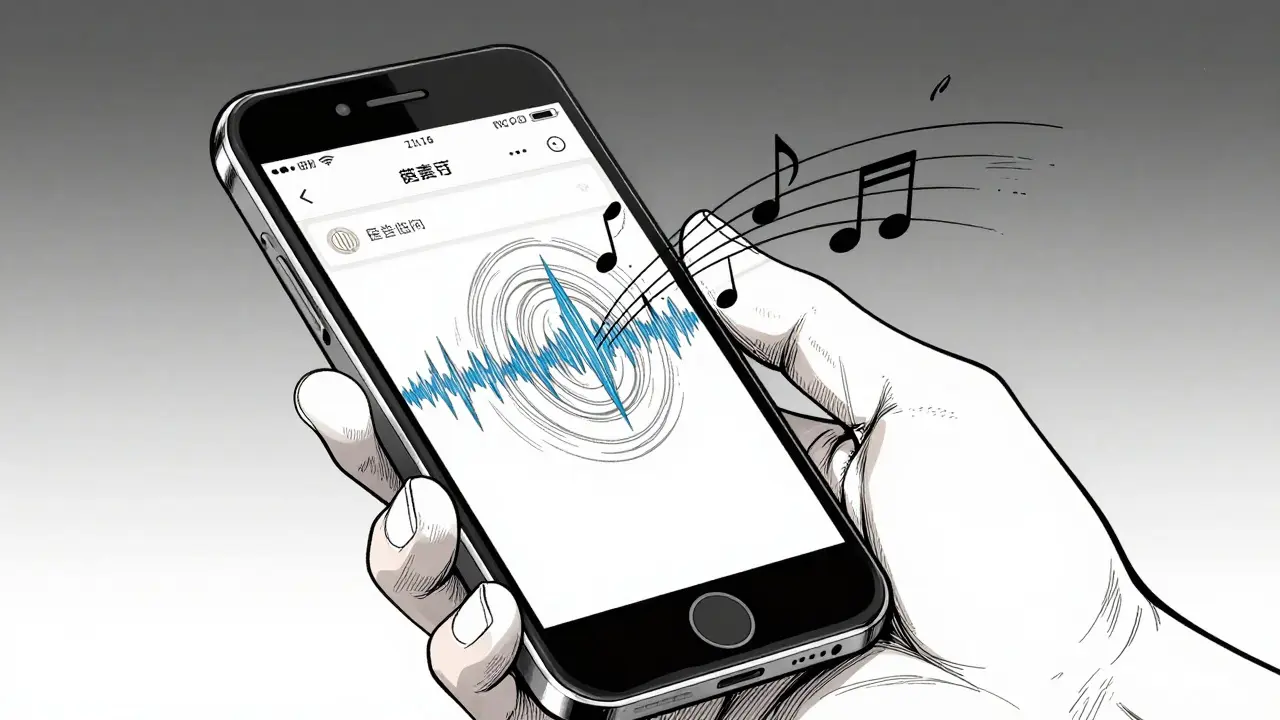
Some might view audio resources as "extra" or "nice to have," but the medical data says otherwise. When a patient can't read their own instructions, the risk of adverse events spikes. Dr. Roxana Mehran from Mount Sinai noted that audio-based delivery can reduce adverse events by about 31% because it directly improves how patients understand their medications and keep their appointments.
The risk is particularly high with medication. A report in JAMA Internal Medicine highlighted that visually impaired patients are 2.3 times more likely to make medication errors when audio alternatives are missing. Whether it's confusing two similarly shaped bottles or missing a "do not take with food" warning, the consequences can be life-threatening. This is why the 21st Century Cures Act now mandates that electronic health records must include audio output capabilities.
For healthcare providers, moving toward an audio-first approach requires more than just buying an app. It requires a shift in protocol. The Centers for Medicare & Medicaid Services (CMS) suggests a structured communication access plan. If you're managing a facility, here is a practical way to roll this out:
It's also worth noting the digital divide. Not every patient is comfortable with a smartphone; in fact, only about 43% of older visually impaired adults feel confident using them. A truly accessible clinic provides a mix of high-tech apps and low-tech solutions, such as human-read summaries or pre-recorded audio messages.

We are heading toward a world where medical records aren't just read, but "heard" and personalized. Mayo Clinic is already piloting AI-powered audio summaries that can condense a complex medical history into a short, easy-to-understand audio brief for the patient. Imagine a patient waking up and hearing a 30-second AI summary of their day's appointments and medication changes, customized to their specific needs.
Furthermore, we're seeing a push toward real-time audio translation. By 2025, there is a move to ensure that visually impaired patients who don't speak English can still receive the same level of audio-guided care. This intersection of AI, linguistics, and accessibility is where the most significant gains in patient safety will happen.
Yes, the National Library Service (NLS) through the BARD Mobile app provides a massive library of audiobooks and medical literature for free to eligible users. You typically need to go through a certification process to verify your visual impairment, which can take about two to three weeks.
Under the ADA and Section 504 of the Rehabilitation Act, healthcare providers are required to provide "auxiliary aids." You can ask your provider for their "communication access plan." If they don't have one, you can request that your medical records or discharge instructions be provided in an audio format or read aloud by a staff member.
KNFBReader is widely considered one of the best for this specific task because it specializes in converting printed text to speech with very high accuracy (around 98.7%), which is critical for medical safety.
As of January 2023, under CMS Rule 42 CFR §410.152, Medicare does cover audio description services for beneficiaries who have a certified visual disability.
Systems like RightHear use small Bluetooth beacons placed throughout a building. When a patient with the app walks near a beacon, the app triggers a specific audio recording that describes the location or provides directions, functioning independently of the internet once the app is set up.
If you are a patient, start by auditing your current tools. If you're only using a screen reader, try a specialized app like Voice Dream Reader for complex documents. Reach out to the Braille Institute or NLS to get certified for free medical audiobooks.
For providers, the first step is a simple conversation. Ask your visually impaired patients: "How do you prefer to receive your results?" or "Would an audio version of these instructions be more helpful?" Moving from a print-default to an audio-inclusive culture doesn't happen overnight, but it's the only way to ensure that no patient is left in the dark regarding their own health.



Stephen Johnson
It's interesting how we prioritize digital fixes over the basic human element of care. These tools are great for autonomy, but the real shift happens when the system recognizes the person, not just the impairment.
Justin Crice
The integration of Bluetooth Low Energy (BLE) beacons for indoor positioning systems represents a significant mitigation of the 'last mile' navigation latency. However, I wonder about the scalability of such infrastructure in legacy facilities with high electromagnetic interference.
Amber McCallum
People think apps fix everything. They don't. We are just moving our blindness from the world into a screen. It's a fake kind of freedom.
Peter Minto
Why we payin for apps when we got the best tech in the world right here in USA?? Just use a real person!! These expensive apps are probably made in some other country anyway lol
Timothy Brown
Honestly, most doctors couldn't even find these apps if you gave them a map. The training part is where it all falls apart because the staff is usually clueless.
Ryan Wilson
The sheer audacity of calling a $99 annual subscription 'accessible' is a joke. It's a predatory gold-rush on disability. We're essentially taxing people for the privilege of not walking into a wall, which is a grotesque failure of the healthcare industrial complex that treats basic safety as a premium add-on feature.
Abhishek Charan
Actually, the 98.7% accuracy rate is statistically insignificant if the 1.3% error occurs on a critical dosage instruction!!! 🙄 The reliance on OCR is fundamentally flawed when life-critical data is involved!!!! 🚩🚩🚩
Angela Cook
American hospitals should lead the way in this! We have the best resources and we should be forcing every single clinic in this country to adopt these standards immediately to keep our citizens safe!
Kevin Taggart
didnt know about the NLS free books... thx :)
Michael Yoste
I totally get where you're coming from on the cost issue, but isn't it better than nothing? I'm just sad that we have to pay for things that should be basic human rights, but hey, that's just how the world works, right?
Jonathan Hall
While I understand the frustration regarding the pricing structures of these specialized tools, we must acknowledge that the research and development for high-precision indoor navigation is incredibly costly, and while it would be ideal for everything to be free, we have to balance the sustainability of the companies providing these services with the urgent need for accessibility in a world that is still very much designed for the sighted, though I will admit the price points are quite steep for the average patient.