
You pick up your prescription bottle, glance at the label, and see a small line that says "Ref: 3." What does that actually mean? Do you have three pills left? Three weeks of medicine? Or something else entirely?
Confusion over refill information on prescription labels is common but potentially dangerous. It dictates exactly how many additional times you can obtain your medication without requiring a new prescription from your healthcare provider. Misunderstanding this simple detail can lead to running out of essential meds, unnecessary trips to the doctor, or even health complications.
Let’s clear up the mystery behind those numbers so you can manage your medications with confidence.
When you look at a standard prescription label, you’ll typically see the medication name, strength, and dosing instructions at the top. These are the critical safety details. Further down, usually near the bottom, you will find the refill section.
This section looks like "Ref: 5" or "Refills: 0." The number represents the remaining refills authorized by your prescriber. If it says "Ref: 5," you can go back to the pharmacy five more times to get a fresh supply of that same medication without needing to call your doctor for a new script.
Here is where people often trip up: "Ref: 0" does not mean you have zero pills left in the bottle. It means you have zero remaining refills. You still have the current supply in hand, but once that runs out, you must contact your healthcare provider for a new prescription.
According to data from the U.S. Pharmacopeial Convention (USP), refill information is categorized as important content that helps patients maintain medication adherence. However, because it is placed away from the immediate dosing instructions to prevent distraction, patients frequently overlook it until they are already short on medication.
You might wonder why the refill info isn’t right next to the "Take one pill daily" instruction. It’s intentional. Studies show that 68% of medication errors occur when patients misread label information due to cognitive overload.
The FDA labeling resources indicate that while refill information is standardized across U.S. pharmacies, specific formatting varies based on state regulations. For instance, California requires explicit "no refills" statements when applicable, while Texas mandates that refill information include both the total authorized refills and the remaining count.
Pharmacy chains like CVS and Walgreens have adopted color-coded labels to help organize this information. CVS places refill details alongside the prescription number and fill date in the middle section. Independent pharmacies often follow guidelines similar to those recommended by the Pharmacy Association of Nova Scotia, which lists refill counts as a standard element alongside the Drug Identification Number (DIN) and expiration date.
If you are unsure what your label means, ask your pharmacist. They can point out exactly where the refill count sits on their specific label format.
Having refills available doesn’t mean they last forever. This is the most overlooked aspect of prescription management. Most non-controlled prescriptions have a one-year expiration limit from the date the prescription was written or first filled.
Imagine you have a prescription for blood pressure medication with 11 refills. You take it slowly, maybe only using one refill every two months. By month 14, you still have refills listed on the label, but the prescription itself has likely expired. The pharmacy cannot legally dispense the medication, even if the label says "Ref: 8."
Some pharmacies, including Express Scripts, include additional details such as "refill/use by dates" to help patients understand these time limitations. Always check for a secondary date on your label or ask your pharmacist when your refills will expire.
For controlled substances (like certain painkillers or ADHD medications), rules are much stricter. Federal law limits refills to six months from the date of issue, regardless of how many refills were originally authorized. After six months, you need a new prescription, period.
Your ability to use a refill isn't just about what's on the label; it's also dictated by your insurance plan. Understanding this prevents awkward moments at the counter when the computer rejects your request.
Most insurance plans operate on a "days supply" rule. For a 30-day supply:
If you try to refill too early, the system will flag it. If you wait too long, you risk running out. A good rule of thumb is to request your refill 3-5 days before you expect to run out. This buffer accounts for processing delays, especially for controlled substances which may require 72-hour processing time.
A 2022 study published in the American Journal of Managed Care found that patients who understood their refill information-and aligned it with insurance timing-were 37% less likely to experience medication interruption. That’s a significant drop in health risks simply from knowing the numbers.
We’ve all been there. You’re busy, you grab the bottle, and you miss the fine print. Here are the most frequent errors pharmacists see:
Dr. Sarah Thompson, Director of Pharmacy Practice at the American Pharmacists Association, notes that clear refill information reduces medication abandonment rates by 23%. When patients know exactly where they stand, they stick to their regimen.
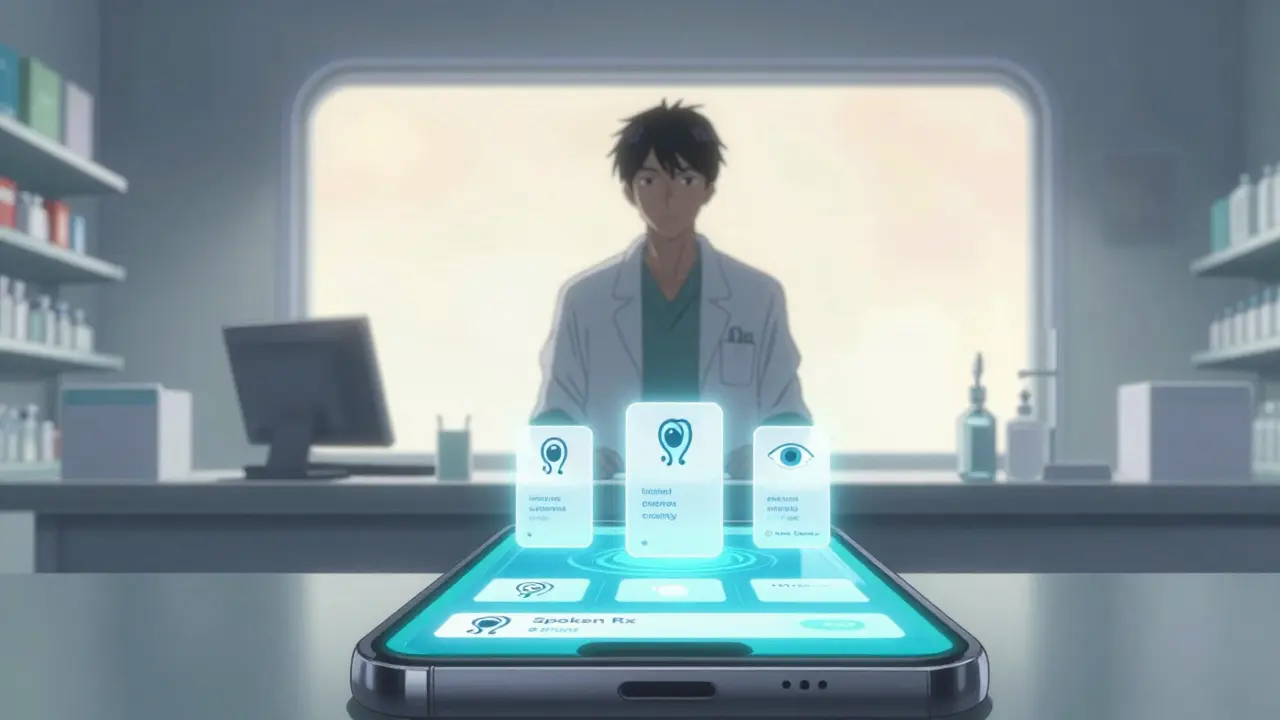
You don’t have to memorize every date and number. Modern pharmacy technology is designed to do the heavy lifting for you.
CVS’s Spoken Rx technology, launched in April 2022, serves 1.7 million users. You scan your prescription bottle with your smartphone, and the app reads aloud the medication names, instructions, and refill status in English or Spanish. This is incredibly helpful for visually impaired patients or anyone who struggles with small print.
Additionally, 85% of U.S. pharmacies are expected to incorporate digital refill reminders through apps or text messaging by 2025. If your pharmacy offers this, sign up. It sends a notification when your refill is ready, removing the guesswork entirely.
Independent pharmacies are also adapting. The National Community Pharmacists Association reports that 94% of independent pharmacies plan to maintain or enhance their refill information systems, recognizing its critical role in patient safety.
Knowing who to call saves time and frustration.
Call your pharmacist if:
Call your doctor if:
Pharmacists are excellent resources for logistical questions, but only your prescriber can authorize new refills or adjust your treatment plan.
It means you have zero remaining refills authorized. You can still use the medication currently in the bottle, but once it runs out, you must contact your healthcare provider for a new prescription. It does not mean the bottle is empty.
Yes. Most non-controlled prescriptions expire one year from the date they were written or first filled. Controlled substances often expire within six months. Even if you have refills left on the label, the pharmacy cannot dispense them if the prescription has expired.
It is best to request a refill 3-5 days before you expect to run out. This gives the pharmacy time to process the order, verify insurance coverage, and handle any potential delays, especially for controlled substances which may take 72 hours to process.
This usually happens due to insurance timing rules. Most plans require a gap between fills (e.g., 23 days for a 30-day supply). If you try to refill too early, the insurance will reject it. Alternatively, the prescription may have expired beyond its legal validity period.
Yes. Your pharmacist has access to the original prescription date and can calculate the expiration window for your refills. Ask them during your next pickup for clarity on when you will need a new script from your doctor.
Start by checking the labels on all your current medications today. Note the "Ref" number and look for any expiration dates. If you aren’t sure, call your pharmacy-they are happy to explain.
Set a recurring reminder on your phone for 5 days before you expect to run low. Use pharmacy apps if available to automate alerts. And remember, if your label says "Ref: 0," don’t panic. Just give your doctor’s office a call to renew your prescription well in advance.
Understanding these small details keeps you healthy, saves you time, and ensures you never miss a critical dose.