When a child breaks out in hives after eating peanut butter, or an adult gets stomach cramps after a slice of pizza, it’s natural to wonder: is this a real allergy? Many people assume skin tests or blood work give clear answers. But the truth is, those tests often lie. They can tell you your body has reacted to a food protein-but not whether that reaction actually causes symptoms. That’s where the oral food challenge comes in. It’s not flashy. It doesn’t involve needles or fancy machines. But for doctors who treat food allergies, it’s the only test that gives a definitive yes or no.
Why Other Tests Fall Short
Skin prick tests and blood tests for IgE antibodies are common first steps. They’re quick, non-invasive, and widely available. But here’s the problem: they’re not reliable enough to make a diagnosis on their own. A positive result doesn’t mean you’ll react when you eat the food. Studies show these tests have a false positive rate of up to 60% for common allergens like egg, milk, and peanut. That means hundreds of thousands of people are told they’re allergic-when they’re not.
Think about it this way: your immune system might recognize peanut protein as a threat, but that doesn’t mean your body will react when you actually eat it. Some people can eat peanut butter without a problem, even if their blood test says they’re allergic. That’s why doctors don’t rely on lab results alone. Without an oral food challenge, many people avoid foods they don’t need to, living with unnecessary restrictions that affect their nutrition, social life, and mental health.
What Happens During an Oral Food Challenge?
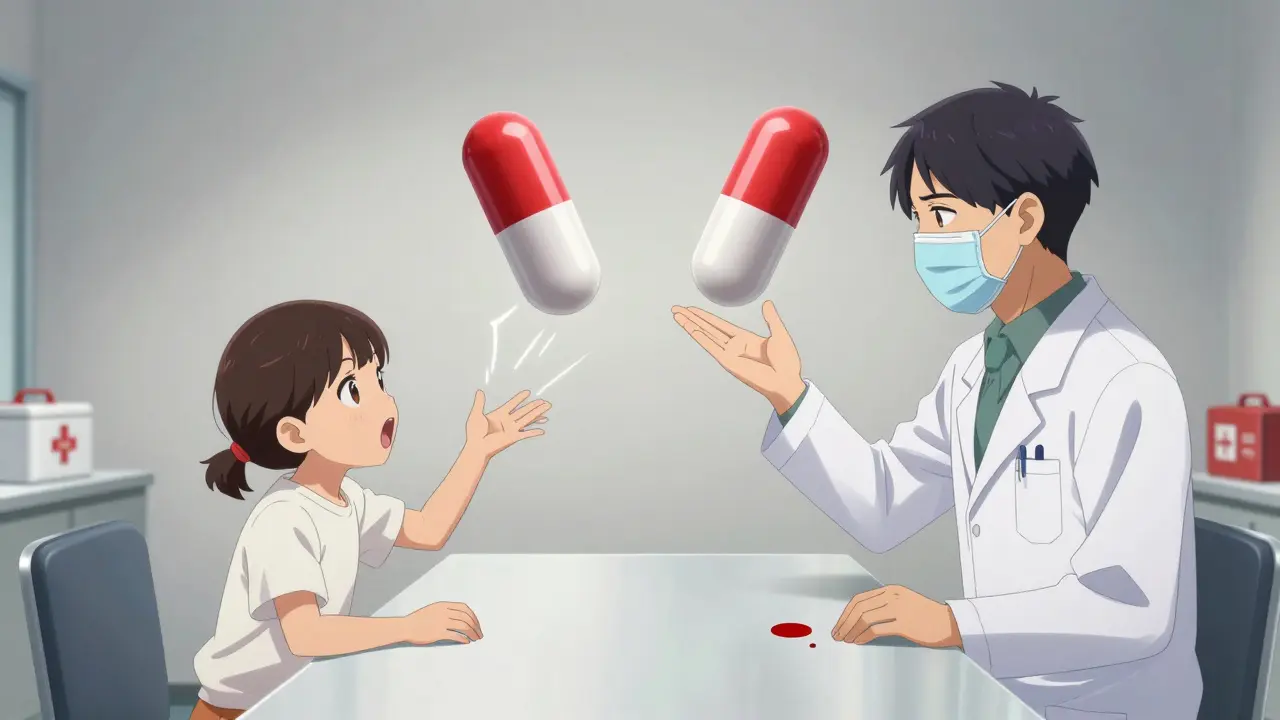
An oral food challenge is simple in concept but tightly controlled in practice. You start with a tiny amount of the food-sometimes as little as 1-2 milligrams, which is less than a grain of rice. That’s diluted in water, mixed into applesauce, or baked into a cookie. You eat it. Then you wait 15 to 30 minutes. If nothing happens, you get a slightly bigger dose. You repeat this process, slowly building up to a full serving, all while being watched by trained medical staff.
The whole thing takes 3 to 6 hours. You’re monitored for signs of a reaction: hives, swelling, vomiting, wheezing, or a drop in blood pressure. The setting is never casual. It’s always in a clinic or hospital with emergency equipment on hand-epinephrine, oxygen, IV fluids-just in case. At least two trained professionals are present: one doctor and one nurse. No exceptions.
There are three types of challenges: open, single-blind, and double-blind. Open means everyone knows what you’re eating. Single-blind means only the doctor knows. Double-blind means neither you nor the doctor knows if it’s the real food or a placebo. The double-blind version is the gold standard for research, but it’s rarely used in practice because it’s complicated and expensive. Most clinics use open challenges because they’re practical and just as accurate for clinical decisions.
How Safe Is It?
It’s natural to be scared. You’re deliberately feeding someone a food they might be allergic to. But here’s what most people don’t realize: serious reactions are rare. About 40 to 60% of challenges result in mild symptoms-usually just a few hives or a flushed face. These are easily treated with antihistamines right in the room. Severe reactions requiring epinephrine happen in only 1 to 2% of cases when protocols are followed correctly. That’s lower than the risk of many common medical procedures.
One parent on a food allergy forum wrote: “My daughter cried through the whole peanut challenge. I was terrified. But when the nurse said, ‘She’s fine, she’s not reacting,’ I cried too.” That moment-knowing your child can safely eat a food they’ve avoided for years-is why families go through this.
The key to safety is preparation. You can’t be sick the day of the challenge. If you have a cold or asthma flare-up, the test gets postponed. Antihistamines must be stopped 5 to 7 days before, because they can hide early signs of a reaction. And you can’t do this at home-unless you’re in a very specific, low-risk case approved by your allergist. Even then, it’s only under strict supervision.
Who Benefits Most?
Oral food challenges aren’t for everyone. If someone had a life-threatening reaction to a food last week, they won’t be tested right away. But they’re essential for three groups:
- People with unclear allergy histories-maybe they had a rash once, years ago, and now they’re told they’re allergic. The challenge clears it up.
- Children who may have outgrown allergies. About 65% of kids with milk or egg allergies outgrow them by age 5. Without a challenge, parents keep avoiding those foods unnecessarily.
- People who’ve been avoiding multiple foods based on positive blood tests but feel fine eating them. The challenge can confirm tolerance and expand their diet.
Dr. Matthew Greenhawt, a leading allergist, says OFCs prevent unnecessary dietary restrictions in 25 to 30% of cases. That’s huge. Avoiding foods you don’t need to can lead to nutrient deficiencies, social isolation, and anxiety. For kids, it can mean missing out on birthday cakes, school lunches, or family dinners.
The Hidden Cost: Time, Stress, and Access
The biggest barrier isn’t safety-it’s access. These challenges take hours. They require specialized staff. Not every clinic offers them. In the U.S., only about 5 to 10% of the 32 million people with food allergies ever get one. That’s because they’re expensive and time-consuming for clinics to run. Many private practices only do 50 to 200 per year.
There’s also emotional weight. Parents report high anxiety before the test. Kids often cry, refuse to eat, or panic when they see the food. That’s why many clinics use tricks: hiding the allergen in baked goods, using capsules, or letting kids pick their favorite food format. One clinic in Bristol even lets children bring a favorite toy or tablet to distract them during the waiting periods.
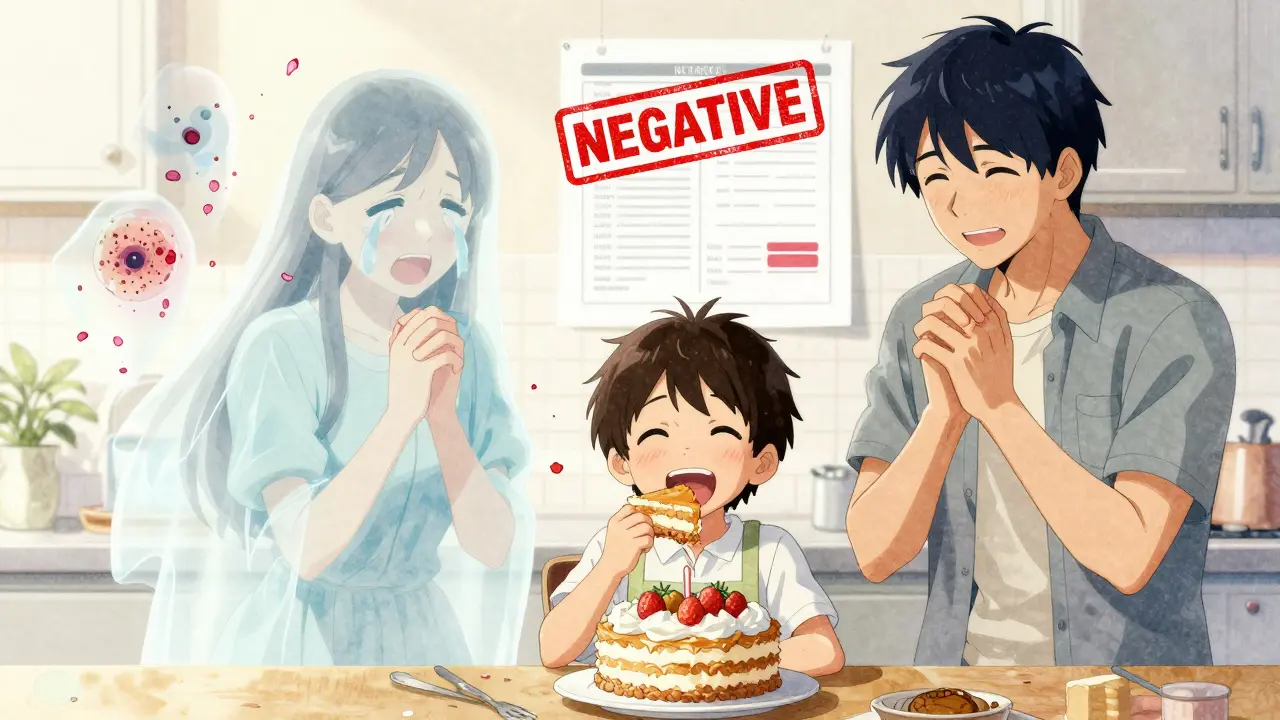
But despite the stress, patient satisfaction is high. Nationwide Children’s Hospital found 89% of families felt the challenge was worth it-even if their child had a reaction. Why? Because they finally had an answer. No more guessing. No more fear.
What’s Next for Food Allergy Testing?
Researchers are working on better blood tests-like component-resolved diagnostics-that look at specific proteins in foods instead of the whole allergen. These can sometimes predict whether someone will have a severe reaction. But they still can’t replace the oral food challenge. Even the best of these tests max out at 85% accuracy. The OFC is still near 100%.
In 2023, the NIH launched a study to create safer, more standardized dosing for high-risk foods like peanuts and tree nuts. Some allergists are now testing home-based challenges for very low-risk cases, like children who’ve only had mild skin reactions in the past. But even then, it’s done under strict guidelines and with emergency plans in place.
The bottom line? No matter how advanced diagnostics get, the oral food challenge remains the gold standard. It’s not perfect. It’s not quick. But it’s the only test that tells you, for sure, whether a food will hurt you-or not.
What to Do Before Your Challenge
If you’re scheduled for an oral food challenge, here’s what you need to know:
- Stop antihistamines 5 to 7 days before the test (ask your doctor which ones).
- Don’t go if you’re sick, have asthma symptoms, or are running a fever.
- Wear loose, comfortable clothing.
- Bring snacks you know your child likes (for after the test).
- Bring distractions: books, tablets, coloring supplies.
- Ask your allergist what the food will look like-is it baked in? Mixed in? Pure?
- Make sure you know the emergency plan: who to call, where to go if something happens after you leave.
What to Expect After
If the challenge is negative-you didn’t react-you’ll get a clear plan: start eating the food regularly at home. Your allergist will likely give you a schedule: daily, then weekly, then as part of your normal diet. This helps keep your tolerance strong.
If you had a reaction, you’ll get a treatment plan and instructions to avoid the food. But even then, you’ll know exactly what you’re dealing with. No more guessing. No more fear of the unknown.
Are oral food challenges dangerous?
Serious reactions are rare-only 1 to 2% of challenges require epinephrine when done under proper medical supervision. Most reactions are mild, like hives or stomach upset, and are treated quickly in the clinic. The procedure is designed with safety as the top priority, with emergency equipment and trained staff always present.
Can I do an oral food challenge at home?
Home-based challenges are only considered in very specific, low-risk cases-like children with a history of only mild skin reactions and a clear, stable allergy history. Even then, it must be approved by an allergist, with a detailed emergency plan, and only after a successful in-clinic evaluation. It is never recommended for people with past severe reactions.
How long does an oral food challenge take?
Most challenges last between 3 and 6 hours. The first 1 to 2 hours involve giving small, increasing doses of the food every 15 to 30 minutes. After the final dose, you’re monitored for another 2 to 3 hours to watch for delayed reactions. Plan to be at the clinic for the full time.
What if my child is too scared to eat the food?
It’s common for children to be anxious. Clinics often disguise the allergen in familiar foods-like baking peanut butter into cookies or mixing it into applesauce. Some use capsules to hide the taste. Staff are trained to work with anxious kids, and many families bring favorite toys, books, or tablets to help distract during waiting periods.
Do I need to stop all medications before the test?
You must stop antihistamines (like Benadryl, Zyrtec, Claritin) for 5 to 7 days before the challenge because they can mask early symptoms of a reaction. Other medications like asthma inhalers or acid reflux drugs are usually fine-just confirm with your allergist. Never stop prescribed medications without talking to your doctor first.
How accurate is an oral food challenge?
When performed correctly, oral food challenges are nearly 100% accurate in confirming or ruling out a food allergy. No blood test, skin test, or genetic marker comes close. They’re the only method that observes the body’s actual response to eating the food, making them the gold standard in allergy diagnosis.
Can adults get oral food challenges too?
Yes. While food allergies are more common in children, adults can develop them-or outgrow them too. Oral food challenges are used for adults who suspect they’ve outgrown an allergy, or whose test results don’t match their symptoms. The same protocols apply: careful dosing, medical supervision, and monitoring.





Dan Pearson
So let me get this straight-we’re still doing human guinea pig tests in 2025? I mean, we’ve got AI that can predict stock crashes, but we’re feeding kids peanut butter one grain at a time like it’s 1952? 🤦♂️
Brett MacDonald
like... if your body reacts to a protein... doesnt that mean its allergic? why do we need to eat it to know? its kinda like saying 'how do you know hes mad? you gotta throw a punch first'
Sandeep Kumar
In India we dont do this. We eat the food and if you die then you were allergic. Simple. No clinic. No drama. Just life
Gary Mitts
The fact that this is still the gold standard says more about medicine than it does about allergies. But hey, at least they don’t use leeches anymore.
Bridget Molokomme
My kid did this last year. We brought her favorite stuffed dinosaur. She cried. The nurse cried. I cried. And then she ate a whole peanut butter sandwich like a boss. Worth every second.
Hannah Gliane
People who avoid food because of a blood test are basically living in a horror movie where the monster is a lab report 😭🩸
Murarikar Satishwar
I work in a clinic in Delhi and we do these challenges with children who have milk allergy. Many parents think it’s dangerous. But after the challenge, they say, ‘Why did we wait so long?’ The joy on their face when their child eats ice cream again... priceless.
Bob Hynes
I’m Canadian and we do this too but we call it ‘The Great Food Gauntlet’. We have a rule: if you cry during the challenge, you get a free maple syrup donut afterward. Works every time. 🇨🇦🍯
Eli Kiseop
so what happens if you have a reaction but its mild like a rash and you just take benadryl and go home? is that still a pass or fail?
Monica Slypig
This is why American medicine is broken. We spend 6 hours and $2000 to find out something a 5-year-old in rural India figured out by just eating the food and seeing what happens
Becky M.
I had my son do this for egg. We brought his favorite cartoon DVD. He didn’t eat a bite for the first hour. Then he grabbed the cookie and said, ‘I’m hungry.’ We all cried. He’s been eating scrambled eggs every morning since.
jay patel
I’ve seen this in my cousin’s clinic in Bangalore. One kid was terrified of peanut butter. They mixed it into a banana smoothie. He drank it. No reaction. Mom collapsed in the hallway. The kid asked if he could have more. That’s the moment you realize medicine isn’t about machines. It’s about trust. And food. And moms who don’t cry in front of their kids even when their hearts are breaking.
Ansley Mayson
So the solution to overdiagnosis is to deliberately trigger an allergic reaction? Brilliant. What’s next? Fire therapy for asthma?
Chinmoy Kumar
I’ve been doing this for 15 years. I’ve seen kids go from zero to hero. One boy couldn’t even touch a peanut. After his challenge, he became the school’s peanut butter ambassador. He handed out samples at the bake sale. That’s not medicine. That’s magic.