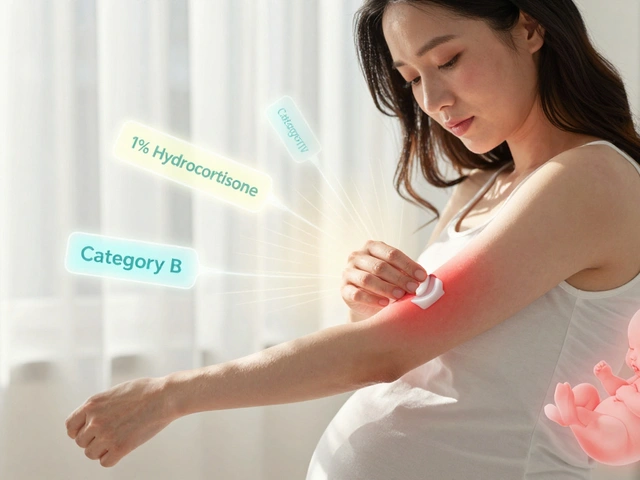

That sinking feeling in your stomach when you realize you’re pregnant? It’s not just the excitement. For most of us, it comes with a side of nausea that feels like it never ends. You might think it’s just something you have to endure until the first trimester passes, but that’s a myth. In fact, about 70-85% of pregnant people deal with this, and while it’s common, it doesn’t mean you have to suffer in silence. The good news is that there are plenty of safe, effective ways to manage it, from simple lifestyle tweaks to prescription meds that have been studied extensively.
We’ve all heard the advice: "just eat crackers" or "try some ginger." But what if that’s not enough? When do you reach for over-the-counter (OTC) options, and when is it time to talk to your doctor about stronger prescriptions? More importantly, which ones are actually safe for your baby? Let’s break down the facts, strip away the fear-mongering, and look at what the medical community says about treating nausea during pregnancy safely and effectively.
First, let’s get the name right. Doctors call it Nausea and Vomiting of Pregnancy (NVP), which is the common experience of nausea and vomiting affecting most pregnancies. It’s not really about the morning; it can hit you at any time of day. While the exact cause isn’t fully understood, hormones like human chorionic gonadotropin (hCG) and estrogen play a big role. Your sense of smell also becomes hypersensitive, turning everyday smells into triggers.
For most, symptoms peak around weeks 9 to 12 and fade by week 16. But for a small percentage-about 0.3-2%-it escalates into Hyperemesis Gravidarum, which is a severe form of morning sickness requiring medical intervention. If you’re losing more than 3% of your body weight, can’t keep fluids down, or see ketones in your urine, don’t wait. That’s when you need professional help immediately. But for the rest of us, managing NVP is about finding the right balance of relief without risking our health or our baby’s.
Before popping pills, doctors recommend starting with non-drug approaches. These aren’t just home remedies; they’re backed by data. Think of them as your first line of defense.
If these don’t cut it after a couple of days, it’s time to look at medication. And yes, taking medicine during pregnancy can be safe-if you choose the right one.

You don’t always need a prescription to find relief. Two main OTC ingredients are widely considered safe and effective when used correctly.
Combining Vitamin B6 and Doxylamine is actually the gold standard for first-line treatment. In fact, this combination was so effective that it became the basis for prescription drugs later on. If you buy generic versions, you’re looking at spending $15-30 a month, which is a fraction of the cost of brand-name prescriptions.
When OTC options fall short, doctors turn to prescription meds. The most recommended is Diclegis, which is a delayed-release combination of doxylamine and pyridoxine approved for pregnancy nausea. It contains 10 mg of doxylamine and 10 mg of pyridoxine. Why is it special? The formulation releases the doxylamine slowly, which means fewer doses and potentially less drowsiness during the day. You take one tablet in the morning, one in the mid-afternoon, and two at bedtime.
Safety-wise, Diclegis holds an FDA Pregnancy Category A status. This is the highest safety rating, meaning controlled studies in thousands of women showed no risk to the fetus. A massive review of 200,000 pregnancies confirmed this. In clinical trials, 70% of women saw significant symptom reduction compared to 48% on a placebo. It takes 3-5 days to build up in your system, so patience is key. By day 7, 85% of users report improvement.
What about Ondansetron (Zofran)? It’s powerful, controlling symptoms in 70-80% of cases. However, it’s considered a second-line option. Why? Because older studies raised concerns about a slight increase in oral clefts, though a major 2019 study in the New England Journal of Medicine involving 1.2 million pregnancies found no significant link. Still, because of the unresolved questions and higher cost (around $350/month without insurance), doctors usually reserve it for severe cases where other treatments fail.
| Treatment | Type | Effectiveness | Key Side Effect | Approx. Monthly Cost |
|---|---|---|---|---|
| Ginger | Natural/OTC | Moderate (32% improvement) | Heartburn (rare) | $5 - $15 |
| Vitamin B6 + Doxylamine (Generic) | OTC Combination | High | Drowsiness | $15 - $30 |
| Diclegis | Prescription | Very High (70% reduction) | Drowsiness (manageable) | $250 (without insurance) |
| Ondansetron (Zofran) | Prescription | Very High (70-80% control) | Headache, Constipation | $350 (without insurance) |

You might hear friends suggest marijuana for nausea. It’s tempting, especially if nothing else works. But here’s the hard truth: major health organizations, including the American College of Obstetricians and Gynecologists (ACOG), strongly advise against it. There simply isn’t enough data to prove it’s safe. Some studies link prenatal marijuana use to lower birth weights. Until we have clear evidence that it’s harmless, it’s a risk not worth taking.
Another option sometimes mentioned is promethazine (Phenergan). It’s effective but carries a higher risk of drowsiness and sedation. It’s usually given via suppository if you can’t keep pills down. It’s a valid tool in the doctor’s kit, but again, it’s not the first choice due to side effects.
So, how do you decide? Start low and go slow. Try dietary changes and ginger first. If that fails, add Vitamin B6. If you’re still struggling, ask your doctor about adding doxylamine or switching to Diclegis. Remember, untreated severe nausea leads to dehydration and weight loss, which is far more dangerous to your baby than these well-studied medications.
Don’t be afraid to advocate for yourself. If you’re feeling miserable, tell your provider. There’s no badge of honor in suffering through pregnancy. With the right plan, you can get your life back and focus on the joy of growing your little one.
Yes, doxylamine succinate (found in Unisom SleepTabs) is considered safe for pregnancy when taken at the recommended dose of 12.5 mg. It is often combined with Vitamin B6 for better results. However, it causes drowsiness in many users, so it's best taken at night or when you can rest.
Studies suggest that 1,000 mg of dried ginger root per day is effective. You can split this into smaller doses throughout the day. Ginger is classified as Generally Recognized As Safe (GRAS) by the FDA, making it a low-risk option for most pregnant individuals.
Diclegis is a combination of doxylamine and vitamin B6 with a Pregnancy Category A rating, meaning it has proven safety in human studies. Zofran (ondansetron) is a stronger anti-nausea drug but is considered second-line due to historical concerns about cardiac defects and oral clefts, although recent large studies have largely alleviated these fears. Diclegis is usually tried first.
You should seek medical attention if you cannot keep any fluids down for 24 hours, lose more than 3% of your body weight, feel dizzy or faint, or see blood in your vomit. These could be signs of hyperemesis gravidarum, a severe condition requiring hospitalization and IV fluids.
Yes, they can be helpful for some people. A Cochrane Review found that acupressure bands applied to the P6 point on the wrist reduced vomiting episodes by an average of 2.2 per day compared to placebo. They are drug-free and have no side effects, making them a good complementary therapy.