
When you’re taking more than one medication, even something as simple as an over-the-counter pain reliever or a herbal supplement can cause serious problems. Drug interaction checker tools exist to help prevent this-but only if you use them right. Many people assume these tools catch everything. They don’t. And relying on them blindly can be dangerous. The truth is, these tools are powerful, but they’re not infallible. Used correctly, they can keep you out of the hospital. Used poorly? They might give you a false sense of safety.
A drug interaction checker doesn’t guess. It compares the ingredients in your medications against a database of known interactions. These databases include information about how drugs affect each other’s absorption, metabolism, or how they act in your body. For example, some antibiotics can stop birth control pills from working. Grapefruit juice can make cholesterol meds dangerously strong. Even St. John’s Wort, a common herbal supplement, can reduce the effectiveness of antidepressants and blood thinners.
There are three main types of interactions these tools look for:
Tools like the University of Liverpool’s COVID-19 Drug Interactions Checker use color codes to show severity: red means avoid completely, orange means monitor closely, yellow means watch for symptoms, and green means safe. This helps users quickly understand risk levels.
Not every drug interaction checker is built the same. A 2016 study by the National Institutes of Health tested five major tools and found big differences in accuracy.
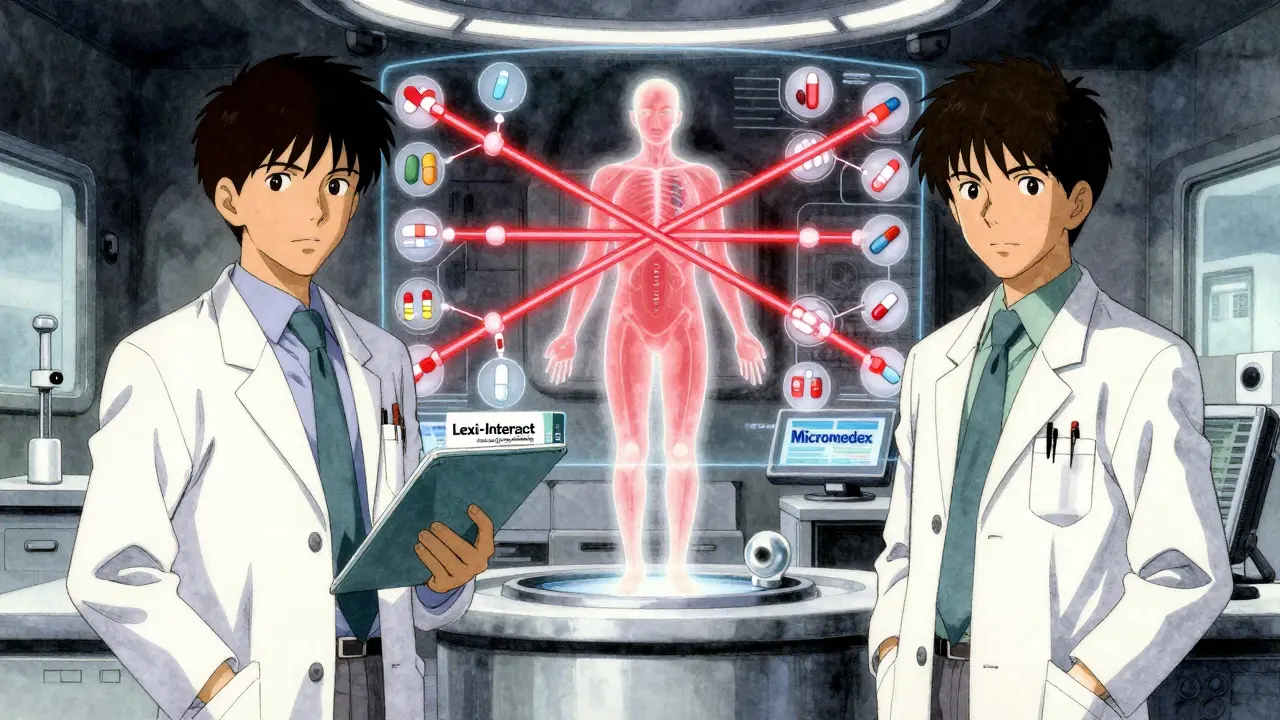
For professionals, Lexi-Interact and Micromedex are top performers. Lexi-Interact catches 77% of real interactions (high sensitivity), but it flags a lot of false alarms. Micromedex is more selective-only 22% of its alerts are false, but it might miss a few real ones. If you’re a pharmacist or doctor, using both together cuts your risk of missing something critical.
For everyday users, WebMD and Drugs.com offer free tools. They’re easy to use, but their accuracy hovers around 60%. That means nearly 4 in 10 potential interactions might go unnoticed. Epocrates, popular among nurses and paramedics, has decent mobile usability but misses about 40% of important interactions. Medscape? It’s even worse-only 49% accurate according to the same study.
Here’s a quick comparison:
| Tool | Sensitivity (Catches Real Interactions) | Specificity (Avoids False Alerts) | Best For |
|---|---|---|---|
| Lexi-Interact | 77% | 72% | Healthcare professionals needing thorough screening |
| Micromedex | 75% | 78% | Professionals wanting fewer false alarms |
| iFacts | Not tested | Not tested | Most comprehensive database (100% completeness) |
| WebMD | ~60% | ~65% | General public checking occasional OTC or supplement use |
| Drugs.com | ~62% | ~68% | Checking supplements and common OTC drugs |
| Epocrates | 60.3% | 63% | Mobile users who need quick access |
| Medscape | 49% | 52% | Not recommended as primary tool |
The University of Liverpool’s tool stands out because it’s updated weekly and focuses on specific treatments like Paxlovid. It’s the go-to for people on COVID-19 antivirals, with over 1,200 added drug interactions since 2022.
Using one of these tools isn’t just about typing in a drug name and hitting search. Here’s how to do it properly:
Here’s where people get into trouble:
In March 2022, a patient in California took sertraline (an SSRI antidepressant) and linezolid (an antibiotic) together. She felt dizzy, had a high fever, and was rushed to the ER with serotonin syndrome-a life-threatening condition. Her free online checker didn’t flag it. The interaction was known, but the tool’s database was outdated. She survived, but barely. This case was published in the Journal of Patient Safety as a warning.
Another common mistake: people think supplements are safe. But St. John’s Wort, garlic pills, ginkgo, and even high-dose vitamin E can interfere with blood thinners, antidepressants, and transplant meds. Most consumer tools don’t have robust supplement databases. That’s why Drugs.com and Lexi-Interact score higher-they include more herbal and vitamin data.

Don’t wait until you’re in the hospital. Here’s what to do now:
Drug interaction checkers are tools, not babysitters. They’re like seatbelts-you need them, but they won’t save you if you’re speeding into a wall. Use them as part of a smarter system, not as the whole system.
Free tools like WebMD and Drugs.com are better than nothing, but they’re only about 60% accurate. They’re good for checking one or two common medications, but they often miss interactions involving supplements, herbal products, or newer drugs. Don’t rely on them alone if you’re taking five or more medications. Always confirm with a pharmacist.
Some do, some don’t. Tools like Lexi-Interact and Drugs.com include hundreds of herbal and vitamin interactions. Epocrates and Medscape have much weaker supplement databases. If you take fish oil, ginkgo, or St. John’s Wort, use a tool known for supplement coverage. Still, even the best tools can’t predict every possible reaction-especially with high doses or rare herbs.
Each tool uses a different database and algorithm. Lexi-Interact is designed to catch every possible interaction, even unlikely ones, so it flags more false alarms. Micromedex is more selective, so it misses fewer-but sometimes misses real ones. The NIH study found that using two tools together catches 90% of clinically relevant interactions. That’s why experts recommend checking with more than one.
No. The FDA and American Society of Health-System Pharmacists both say no tool can replace a pharmacist’s review, especially when you’re on five or more drugs. Pharmacists consider your age, kidney/liver function, allergies, and other conditions. A tool can’t do that. Think of the checker as a first step-not the final answer.
Not right away. Clinical trials don’t test every possible combination before a drug is approved. It takes months, sometimes years, for new interactions to be documented and added to databases. Tools like the University of Liverpool’s update weekly for COVID-19 drugs, but most others lag. Always ask your pharmacist about a newly prescribed drug.
Seniors often take 4-6 medications, so accuracy matters. Use Lexi-Interact or Micromedex if you have access through a healthcare provider. If not, use Drugs.com and WebMD together. Always include supplements-nearly half of seniors take at least one herbal product. And always bring your full list to your pharmacist for review. Many pharmacies offer free interaction checks.
If your checker flags a dangerous interaction:
Remember: the goal isn’t to avoid every interaction-it’s to avoid dangerous ones. A good pharmacist can help you find a balance between safety and effectiveness.