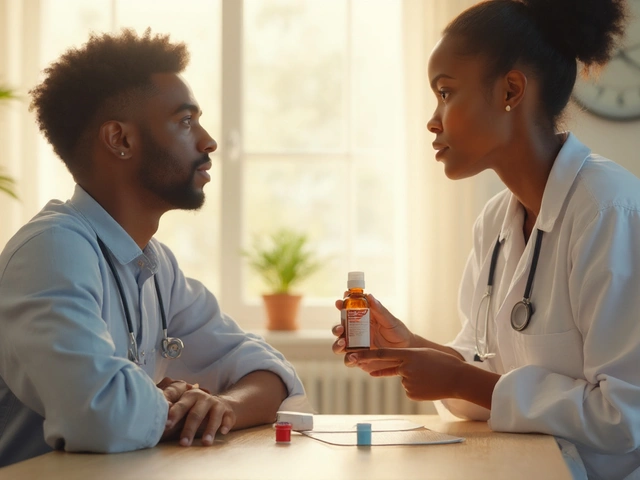

Every year, counterfeit medications kill around one million people worldwide. That’s not a guess. It’s the World Health Organization’s estimate. These aren’t just bad pills-they’re dangerous fakes, often made in secret labs with toxic chemicals, wrong doses, or no active ingredient at all. And they’re getting harder to spot.
You might think, "I’d never buy medicine online," or "My pharmacist wouldn’t give me fake pills." But counterfeit drugs don’t always come from shady websites. Sometimes they slip into legitimate supply chains. A batch of insulin, a bottle of Xanax, or even your daily blood pressure pill could be counterfeit-and you wouldn’t know until it’s too late.
A counterfeit medicine isn’t just expired or poorly stored. It’s deliberately faked. The packaging looks real. The pill has the right imprint, color, and shape. But inside? It could be chalk, rat poison, or a completely different drug. The World Health Organization distinguishes between substandard medicines (poor quality due to bad manufacturing) and falsified ones (intentionally deceptive). This article focuses on the latter-the ones made to trick you.
Counterfeiters target high-demand drugs. In 2024, fake versions of Mounjaro®, Zepbound®, Ozempic®, and Adderall were found across North America, Europe, and South America. These aren’t just scams-they’re life-threatening. One fake pill can contain enough fentanyl to kill you. The U.S. Drug Enforcement Administration says criminal networks are flooding the market with fake prescription pills that look identical to the real thing.
You don’t need a lab to catch some fakes. Here’s what to look for:
Pfizer’s security team says real pills have a factory-made look-smooth, consistent, no cracks or bubbles. If your tablet looks like it was hand-pressed or crumbles when you touch it, it’s not real.
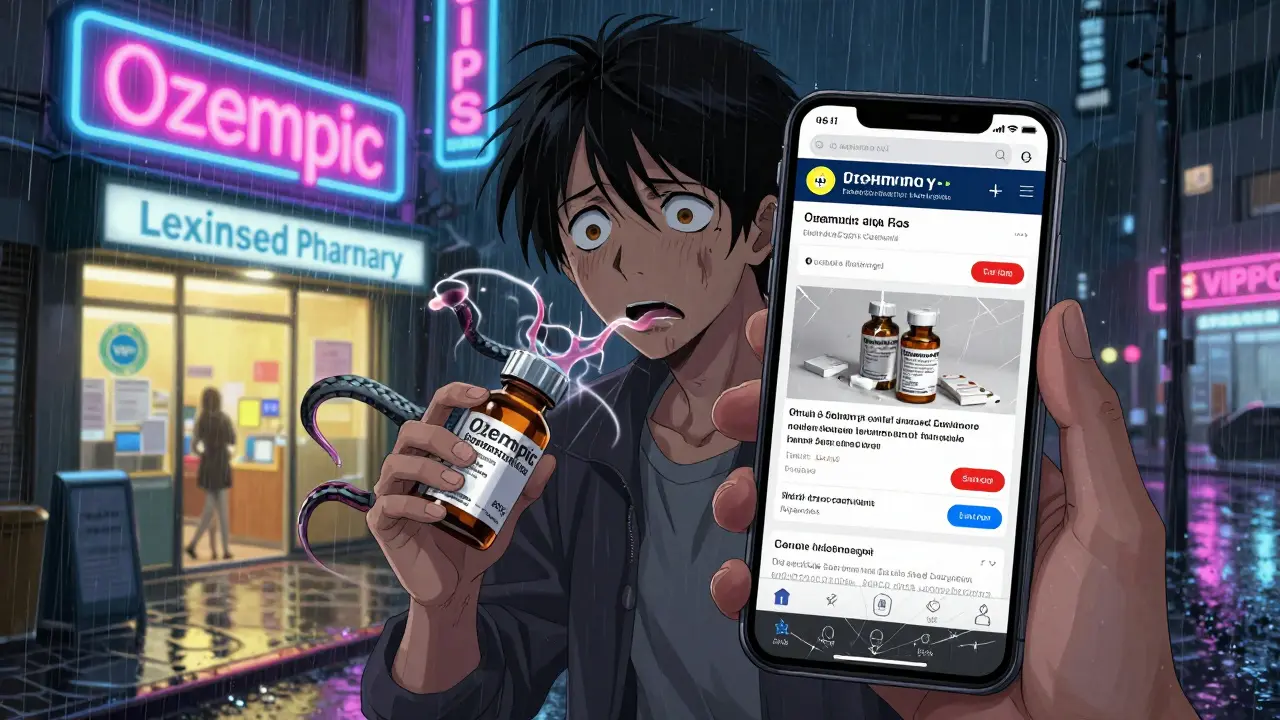
Most counterfeit drugs come from illegal online pharmacies. The National Association of Boards of Pharmacy found over 10,000 websites selling fake GLP-1 weight-loss drugs in 2024. These sites look professional. They use real logos, fake testimonials, and even fake “pharmacist consultations.” But they don’t require a prescription-or they accept one you emailed them from a friend.
Social media is another major source. Instagram, Facebook, and encrypted apps like Telegram are used to sell fake pills directly to users. Ads promise “discounted Ozempic” or “Adderall without a prescription.” The price is too good to be true-because it is. A real Ozempic pen costs over $1,000. If you see one for $100, it’s fake.
Even brick-and-mortar pharmacies can be compromised. In rare cases, counterfeit drugs enter the supply chain through stolen or diverted shipments. That’s why it’s critical to buy from licensed pharmacies only.
Here’s how to protect yourself:
Remember: if the price is too low, it’s a trap. Counterfeiters cut costs by using cheap materials. They don’t care if you live or die-they just want your money.
If you think your medicine is fake:
The UK’s Counterfeit Medicines Advice document recommends healthcare professionals record patient concerns: name, drug, batch number, expiry date, and why they’re suspicious. This data helps track outbreaks and protect others.
Here’s the scary part: even experts can’t spot every fake without lab tests. The most sophisticated counterfeits are nearly identical to the real thing. The FDA says visual inspection helps-but only gets you so far. That’s why reporting suspicious drugs matters. One person noticing a difference can trigger a wider investigation.
Pharmaceutical companies now use digital tracking systems. By 2023, the U.S. Drug Supply Chain Security Act required every prescription drug to have a unique serial number. This lets pharmacies and regulators trace a pill back to the factory. But these systems only work if you buy from legal sources. If you buy from a website with no name or address, there’s no trace.
Counterfeit drugs are not a distant problem. They’re in your neighborhood, on your phone, and in your mailbox. Every year, people die because they trusted a cheap online deal or a friend’s “extra” pills.
Don’t gamble with your life. If you’re unsure about your medicine, call your pharmacist. If the price seems too good to be true, it is. If the pill looks off, stop taking it. And if you see a fake drug being sold online-report it. Someone’s life might depend on it.
A legitimate online pharmacy will always require a valid prescription, display a physical address and phone number, and be licensed by your country’s pharmacy board. In the U.S., look for the VIPPS seal from the National Association of Boards of Pharmacy. In the UK, check for the GPhC logo. If the site doesn’t list this information, walk away.
Absolutely. Many counterfeit drugs contain toxic substances like fentanyl, lead, or industrial chemicals. Others have no active ingredient at all, meaning your condition isn’t being treated. Even if the pill looks perfect, the contents could be lethal.
Stop taking the medication immediately. Call your doctor or poison control. If you experience symptoms like dizziness, nausea, chest pain, or difficulty breathing, seek emergency help. Keep the packaging and pill for testing. Report the incident to your national health authority.
Not inherently. Generic drugs are legally produced and regulated. But because they’re cheaper, counterfeiters often target them. Fake generics are common online. Always buy generics from licensed pharmacies, just like brand-name drugs.
Drugs like Ozempic, Mounjaro, and Zepbound are in high demand and expensive. Many people can’t afford them legally, so they turn to online sellers offering steep discounts. Counterfeiters exploit this desperation. These fake versions often contain incorrect doses or harmful substitutes, putting users at serious risk.
Not if they’re not licensed. Many fake pharmacies use free shipping and discounts to lure customers. Legitimate pharmacies rarely offer deep discounts on controlled medications. If the deal seems too good, it’s likely a scam.
Report it to the Medicines and Healthcare products Regulatory Agency (MHRA). You can do this online through their Yellow Card system or by calling their hotline. Include the drug name, batch number, expiry date, and where you bought it. Your report helps protect others.
Only if the pharmacy is licensed in its own country and ships to yours legally. Many countries have different regulations. A pharmacy that’s legal in India or Canada may not meet UK or U.S. standards. Always verify licensing and avoid pharmacies that don’t require a prescription.

gary ysturiz
Just bought my insulin from a local pharmacy after reading this. Never again buying online. Seriously, if it's too cheap, it's poison.
George Bridges
I work in a clinic and we had a patient come in last month with a fake Ozempic pen. Looked perfect. The bottle even had the right serial number. But the liquid was cloudy. She’d been injecting it for three weeks. Her blood sugar was through the roof. Scary stuff.
Sumit Sharma
Let’s be clear: the pharmaceutical supply chain is broken. Regulatory agencies are asleep at the wheel. The FDA and MHRA issue press releases but do zero enforcement. These fakes are flooding in because no one’s prosecuting the operators. The real criminals are sitting in India and China laughing all the way to the bank while Americans die. This isn’t a consumer issue-it’s a systemic failure.
Darryl Perry
Why are you people so gullible? If you don’t know how to verify a pharmacy, don’t buy online. Simple. Stop blaming the system. You made the choice.
Windie Wilson
So let me get this straight… I’m supposed to pay $1200 for a pen that works… but if I pay $100, I get a pill that might kill me? And somehow that’s MY fault? 😭
Monica Puglia
My grandma takes blood pressure meds. She’s 78. I just checked her bottle with her-no batch number, the cap was loose, and the pill was a slightly lighter shade. We took it back to the pharmacy. They said it was a bad batch and replaced it. THANK GOD we caught it. 🙏
Cecelia Alta
Oh my god, I just remembered-I bought Adderall from a guy on Instagram last year. I thought it was just a ‘friend’s extra.’ I took two pills, felt like I was going to die, and then I just… didn’t tell anyone. I thought it was anxiety. Turns out, I might’ve been poisoned. I didn’t even know what I was doing. I’m so stupid. I’m not even mad at the seller-I’m mad at myself for not caring enough to check.
Jessica Bnouzalim
Okay, but what about the people who can’t afford their meds? Like, really-$1000 for a month of Ozempic? I work two jobs and still can’t pay for it. So I go online. And I get a pill that looks real. And I think, ‘Maybe it’s fine.’ I’m not a criminal-I’m just trying to survive. You can’t just tell people to ‘only buy from licensed pharmacies’ when those pharmacies charge more than their rent.
laura manning
It is imperative to underscore that the absence of a valid National Drug Code (NDC) on pharmaceutical packaging constitutes a prima facie indicator of illegitimacy. Furthermore, the presence of non-compliant labeling, per 21 CFR Part 201, constitutes a violation of federal statutes governing drug distribution. It is not merely a matter of consumer caution-it is a legal and public health imperative.
Jay Powers
My cousin works at a hospital pharmacy. She says the worst part isn't the fake pills-it's when the real ones get mixed in with the fake ones. So you think you're safe but you're not. That's why you gotta check every bottle every time. No excuses.
Alice Elanora Shepherd
Just reported a site selling ‘discounted Mounjaro’ via Facebook Marketplace. Took me 10 minutes. The MHRA responded within 48 hours and shut it down. It’s not hard. If you see something, say something. It really does save lives.
Christina Widodo
Wait-so if I buy a generic version from a licensed pharmacy, it’s safe? But if I buy the brand name from a shady site, it’s dangerous? But the generic looks the same? How do I even know what’s real if I don’t know what the real one looks like?
Prachi Chauhan
It’s funny how we blame the buyer when the system is designed to make people desperate. You tell someone their insulin costs more than their car payment. Then you say, ‘Just don’t buy online.’ But what if you have no choice? Who made the world like this? Not the person holding the pill. The system did.