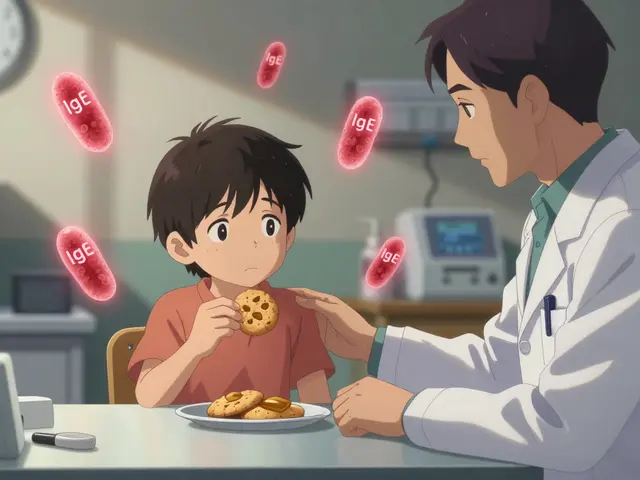
Every year, medication adherence becomes a silent crisis in homes across the UK and the US. You fill your prescription. You mean to take it. But then you forget. Or it costs too much. Or you don’t feel sick enough to bother. Sounds familiar? You’re not alone. About half of people taking medicine for long-term conditions don’t take it as their doctor ordered. And the cost-both to your body and to the system-is far worse than most people realize.
What Happens When You Skip a Dose?
- Your condition gets worse. Not slowly. Not gently. Often, it crashes.
- Emergency visits spike. A 2023 study found that 20% of Medicare readmissions within 30 days were directly tied to patients not taking their meds.
- Death rates climb. The OECD estimates 200,000 deaths per year in developed countries are linked to missed doses. That’s more than traffic accidents in many places.
Take blood pressure pills, for example. If you skip them even a few days a week, your arteries keep tightening. Over time, that leads to strokes. Heart attacks. Kidney failure. You might not feel anything until it’s too late. The same goes for diabetes meds. Missing doses lets blood sugar climb, silently damaging nerves, eyes, and kidneys. One missed insulin shot doesn’t cause chaos-but 10 missed over a month? That’s a hospital stay waiting to happen.
The Hidden Cost: More Than Just Health
People think nonadherence is just a personal choice. It’s not. It’s a system failure with a $500 billion price tag in the US alone. In the UK, the NHS spends an extra £1 billion annually treating complications that could’ve been avoided if patients had taken their pills.
Here’s how the money drains away:
- Emergency room visits cost £150-£400 each. A single nonadherent patient can trigger 2-3 per year.
- Hospital stays average £1,200 per day. A 5-day stay for a preventable complication? That’s £6,000 gone.
- Lost productivity. If you’re too sick to work because your asthma flared up from skipping inhalers, your employer loses. You lose. The economy loses.
And it’s worse for older adults. One in five people over 65 takes five or more prescriptions. Mix that with memory issues, confusing pill schedules, and rising costs-and it’s no surprise that 100,000 elderly deaths in the US each year are preventable. In Bristol, we’ve seen it: an 82-year-old woman skipped her statin because she thought, “I feel fine.” Six months later, she had a heart attack. She didn’t survive.
Why People Don’t Take Their Medicine
It’s not laziness. It’s not ignorance. It’s a mix of real, painful barriers.
- Cost: In 2021, 8.2% of working-age adults in the US skipped meds because they couldn’t afford them. In the UK, even with the NHS, some prescriptions still cost £9.65 per item. For someone on Universal Credit, that adds up fast.
- Side effects: A man I spoke to in Bath stopped his antidepressant because it made him feel “like a zombie.” He didn’t tell his doctor. He just quit.
- Complex regimens: A 70-year-old with diabetes, heart disease, and arthritis might have 14 pills a day, at different times. No wonder 67% of Americans are nonadherent.
- Distrust: Black, Latino, and other minority communities often avoid meds due to historical mistreatment in healthcare systems. That trauma doesn’t vanish with a prescription.
- Feeling fine: This is the biggest one. If you don’t feel sick, why take a pill? But most chronic meds work silently. They’re like insurance-you pay now so you don’t pay later with your life.
Who Pays the Price?
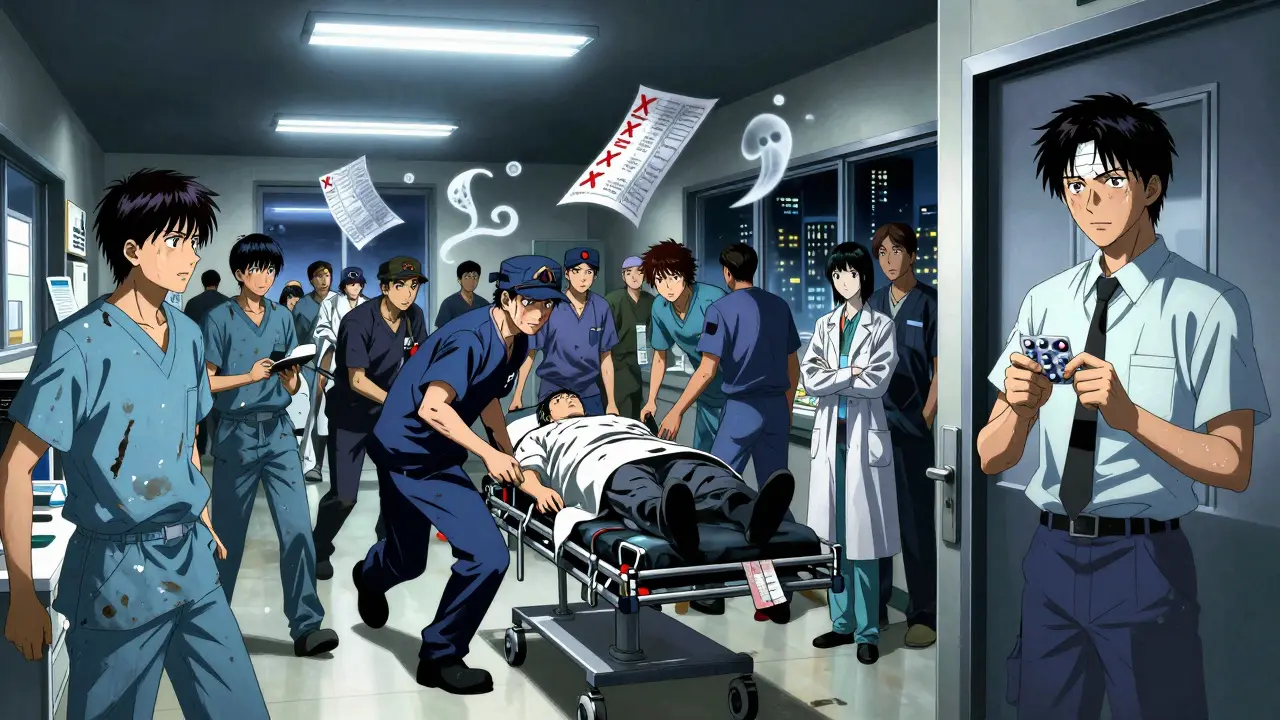
It’s not just you. It’s your family. Your neighbours. The nurses in the ER. The paramedics who rush to your door because you didn’t take your blood thinner.
Minority groups bear the worst of it. Studies show Black and Latino patients are 30% more likely to miss doses due to pharmacy deserts, language barriers, and lack of culturally competent care. In areas like South Bristol, where pharmacies are scarce and public transport is unreliable, people skip meds because they can’t get to the pharmacy.
Older adults? They’re the most vulnerable. One in three over 65 takes three or more prescriptions. If one pill doesn’t fit in their hand, if the label is too small, if they forget what each one does-they stop. And then they pay with their health.
What Actually Works
It’s not about scolding people. It’s about fixing the system.
- Pharmacist-led check-ins: In trials, pharmacists calling patients once a week improved adherence by 15-20%. No fancy tech. Just someone asking, “How are the pills working for you?”
- Simple packaging: Blister packs with days of the week printed on them cut confusion. One study showed a 40% drop in missed doses.
- Text reminders: A simple daily text saying, “Take your metformin today,” boosted adherence by 12-18% in clinical trials.
- Cost help: In the US, medication therapy management programs saved $3-$10 for every $1 spent by preventing hospitalizations. The UK could do the same.
- One conversation: A doctor asking, “What’s stopping you from taking your meds?”-and really listening-can change everything.
What You Can Do Today
If you’re struggling to take your meds:
- Ask your GP or pharmacist for a blister pack. It’s free.
- Set a phone alarm. Name it after your goal: “Take pill → Stay out of hospital.”
- If cost is the issue, ask about generic versions or patient assistance programs. You’d be surprised what’s available.
- Bring your pill bottle to your next appointment. Say: “I’m having trouble with this. Can we simplify it?”
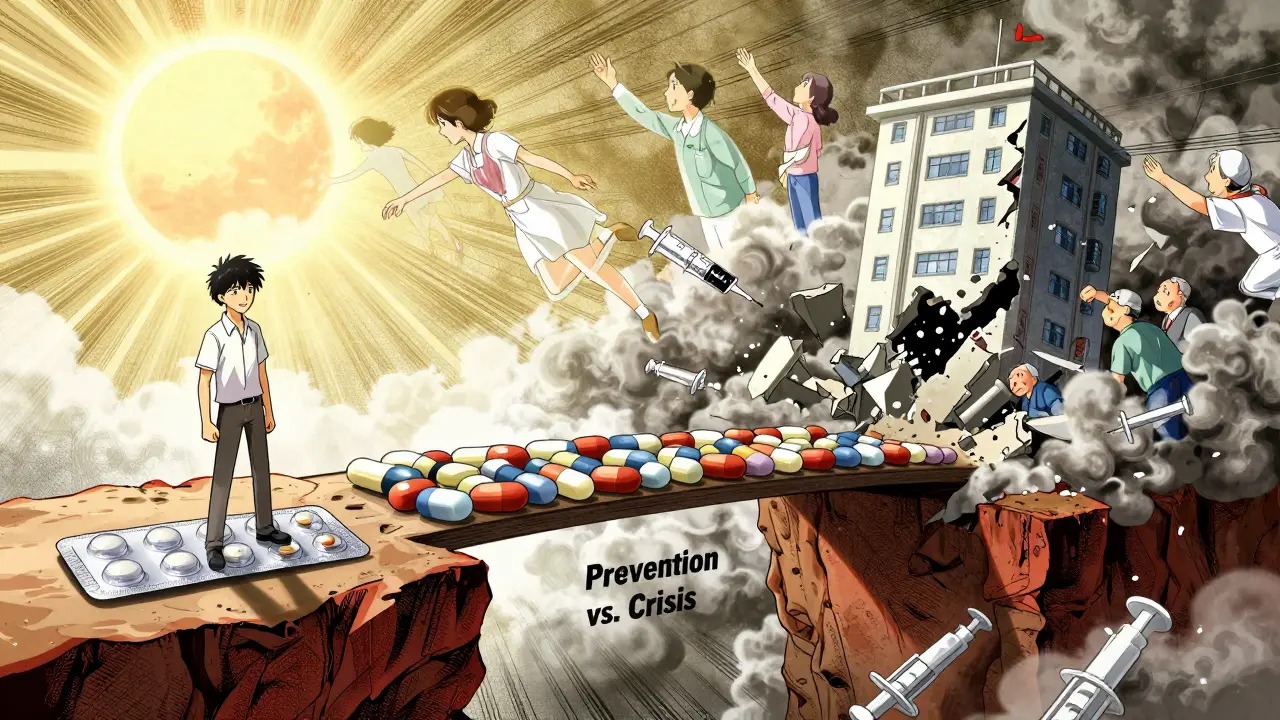
- Don’t stop because you feel fine. That’s when the medicine is doing its job.
It’s Not About Being Perfect
You don’t need to take every pill, every day, perfectly. But you do need to be honest. If you miss one, tell someone. If you’re scared of side effects, ask. If you can’t afford it, say so. There are people who want to help. But they can’t if you stay silent.
Medication adherence isn’t about discipline. It’s about survival. And it’s not just your life on the line-it’s your family’s peace of mind, your community’s healthcare budget, and the nurses who shouldn’t have to rush to save you because you didn’t take a pill.
What happens if I miss a dose of my medication?
Missing one dose rarely causes immediate harm, but repeated missed doses can lead to serious complications. For example, skipping blood pressure or diabetes meds can cause gradual organ damage that shows up as a stroke, heart attack, or kidney failure years later. Always check your medication leaflet or call your pharmacist for specific advice. Some drugs require you to take the missed dose right away; others should be skipped entirely. Never double up without professional advice.
Why do people stop taking their prescriptions even when they know it’s dangerous?
The reasons are real and varied. Cost is the top barrier-many people choose between food, rent, and medicine. Side effects like dizziness, fatigue, or nausea can be so unpleasant that people quit. Others don’t understand why they need the drug if they feel fine. Some distrust the healthcare system, especially in minority communities. And complex regimens with multiple pills at different times become overwhelming. It’s not about willpower-it’s about design. The system often fails people before they even try to fail it.
Can I just stop taking my medication if I feel better?
No. Many chronic medications work to prevent future problems, not treat current symptoms. For example, statins lower cholesterol to prevent heart attacks-you won’t feel better on them, but they save your life. Antibiotics must be taken fully to kill all bacteria. Stopping early can cause resistant infections. Even antidepressants require consistent use to maintain brain chemistry. Always talk to your doctor before stopping, even if you feel great.
Are there free or low-cost ways to get help with medication adherence?
Yes. In the UK, your GP can refer you to a Medicines Use Review (MUR), a free NHS service where a pharmacist reviews your meds and helps simplify your routine. Many pharmacies offer blister packs at no extra cost. Some charities and local councils provide transport to pharmacies for elderly or disabled people. In the US, patient assistance programs from drug manufacturers offer free or low-cost meds. Always ask your pharmacist-they know what’s available.
How do I know if I’m at risk for nonadherence?
You’re at higher risk if you take three or more prescriptions daily, have memory issues, live alone, have trouble reading labels, pay out-of-pocket for meds, or feel hopeless about your condition. If you’ve skipped doses before-even once-you’re already at risk. The key is not to wait for a crisis. Talk to your pharmacist or GP now. They can help you build a system that works for your life, not against it.